ARTS / FILM
Films about ‘small narratives’ find global audiences as Hollywood’s hero formula loses grip
Ordinary lives take the screen
By Published: Sep 10, 2026 09:49 PM

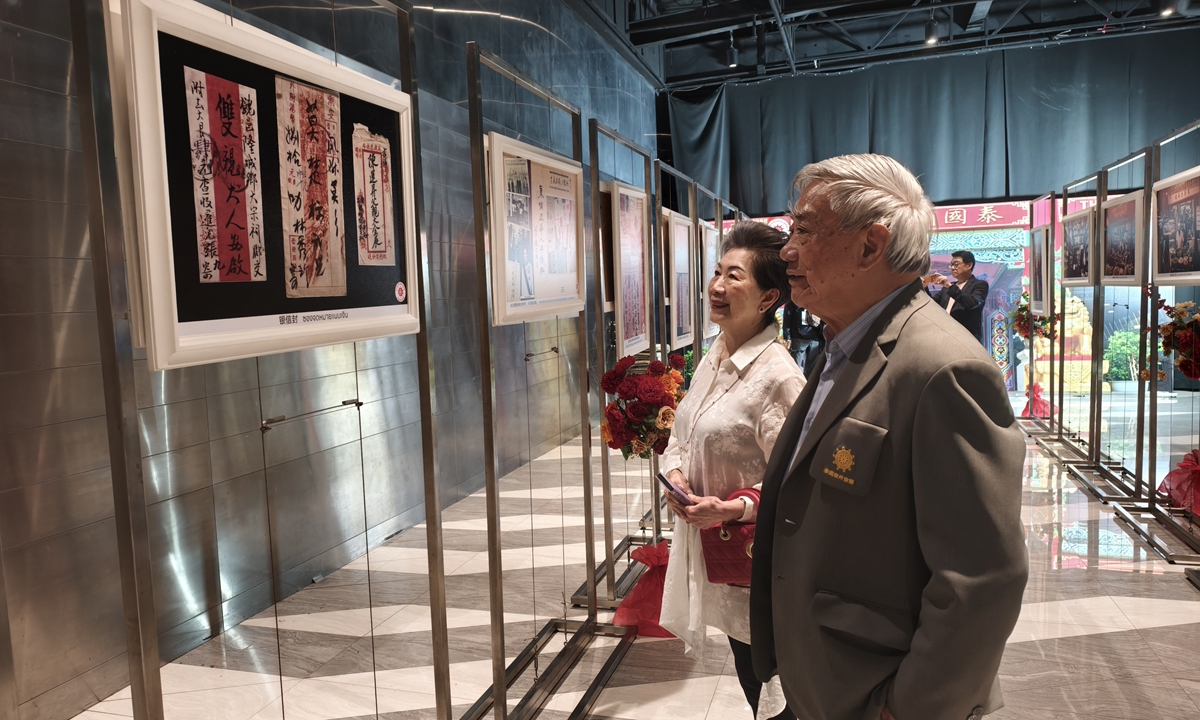
Visitors look at qiaopi letters in an exhibition held during the premiere of movie Dear You in Thailand on August 6, 2026. Photo: VCG
This summer, in a faded cinema in Bangkok, an elderly Chinese-Thai man sat in the front row, listening to his childhood language being spoken on screen.The film was Dear You, a modest Chinese production shot largely in the Teochew dialect using amateur actors to present a story of migration, silence, and family letters known as qiaopi.
"I connected emotionally with that part of the film quite strongly," the man was quoted as saying by AP, recalling the remittance houses where illiterate immigrants once sent letters home.
His own elderly relatives, immigrants themselves, were at the age they needed help climbing stairs. They had never returned to China, yet the money and messages had continued for decades.
The moment was small, almost private. Yet it captured a larger turn in global cinema.
While Christopher Nolan's long-awaited epic reimagining of the Odyssey summoned ancient heroes using Hollywood's full arsenal of scale and spectacle, a different kind of Chinese film was finding audiences abroad by doing the opposite: looking closely at ordinary people, local dialects, and the quiet weight of family memory.
Superheroes not working
For years the dominant international formula had been superheroes, franchise sequels, and visual grandeur designed for simultaneous global release.
That model is showing fatigue. A 2026 report from Fudan University's China Institute found that US films accounted for roughly 66 percent of the top-10 titles across 39 key markets in 2025, down from 77 percent the year before and 82 percent in 2023.
The North American box office has hovered near $9 billion for three consecutive years, a figure that, adjusted for inflation and screen growth, signals shrinking attendance.
The old "golden formula" of Marvel heroes, intellectual property (IP) sequels, and synchronized marketing is no longer finding purchase as reliably as it once did, Sun Kan, the head researcher of the report, told the Global Times.
Critics and producers point to deeper causes.
Tan Fei, a prominent Chinese producer and commentator, describes a broader cultural de-centering. "The stars and the heroes have been taken down from the pedestal," he says.
According to Tan, technology has lowered barriers to filmmaking; artificial intelligence and accessible tools make production less mysterious.
Younger audiences, he argues, increasingly prefer "closer" stories - people who feel like neighbors rather than mythic figures.
"People still like heroism," Tan notes, "but they prefer the kind found in ordinary lives. This is a change of the times, and it is happening everywhere."
Chinese filmmakers have begun to answer that appetite with what some call "small narratives."
Dear You, directed by Lan Hongchun on a budget of about 14 million yuan ($2 million), uses the Teochew dialect for roughly 95 percent of its dialogue.
Released in the Chinese mainland in late April, the film earned strong word-of-mouth. Crossing the 1.4 billion yuan mark at the domestic box office by the end of May, it has maintained a Douban rating of above 9/10.
Its emotional core rests on the historical qiaopi system - letters and remittances that sustained families across the South China Sea and were later inscribed on UNESCO's Memory of the World Register.
When the film opened in Thailand in August, it ranked third among foreign titles in its first weekend. In Malaysia the film also found strong showings in cities with large Chinese communities, prompting distributors to extend its run.
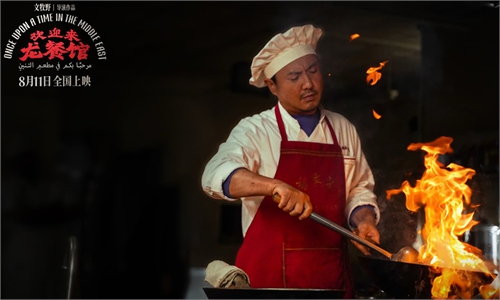
A similar impulse is driving Once Upon a Time in the Middle East, directed by Wen Muye and starring Shen Teng and Jiang Qiming.
A major Chinese production that cast Egyptian actors, including Omar Sherif and Sherif Sobhy, alongside the Chinese leads, it is an explicit attempt to tell a war story set in the Middle East from China's perspective.
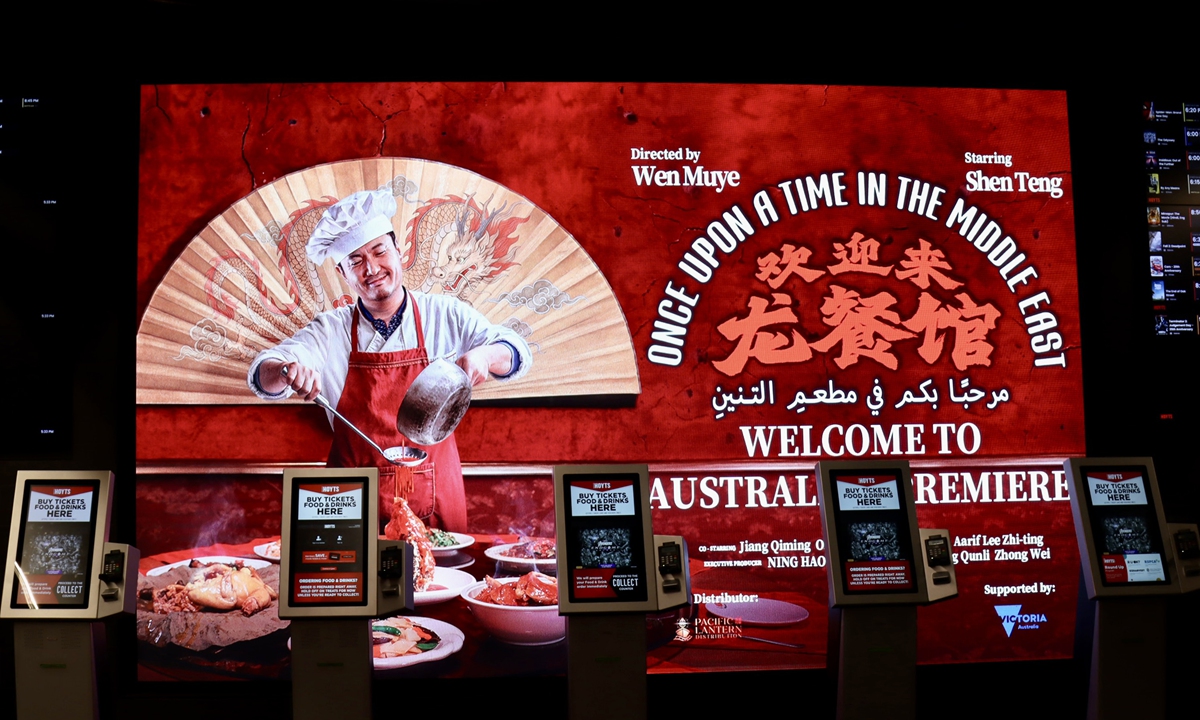
A poster of movie Once Upon a Time in the Middle East in Australia Photo: VCG
Small stories, vast resonanceIn Cairo, Yara Ismail, an Egyptian viewer following the film's progress, described the local cinema landscape this way. "Besides Hollywood movies, which are very popular in Egypt, Egyptian movies themselves are also very popular and have a very strong presence in cinemas. Bollywood films also have their own audience, although they are not as dominant as Egyptian and Hollywood movies."
She noted that Chinese films have begun to draw more attention. "Ne Zha 2 was screened in cinemas in Saudi Arabia, the UAE, and several Arab countries," she noted.
What particularly interests her about Once Upon a Time in the Middle East is its cast and setting. "I'm looking forward to watching it because it is a Chinese film featuring Egyptian actors, and its story is set in the Middle East," she noted.
One of the US actors, Ryan Magnolia, who plays a US soldier in the film, echoed a related sentiment about the director's approach. "I think it was a very interesting choice by the director to humanize all sides because it allows everyone to come to the table. There's no pure good, there's no pure evil."
The film begins its staged overseas roll-out across Asia and Oceania on Friday, while further territories are still being negotiated.
These films do not chase the path of pure spectacle forged by Ne Zha 2.
Instead they bet on recognition. Earlier successes in Southeast Asia and other regions such as YOLO, Chinese actress Jia Ling's story of an ordinary woman's self-reinvention, and Article 20, a family drama entangled with legal questions, followed the same pattern: no cascading visual effects, no costumed saviors, only specific lives rendered with care.
The shift is not uniquely Chinese.
Around the world, audiences appear less inclined to gaze upward at larger-than-life figures and more willing to sit with stories that feel contiguous with their own. Private narratives, family, work, memory, quiet resilience, are reclaiming space once occupied by public myth.
RELATED ARTICLES