SPORT / MISCELLANY
Hyrox vows bans for online abuse after course contamination scandal draws heated discussion on hygiene, responsibilities
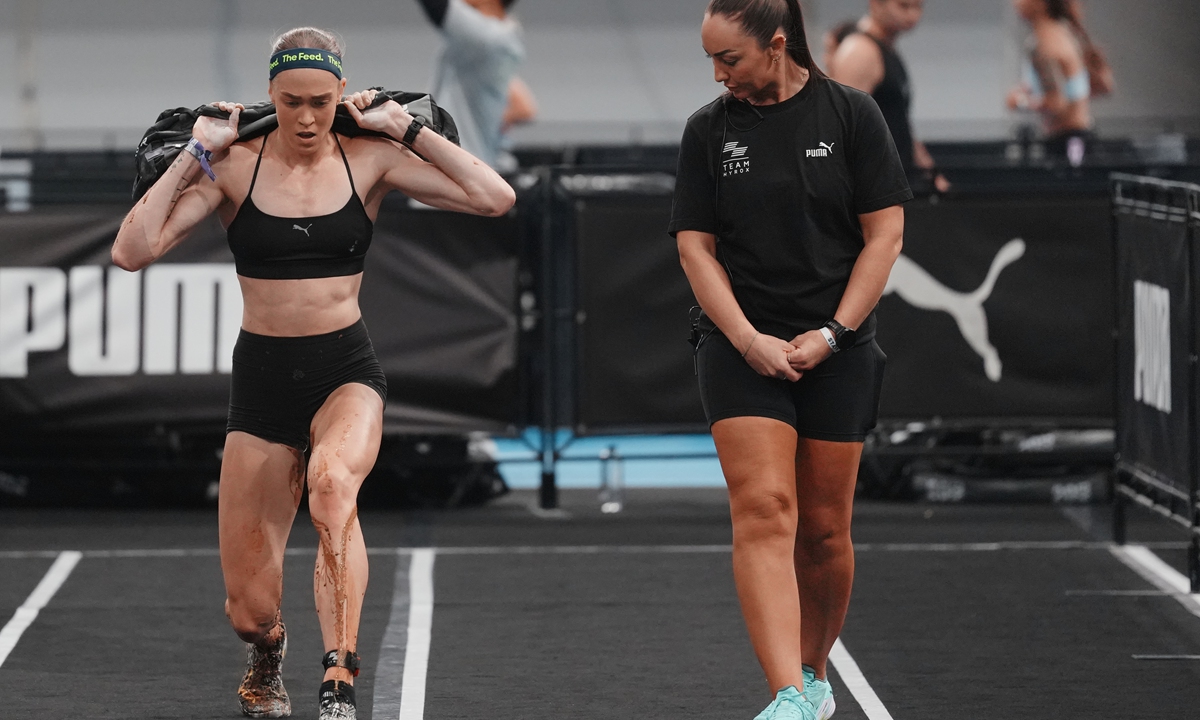
Australian athlete Joanna Wietrzyk (right) competes in the women's elite race at the Hyrox event while suffering bowel incontinence on September 12, 2026 in Beijing. Photo: VCG
Indoor fitness competition Hyrox has vowed to ban anyone who threatens or encourages harm against athletes after a controversial incident at its Beijing event triggered a heated debate over sportsmanship, hygiene and the responsibilities of both competitors and organizers.
In a statement posted on the official Hyrox Instagram account in the early hours on Monday, the fitness-racing organizer said it had clear procedures for dealing with biological contamination and medical incidents, but said there was an "unforeseen situation."
The controversy erupted after Australian athlete Joanna Wietrzyk continued competing in the women's elite race on Saturday in Beijing despite suffering bowel incontinence during the event. Videos and photographs circulating online showed fecal matter on her legs as she continued through later stations of the race.
Wietrzyk went on to win the race in around one hour. She is one of the leading women in the sport and holds the women's Hyrox world record, having recorded 54:26 in Warsaw in April.
That format of Hyrox competitions means athletes share the same indoor racing environment and equipment.
Hyrox's China branch said in a separate statement released on Saturday that the affected areas and race lanes were closed and isolated after the competition, while contaminated areas were disinfected afterwards. But the incident nevertheless prompted questions about why the athlete was allowed to continue.
Hyrox's latest statement noted that it is the organizer's responsibility to provide "the right framework and the right boundaries" for athletes to compete, and that the organization would examine what happened and take responsibility for improving its procedures.
The response, however, drew criticism.
One commenter on Instagram, identifying herself as a nurse, said they were reconsidering whether to compete in Hyrox after the incident, arguing that an athlete who was actively contaminating the course should have been stopped and that affected areas should have been closed and cleaned before other competitors passed through.
Another commenter on Instagram said the issue was not about "embarrassing or shaming" an athlete over an accident, but about hygiene and consideration for other competitors using the same course and equipment.
"Accidents happen," the commenter wrote. "It's about basic hygiene, sanitation, and respect for every other competitor on that course."
On Chinese social media, many netizens are questioning the integrity of Hyrox's competition rules.
"If an athlete's physical condition had deteriorated to this extent, where were the course officials and medical team? Did race officials have the authority to pull an athlete from competition when continuing posed a risk to others? If so, why was that authority not exercised?" a Chinese Hyrox participant posted on RedNote.
Li Hao, a participant who planned to join a race in Sanya, South China's Hainan Province, has decided to quit the race after the scandal.
Some others also compared the incident to other regulations.
"The rulebook says that spitting or clearing one's nostrils onto the floor is strictly prohibited, with each infringement carrying a two-minute penalty, but they allowed an athlete to contaminate the course continuously," another popular post on Weibo reads.
Hyrox's current rulebook also says fluids provided at aid stations are for drinking only and prohibits athletes from using them for active cooling because doing so can create slip hazards for other racers and staff.
At the same time, Hyrox's statement drew a firm boundary in the opposite direction.
"Frustration should never be directed toward the athletes themselves," it said, emphasizing that athletes are the people who put themselves on the line and make competition possible.
The organizer said anyone identified as engaging in such behavior, whether through public comments, direct messages or other social media, would be "permanently banned from all Hyrox events." They then added that those responsible were being reviewed and identified and related actions would be taken.
Zhu Meng, a Beijing-based sports commentator, noted that although Wietrzyk's athletic perseverance deserves credit, it is more fair to challenge one's limits within the rules and with respect for fellow competitors.
"True sportsmanship is about knowing where to draw the line," Zhu told the Global Times, arguing that competition should never come at the expense of public health, fairness or the rights of other athletes.
RELATED ARTICLES