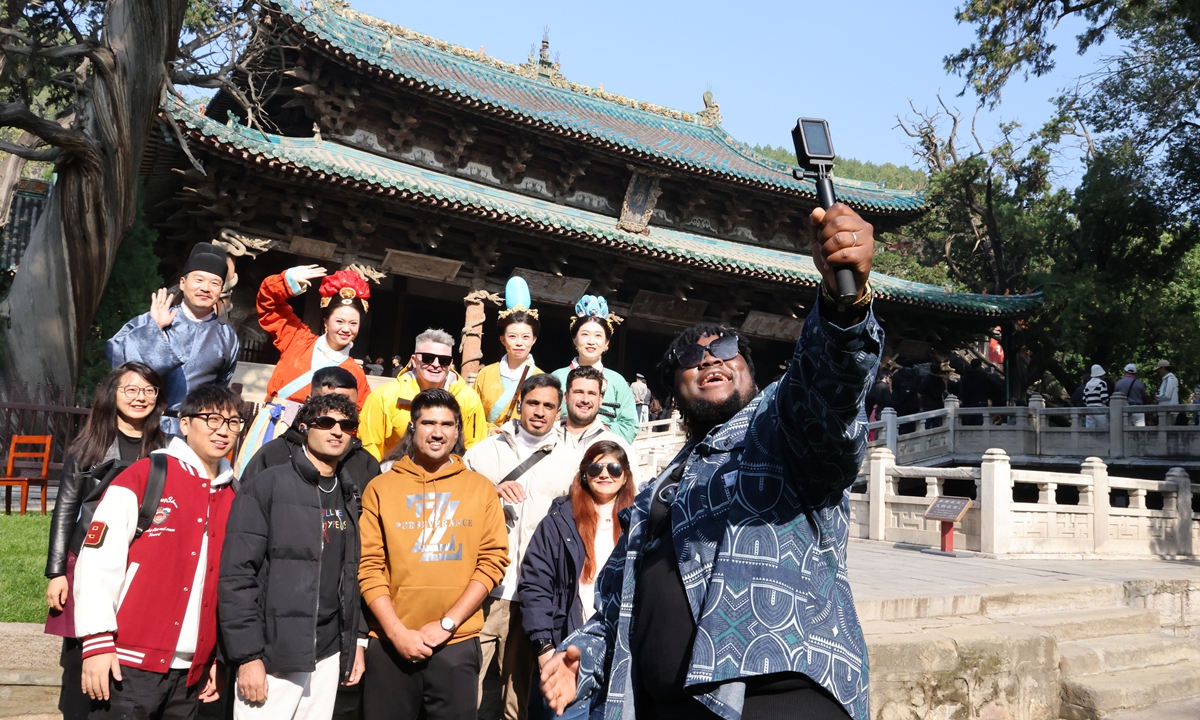
Foreigners pose for a picture at the Jin Temple in Taiyuan, north China's Shanxi province. Photo: Courtesy of the international communication center of Shanxi province
Taiyuan, the capital of north China's Shanxi province, is a nationally designated historical and cultural city and the birthplace of Jin culture and the spirit of Shanxi merchants. Nestled against mountains to the east, west, and north, and bisected from north to south by the Fenhe River, the city has long been celebrated as a "city of splendid beauty."
Today, Taiyuan stands as a modern city with a thriving ecosystem, vibrant energy, and a seamless blend of ancient heritage and contemporary progress. It embodies the qualities of a livable, business-friendly, and tourist-welcoming destination.
The clear waters of the Fenhe River reflect a remarkable ecological transformation
A healthy natural environment has become one of Taiyuan's defining hallmarks. For Andy Edgren, an American who has maintained a deep connection with the city for more than four decades, the transformation of the Fenhe River is especially striking.
Once plagued by water shortages, shrinking ecological space, and pollution, the river now flows with clear water, lined by lush green banks. Its revival reflects not only improvements in Taiyuan's environment but also signals a fundamental shift in the development philosophy and way of life of this historically industrial city.
"The city has changed so much. When my father and younger brother saw what the Fenhe River looks like today, they could hardly believe it!" Andy said.
Andy first came to Taiyuan with his father in the 1980s. Both worked as English teachers at Shanxi University and lived in the city for more than three years. Since then, he has returned to Taiyuan about 50 times, staying for several months on each visit.
As the second-largest tributary of the Yellow River and the mother river of Shanxi, the Fenhe River had fallen into dire straits by the end of the 20th century: flooding in the rainy season, near-dry conditions in the dry season, and polluted water at other times. To restore the river's ecosystem and improve the urban living environment, Taiyuan has carried out comprehensive management of the Fenhe River for more than 20 years.
Today, the Taiyuan section of the Fenhe River features 12 cascade impoundment lakes and 6.67 million square meters of artificial wetlands. The river maintains a stable water surface of 11.5 square kilometers and remains clean year-round, with a storage capacity of 30 million cubic meters that helps reinforce its ecological defenses.
"One of my favorite things to do in Taiyuan is to take an evening walk along the Fenhe River with friends. When the lights on the buildings and bridges along the river come on, they keep changing colors, like a rainbow," Andy said. "I like Taiyuan. It's a very livable city."
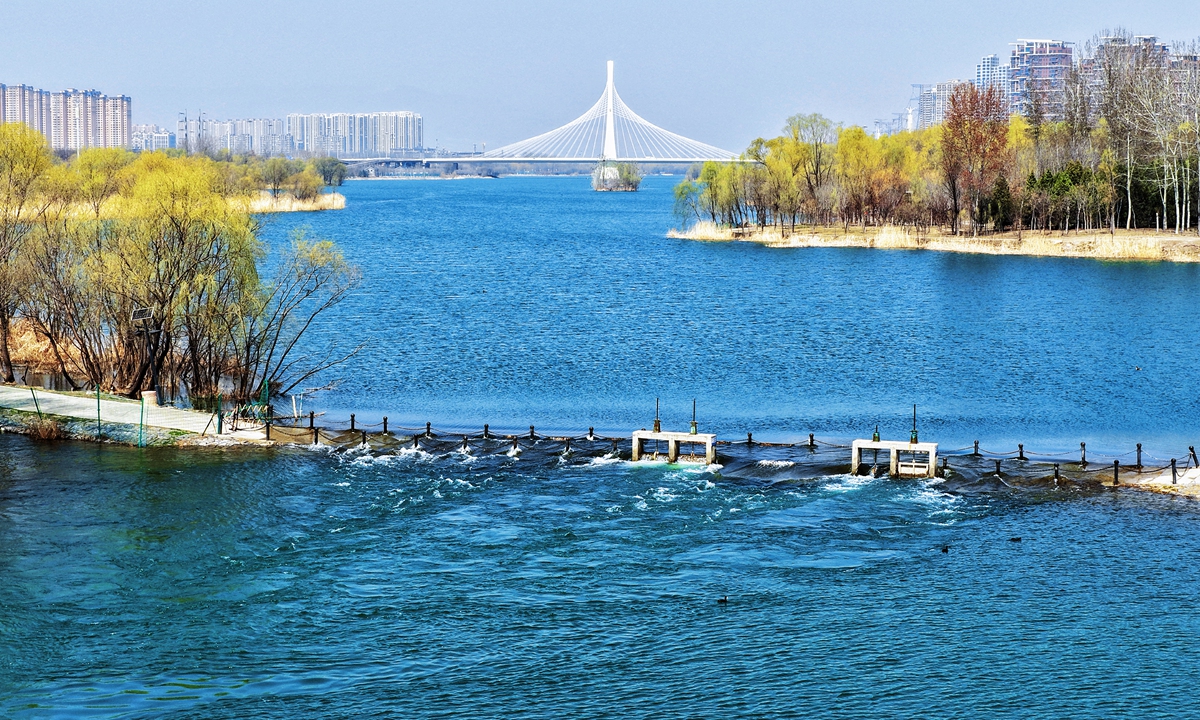
Photo shows a wetland park along the Fenhe River in Taiyuan, north China's Shanxi province. Photo: Courtesy of the publicity department of Taiyuan
The spirit of Shanxi merchants fuels entrepreneurial vitality
Three years ago, Mexican entrepreneur Mauro Arturo Salazar Zavala, known locally as Maodou, settled in Taiyuan with his wife, Yang Miao. It marked the start of his connection with the city. As Taiyuan undergoes industrial transformation, expands cross-border e-commerce, and grows its digital economy, it is emerging as a new hub linking inland China with domestic and international markets.
During his research, Maodou discovered that Taiyuan has assembled suppliers and specialty goods from all over Shanxi. Iconic local offerings including mature Shanxi vinegar, millet and other coarse grains, and intangible cultural heritage handicrafts align closely with consumer tastes in Latin America, boasting unique advantages for export. This inspired him to reframe his entrepreneurial approach and pivot to exporting Shanxi's distinctive products.
In his search for quality goods, Maodou also found a "key" to understanding Taiyuan and Shanxi -- the spirit of Shanxi merchants.
During the Ming and Qing Dynasties (1368-1911), Shanxi merchants set out from Taiyuan and expanded their markets through integrity, cooperation, and mutual support. They sold Shanxi products across China and overseas, building a vast commercial network that connected far-flung markets. Their legacy helped shape Taiyuan's open, inclusive, and outward-looking character.
Since the beginning of this year, Taiyuan has established a specialized cross-border digital industry park and promoted the integrated development of cross-border e-commerce and local specialty industrial clusters. The city continues to improve its foreign trade ecosystem and attract new talent to the sector.
"I can see Taiyuan's e-commerce and trade ecosystem is becoming ever more vibrant, with a rising number of practitioners. We exchange experiences, share resources, and support one another, just as the ancient Shanxi merchants did," Maodou remarked.
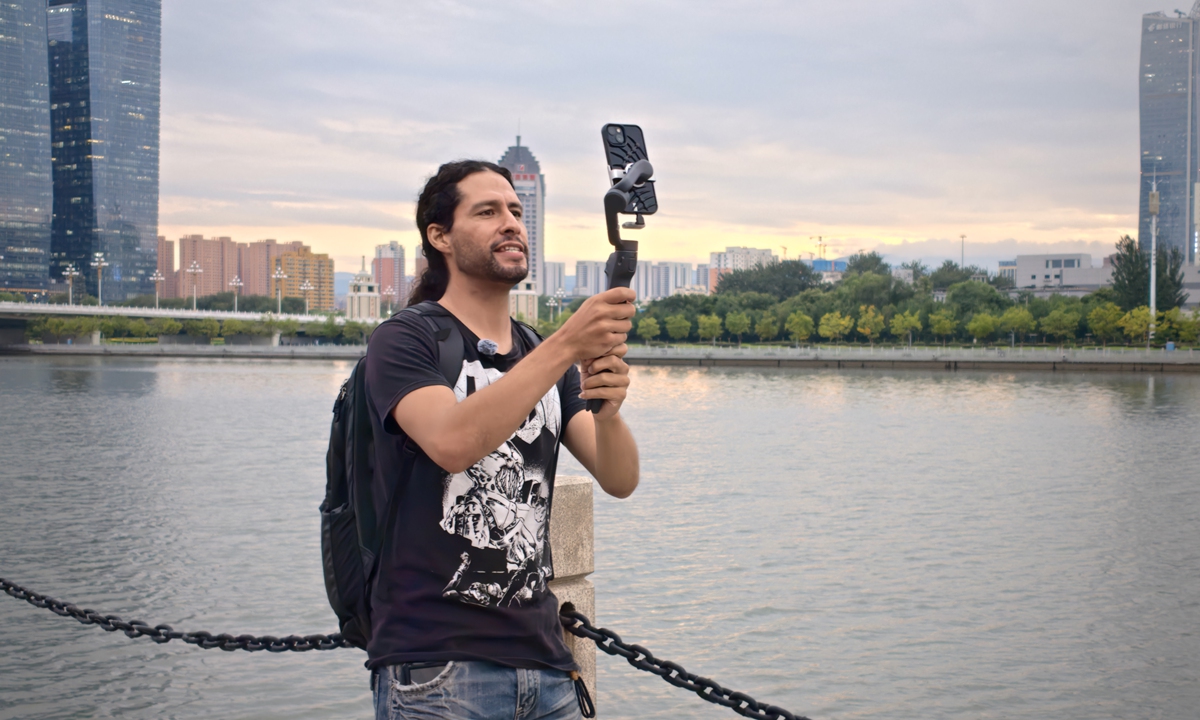
Mauro Arturo Salazar Zavala (Maodou) livestreams by the Fenhe River in Taiyuan, north China's Shanxi province. Photo: Ma Mengdi
Rich cultural heritage connects the city's past and present
For Andy and Maodou, Taiyuan's enduring appeal also lies in its rich cultural heritage. They have visited ancient buildings, museums, and historical neighborhoods, recording the city's transformation through their cameras while showing overseas audiences a more diverse and multifaceted Taiyuan.
At the Taiyuan Northern Qi Dynasty Mural Museum -- China's first mural museum built at the original site of the murals -- Maodou put on a virtual reality headset and immersed himself in the process of archaeological excavation and mural conservation.
"Modern technology allows visitors to gain a more direct and clearer understanding of burial murals," he said. "Technology has not diminished the weight of history. Instead, it has made this ancient civilization more tangible and accessible."
The museum is one example of Taiyuan's broader efforts to protect and make innovative use of its cultural heritage. The city currently has 2,237 above-ground cultural heritage sites and 541 sites under protection at various levels. It is also home to 108 museums.
Strolling along Bell Tower Street, visitors can see historical buildings alongside modern businesses, while traditional lanes have embraced new forms of commerce, including restaurants, live performances, and cultural and creative products.
"Today's Taiyuan has both an ancient history and a vibrant modern side. I'm particularly drawn to the way the city brings together quiet charm and youthful energy," Maodou said.
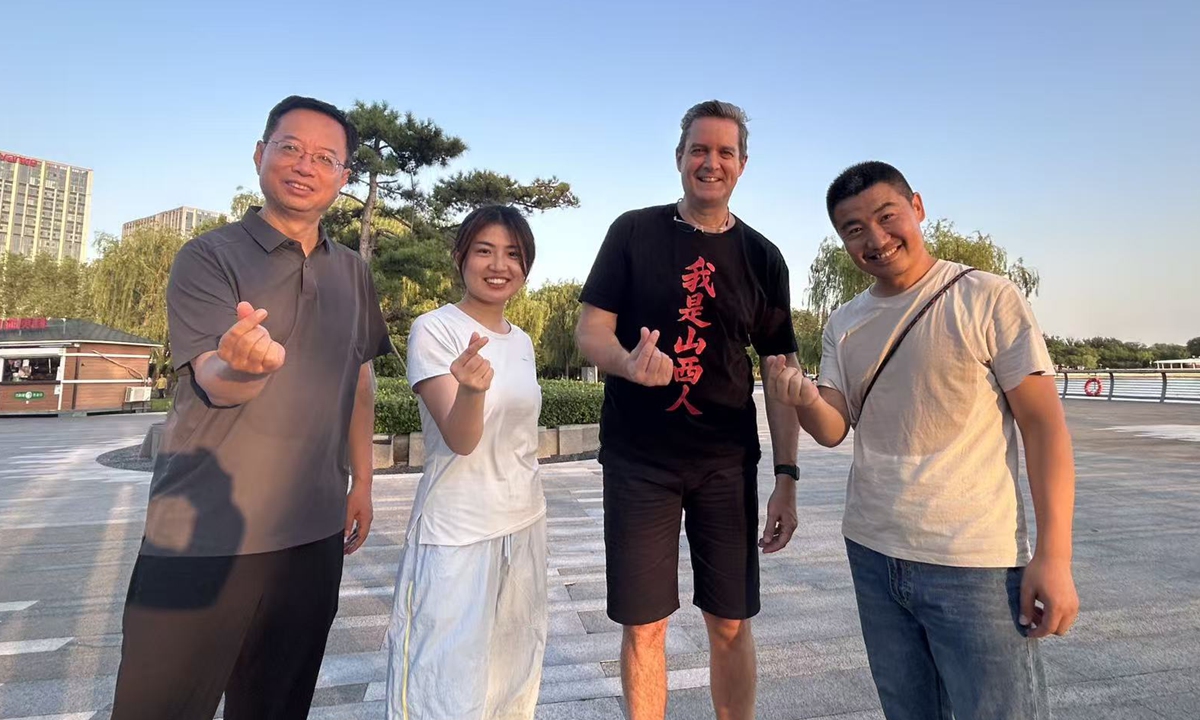
Andy (second from right) poses for a picture with his friends at the Fenhe Park in Taiyuan, north China's Shanxi province. (Photo courtesy of Andy)Andy (second from right) poses for a picture with his friends at the Fenhe Park in Taiyuan, north China's Shanxi province. Photo: Courtesy of Andy
A city renewed
The ecological renewal along the Fenhe River, new opportunities created by cross-border e-commerce, and the fresh vitality brought to ancient buildings and historical streets by cultural development -- all these changes are giving Taiyuan a new look.
For more than four decades, Andy has returned to Taiyuan time and again, sharing the city's story with foreign friends around him on each visit.
"I tell them they really should come to China and see Taiyuan for themselves," he said.
RELATED ARTICLES