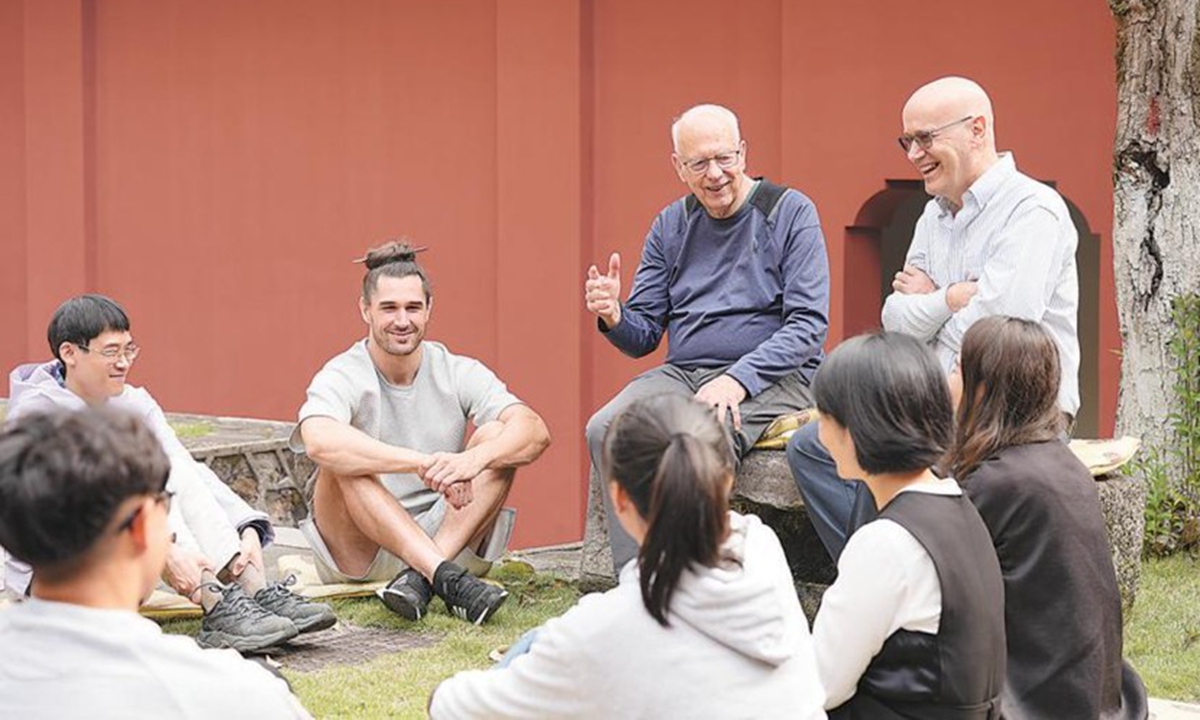
Peter Brian Ditmanson (first from right) talks with students during an English corner activity held at Yuelu Academy of Hunan University in Changsha, central China's Hunan province. (Photo/Xiang Songyang)
Changsha, the capital of central China's Hunan province, has kept both its name and its urban site unchanged for more than 3,000 years. Its streets and lanes carry centuries of history. In recent years, the city has worked to protect, preserve, and creatively revitalize its cultural heritage, finding new ways to integrate its rich legacy into modern urban life.
This distinctive cultural appeal has drawn people from around the world. Some come to study at its thousand-year-old academy; others experience how traditional culture has become part of everyday life; still others find fresh ways to tell Changsha's story to young audiences overseas. Their experiences offer fresh perspectives on how the ancient city preserves and passes on its cultural heritage.
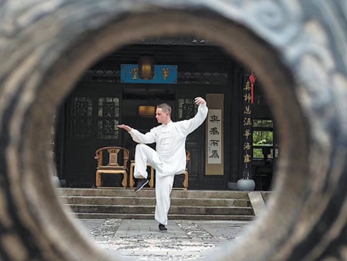
Martin Haase practices tai chi. (Photo courtesy of Martin Haase)
Keeping tradition alive, Yuelu Academy continues its scholarly legacy
American scholar Peter Brian Ditmanson began teaching at Yuelu Academy of Hunan University in 2017, where he studies the history of the Ming Dynasty (1368-1644) and leads a team translating historical texts related to the academy.
When translating inscriptions such as "Xue Da Xing Tian," he often weighed each phrase carefully, striving to convey their philosophical depth to readers from different cultural backgrounds.
In his view, Yuelu Academy is not a museum to be admired from afar, because its tradition of learning, teaching, and scholarship has never been interrupted. Its historical buildings retain their original character, while modern education continues the academy's ancient mission.
How can a living history be preserved? Ditmanson has taken part in an oral history project of Yuelu Academy, organizing nearly 200,000 Chinese characters of oral records from faculty and staff. This effort captures aspects of the academy's history that cannot be seen from its buildings alone.
This idea of "letting history continue to tell its story" also runs through Changsha's broader cultural initiatives. The city is developing itself as a "city of museums" and promoting public archaeology and hands-on experiences in cultural relic restoration, bringing history closer to the public.
Ditmanson believes history should always be approached with reverence. "We should not flatten a rich and profound history just to make it seem easy and entertaining to visitors," he said. In his view, the fact that people still study and pursue knowledge at a thousand-year-old academy, while ancient texts reach readers in different languages, means that history has never been confined to the past. He still sees himself as a "student": only after understanding the cultural spirit of the academy can he share it with more people and foster genuine exchange.
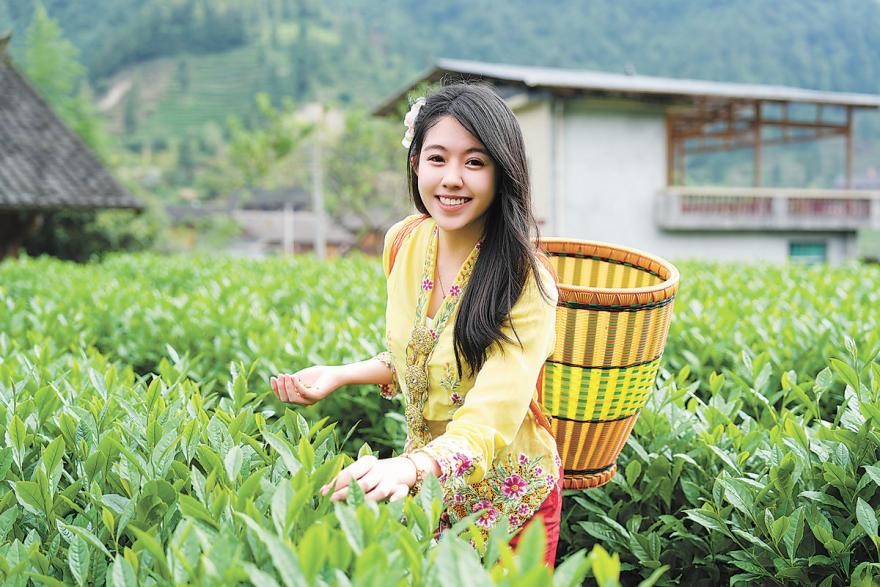
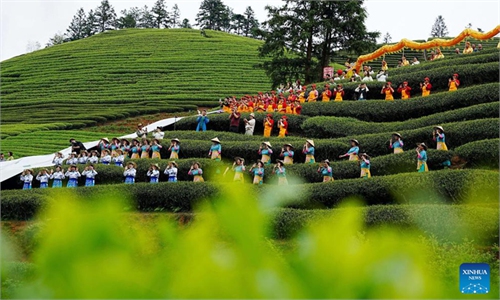
Samviontha (Wong Pek Hwa) Wong picks tea leaves. (Photo/He Xueyuan)
Sustaining living heritage, weaving traditional culture into everyday life
Canadian Martin Haase has lived in Changsha for nearly 20 years. Practicing tai chi daily is his routine. For him, culture's integration into modern life requires no elaborate ceremonies. "The true vitality of traditional culture lies precisely in these ordinary moments that unfold each day," he said.
Tai chi led Haase to traditional Chinese medicine (TCM), and he went on to study at Hunan University of Chinese Medicine, progressing from undergraduate to a master's and doctoral degrees. He now researches the international communication of TCM.
When Haase first arrived in Changsha, foreigners had limited access to systematic learning of TCM and tai chi. Now the situation has greatly improved: universities host tai chi workshops: associations run community classes, grassroots groups set up learning platforms, and districts showcase intangible cultural heritage. Fueled by short videos, it has become easier than ever for ordinary people to experience traditional culture.
Haase has evolved from a Tai Chi novice into a cultural narrator. When foreign friends ask where they can learn tai chi in Changsha, he not only translates for them but also manages social media accounts, explaining to global audiences the lifestyles and worldviews embedded in TCM.
To him, Changsha's greatest strength is its ability to turn esoteric practices -- once limited to close-knit communities of heritage bearers -- into everyday urban experiences open to all. "Savor a cup of tea, practice a tai chi routine, wander down an old lane -- traditional culture resides in the simple rhythms of daily living," he said.
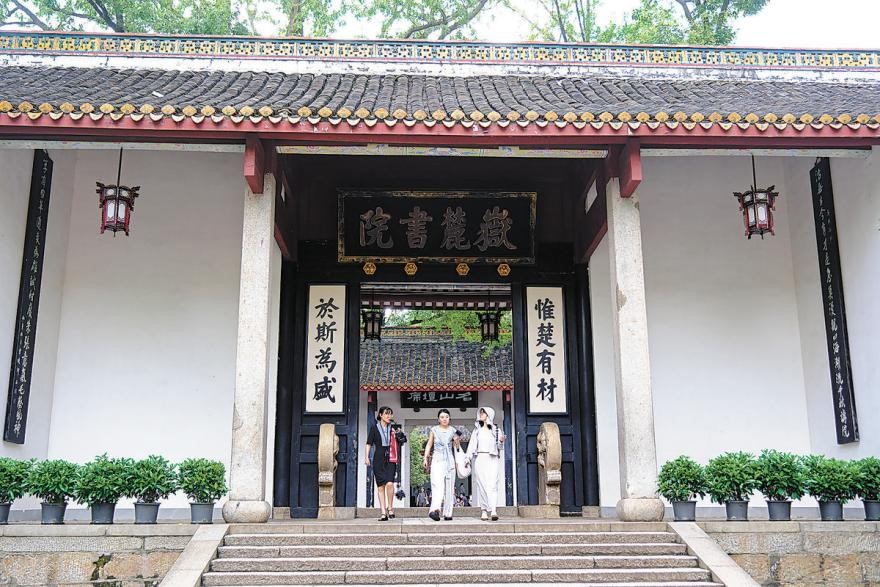
Tourists visit Yuelu Academy of Hunan University in Changsha, central China's Hunan province. (Photo/Lin Daohui)
Diverse forms of expression bring more people into storytelling
Standing beneath the ancient city wall at Tianxin Pavilion, Malaysian student Samviontha (Wong Pek Hwa) was reminded of her hometown, Malacca. "When you start with something people are already familiar with, history becomes easier to understand," she said.
In 2025, she came to study at Central South University of Forestry & Technology. Changsha's rich historical and cultural heritage and its youthful urban character soon became subjects for her videos, through which she introduces the city to audiences in Malaysia in the Malay language.
"Effective communication is not simply translating a piece of Chinese into another language," Samviontha said. Starting from her own experiences, she connects distinctive aspects of Changsha with things familiar to her audience. When introducing Changsha stinky tofu, for example, she draws a comparison with fermented stink beans in Malaysia, using a shared memory of taste to bridge the cultural distance. After visiting a museum of Hunan embroidery, she used Malay to describe the vivid, lifelike embroidery techniques, giving audiences in Southeast Asia a closer look at this form of Hunan intangible cultural heritage.
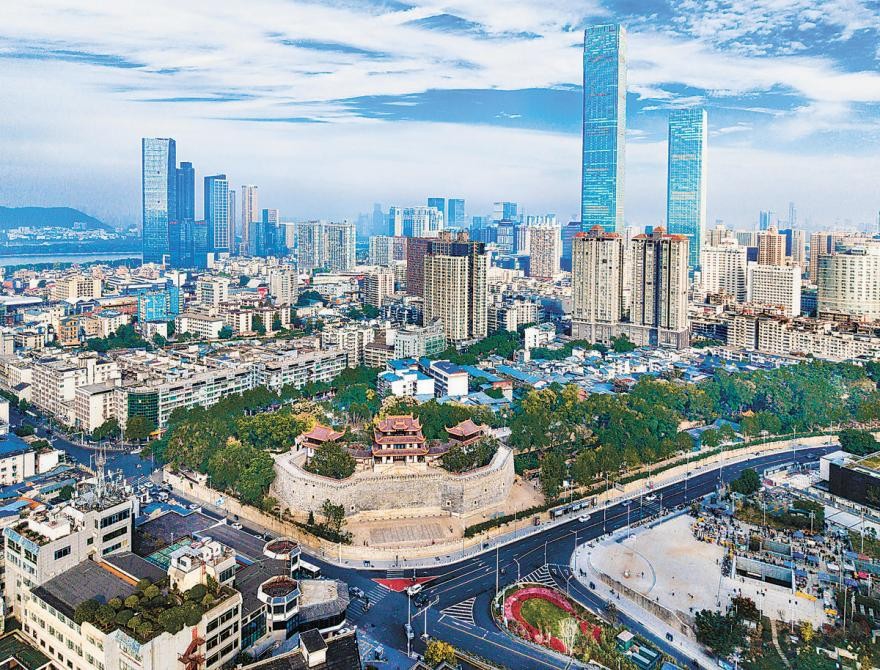
Photo shows Tianxin pavilion in Changsha, central China's Hunan province. (Photo/Peng Fuzong)
As a UNESCO Creative City of Media Arts, Changsha keeps broadening its avenues for international outreach. Samviontha and other young foreigners have been named "international communication ambassadors." A tiny shop, a local custom, or a traditional craft enjoying renewed popularity among young people -- to Samviontha, what makes Changsha captivating is how antiquity and innovation often land within the same frame. History does not fade amid the city's development.
Beneath lamplight, some pore over books; on street corners, others practice tai chi; still others relay tales of these humdrum lanes to friends afar. Though hailing from different nations, they all draw nourishment from the ancient city's cultural legacy and breathe fresh vitality into it. It is within these quiet, everyday moments that time-honored cultural traditions gain wider recognition, affection, and care.
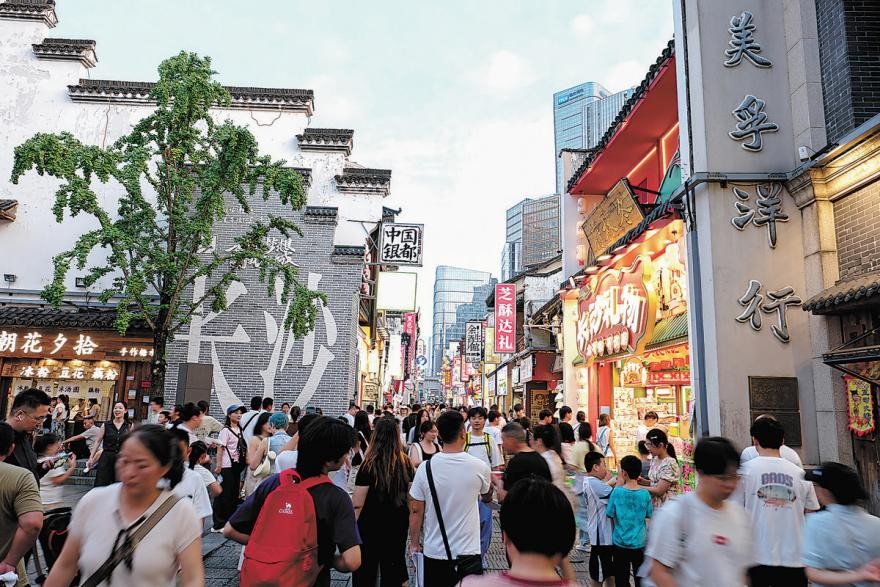
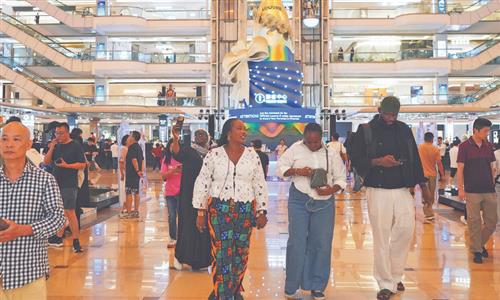
Tourists visit Taiping old street in Changsha, central China's Hunan province. (Photo/Lin Daohui)
RELATED ARTICLES