SPORT / MISCELLANY
Designer introduces China’s new Asian Games podium uniform look
Moonlight blue, stars and a new visual language
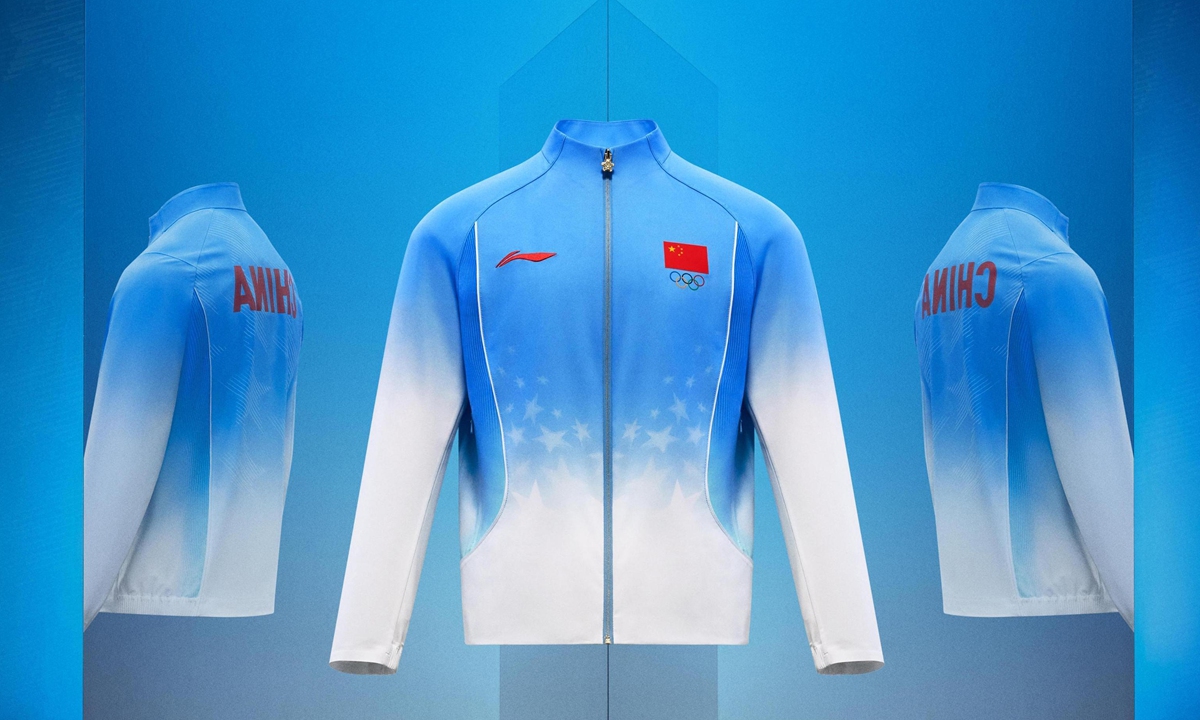
The Chinese delegation's podium uniform at the Aichi-Nagoya Asian Games Photo: Courtesy of the Chinese Olympic Committee
For decades, Chinese athletes standing on an Asian Games podium have often been associated with uniforms dominated by red, yellow and white. At the Aichi-Nagoya Asian Games, however, the visual picture will be markedly different as blue will take the center stage.The Chinese delegation's new podium uniform, unveiled in Beijing in August, uses the traditional Chinese color pinyue, or "moonlight blue," as its main tone, complemented by dynamic star patterns.
The design is built around the theme "Brilliant Starlight," with the stars intended to represent athletes who continue to emerge and shine on the international sporting stage.
The 20th Asian Games will officially open on Saturday in Japan's Aichi-Nagoya region and run through October 4.
For Zhang Yuzhe, the designer of the Chinese delegation's podium uniform, the change in color is more than a departure from convention.
The color, Zhang explained, resembles moonlight and was chosen for its softness and understated elegance. He also sees in it a broader image of contemporary China.
"Pinyue is soft and elegant, and it better reflects the temperament of being calm on the surface while keeping strength within, and having power hidden in softness," Zhang said.
At the same time, the color draws associations with the sky and the sea, which Zhang said reflect China's vast spaces and technological capabilities while conveying a sense of composure and confidence.
The color is only one part of the story.
Across the front and back of the uniform, streamlined stars overlap in different sizes and appear to rise upward. The effect is intended to create a sense of movement while expressing the idea of sporting achievements being passed from one generation to the next.
"The stars are not simply a decorative pattern," Zhang said. "They are connected with the theme of 'Brilliant Starlight,' the inheritance of the sporting spirit and the story of athletes constantly making breakthroughs."

Zhang Yuzhe Photo: Courtesy of Zhang Yuzhe
That idea of continuity was also reflected in the uniform's official unveiling in Beijing. The launch revisited imagery from the 1990 Beijing Asian Games, with former and current athletes participating in a symbolic handover of sporting glory across 36 years.For Zhang, looking back to 1990 was not simply an exercise in nostalgia.
He said the design team deliberately studied the podium uniforms used at the Beijing Asian Games, the first time China hosted one, when the emphasis was on clean, dignified visual expression.
"The craftsmanship of pursuing excellence and paying meticulous attention to detail in 1990 is something we greatly admire," Zhang said. "We have paid tribute to and carried forward this craftsmanship with a deeper and more persistent understanding of athletes' needs, seeking to uphold tradition while pursuing innovation."
That approach also reflects a broader question facing designers of national team apparel: How can a country communicate its cultural identity without simply decorating modern clothing with familiar symbols?
For Zhang, the answer lies in making cultural references part of the design logic rather than adding them as surface decoration.
"The truly important thing is not how many Chinese elements are used, but why these elements exist and whether they are connected with the product itself," he said.
Technology, meanwhile, is intended to be less visible but equally integral to the design.
The uniform incorporates temperature-control fiber technology using phase-change material derived from technology associated with the Chang'e-1 lunar probe.
According to the Chinese Olympic Committee, the material is incorporated into the fabric through melt spinning and is designed to help maintain athletes' comfort amid changing temperatures.
"Technology is the foundation of function, while culture is the spiritual foundation," Zhang said. "The two do not conflict."
Zhang said the technology serves the actual circumstances in which athletes wear the uniform, while the "Brilliant Starlight" theme gives that technology a cultural and emotional dimension.
"The two coexist as one, showing the world a contemporary China in which cultural heritage and innovative strength exist side by side," he said.
Ultimately, Zhang said he hopes overseas audiences will remember more than a color, a star or a particular piece of traditional symbolism.
"If only one impression could remain, I hope it would not be a particular pattern, but the spirit and appearance shown by Chinese athletes," he said. "They are confident and full of vitality. They pursue breakthroughs on the field while also having their own aesthetics and personalities."
The choice of moonlight blue and the rising-star motif, he added, is intended to convey "a contemporary China that is young, open and confident, combining design aesthetics with cutting-edge technology."
"I hope this clothing can help people see the confidence behind this color and feel a China that continues to move forward and innovate," Zhang said.
RELATED ARTICLES