Indian rupee under pressure, but it's not alarming for outward-oriented economy Illustration: Liu Xiangya/GT
The Indian rupee is approaching 96 to the US dollar. The depreciation pressure is worth keeping an eye on, but a weaker currency does not necessarily mean that something is wrong with the Indian economy.
The Indian rupee has dropped to its lowest value since late July. The latest pressure is coming largely from global markets. Higher oil prices, rising US Treasury yields and expectations of a stronger dollar are all working against the currency. These forces are closely linked, adding to volatility in the rupee-dollar exchange rate.
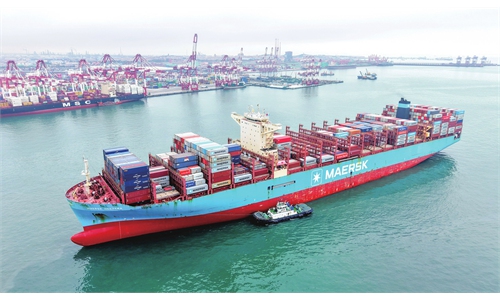
Oil prices offer a clear example of how global markets can affect the rupee. India is a large oil importer. Higher oil prices typically increase India's import bill, put pressure on the current account, and increase demand for dollars from oil companies. This can add to pressure on the rupee. For an economy that is becoming more integrated with global markets, such exposure is increasingly part of the picture.
India, however, is not without a buffer. Its foreign-exchange reserves reached a record $785.7 billion in the week to September 4, giving the Reserve Bank of India room to smooth excessive volatility in the rupee if it chooses to do so.
The rupee was described by some Indian media outlets in May as Asia's worst-performing currency. But if the Indian economy continues to hold up, there may be less reason to be overly concerned about the part of the rupee's depreciation driven by external factors. India's economy has remained on a strong growth track despite higher energy prices, with real GDP rising 7.8 percent year-on-year in the April-June quarter. This suggests that the rupee's weakness, on its own, does not point to a loss of economic momentum.
As India's economy grows rapidly, manufacturing has become an increasingly important part of its development, while the economy is becoming more deeply connected to global markets through trade and investment. India's economy is, in many ways, becoming more outward-oriented. The more connected an economy becomes to the world, the more it feels the world's ups and downs. That is simply part of the process. Learning to live with such volatility is part of becoming a more internationalized economy.
There may be no need to read too much into such volatility. But as India's economy moves forward, becoming more closely connected to international supply chains and playing a deeper role in regional and world markets, it may also become more important to get better at dealing with global markets - managing volatility, smoothing excessive swings and building economic resilience.
India's economy is becoming more outward-oriented at an accelerating pace, and that can be a positive development. In this process, deeper trade and economic links with China are difficult to overlook. Indian exports to China rose 52.35 percent year-on-year in August, a notable increase that suggests there is still scope for further development in China-India economic ties. If this potential is put to better use, it could provide another source of support for India's outward-oriented growth and add to the resilience of its economy.
In an uncertain global environment, economic resilience can come from a broader range of export markets, more foreign investment and closer financial cooperation. China and India have room to deepen the complementarity between their industrial supply chains. As two large developing economies, development is a shared interest. The more uncertain the external environment becomes, the more valuable such economic links can be.
During the recently concluded BRICS Summit, China and India reaffirmed the direction of their bilateral relationship. In the months ahead, it will be worth watching how this translates into more concrete areas of economic cooperation. This is a process worth following - and worth looking forward to.
For India, economic resilience comes from deeper connections with the world. Closer economic ties with China can be part of that process, adding to the resilience of an outward-oriented economy.
The author is a reporter with the Global Times. bizopinion@globaltimes.com.cn
RELATED ARTICLES