China’s strong H1 growth showcases tech prowess; many Indian firms eye JVs with Chinese counterparts in multiple tech areas: Indian scholar
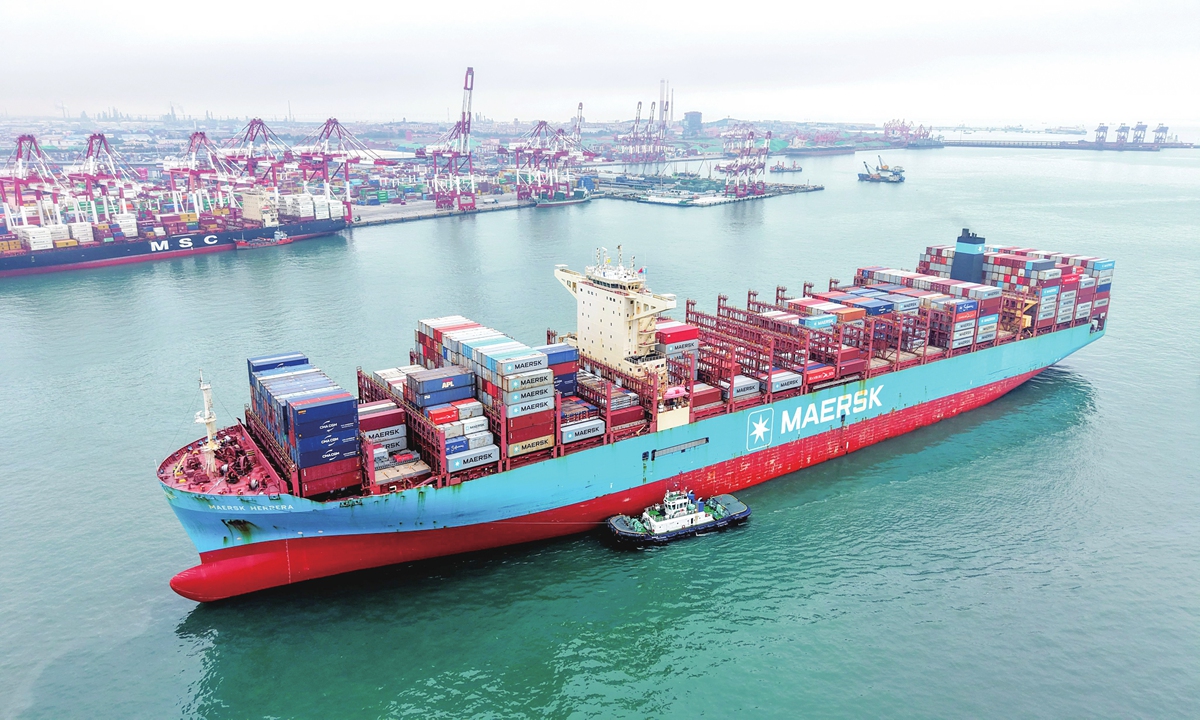
A cargo ship loaded with foreign trade containers enters a port in Qingdao, East China's Shandong Province, on July 16, 2026. Photo: VCG
Editor's Note:
China's GDP grew up by 4.7 percent in the first six months of the year, demonstrating its resilience and vitality. What's the main drivers behind the figures and what's the significance of China's stable economic growth for the global economy? Sudheendra Kulkarni (Kulkarni), a renowned Indian scholar and the founder of India's Forum for a New South Asia, told the Global Times (GT) that China's better-than-expected growth rate highlights its hard-core tech strength and many Indian companies are waiting to form joint ventures (JVs) with Chinese counterparts.

Sudheendra Kulkarni Photo: courtesy of Kulkarni
GT: How do you view China's overall economic performance in the first half of 2026?
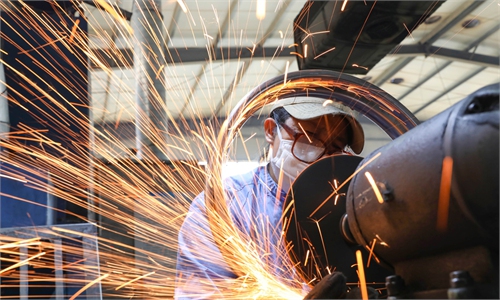
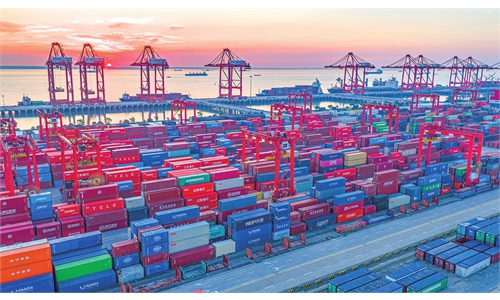
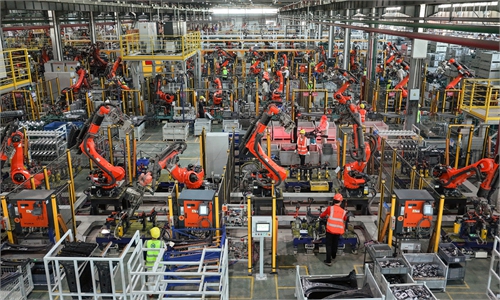
Kulkarni: China's GDP grew up by 4.7 percent in the first six months of the year, placing the Chinese economy within the government's full-year growth target range of 4.5-5.0 percent. Overall, China has maintained macroeconomic stability and continued rapid industrial upgrading. Exports are buoyant. Advanced manufacturing - including the production of industrial robots, 3D-printing equipment, and lithium-ion batteries - is performing very well. Innovation-related investment is outperforming conventional investment.
Last week, the IMF downgraded its global growth outlook for 2026 while revising China's projection upward from 4.4 percent to 4.6 percent. This shows that the Chinese economy is resilient and is acting as a stabilizing force for the world.
China's resilience is significant because the world economy has faced strong headwinds in 2026, mainly due to the US-Israel war on Iran - higher global oil and gas prices, weaker demand from some trading partners, and overall geopolitical uncertainty. This shows that China has demonstrated a greater capacity than expected to absorb external shocks.
China can indeed be described as a stabilizing anchor because, at 4.7% growth, it remains a major market for energy, minerals, agricultural commodities, intermediate goods, capital equipment and consumer products. Chinese production capacity in machinery, electronics, batteries, solar equipment, telecommunications, and other manufactured goods supports the economies of many countries. Chinese goods compete well on quality while being lower-cost. This reduces the capital required for energy transition, automation, and digitalization in developing economies.
GT: Recent commentary in the Western media have hyped the "China Shock 2.0" narrative, framing China's rise in high-tech sectors - such as AI and new energy - as a threat to the global economy. How do you respond to this characterization? Is this narrative a misreading of China's growth dynamics?
Kulkarni: The propaganda about "China Shock 2.0" is a Western lie. The Western media and political establishment habitually cast anything that challenges Western dominance as a threat to the global economy. The irrefutable fact is that China is outperforming the West in futuristic technologies - electric vehicles, batteries, solar products, robotics and automation, hi-tech machinery, and digital hardware. Even in artificial intelligence (AI), China is making rapid progress. Most of this progress is driven by indigenous research and development.
China is moving up the value chain rather than simply expanding labor-intensive exports. Western Europe is lagging in all these areas at an alarming rate. The US, too, is worried by China's advances in new industries, although it is still ahead of China in AI and some critical technologies.
Two more points need to be made here. First, rapid modernization of China's economy has fueled strong domestic demand for high-tech industrial goods. China has become the world's largest consumer market for electric vehicles, renewable-energy systems, digital services, and industrial automation. It is also a major investor in power grids, data infrastructure, urban transport, and advanced manufacturing.
Second, China's production capacity has delivered affordable global public benefits. It has lowered prices for batteries, solar panels, electric vehicles, and grid equipment. It has reduced the cost of decarbonization, improved access to clean technology, and accelerated electrification in developing economies. China has not prevented Western countries from competing on fair terms in these industries. Therefore, they should stop complaining about "China Shock 2.0."
GT: How do you view the positive momentum in China-India bilateral economic and trade relations? What specific areas do you think the two countries can strengthen cooperation?
Kulkarni: The Indian government's recent steps to improve bilateral economic and business relations with China were long overdue. Its approval of the Dixon-Vivo JVs is a welcome move. It will manufacture smartphones and other electronic devices in India. Local manufacturing will benefit the Indian economy and promote the integration of Chinese technology with Indian production expertise.
However, this is only a small step. Much more is needed to fully normalize India-China cooperation in business and the economy in ways that benefit both countries. India has a large market for consumer and capital goods. China has proven industrial strengths in these areas. There can be many more JVs in electronics and component manufacturing, including display and camera modules, printed circuit board assemblies, power electronics, battery packs, and semiconductor packaging, assembly, and testing.
Many Indian companies are waiting to form joint ventures with Chinese counterparts across the green energy ecosystem - electric vehicles and batteries, charging infrastructure, recycling and energy storage systems, renewable energy and grid infrastructure, smart meters, transmission systems, and green hydrogen equipment. As is well known, India wants to reduce its dependence on imported fossil fuels, while taking steps to green its entire economy.
India's appetite for infrastructure development - in ports, airports, expressways, tunnels, bridges, railway modernization, etc. - is huge. China, the world leader in infrastructure, is our best partner. Lastly, agriculture and agro-processing in India are crying out for modernization.
Besides JVs, India should also permit 100 percent Chinese investments in enterprises in areas where the benefits to the Indian economy are obvious. There is no need for preferential treatment. The Indian government should invite Chinese investments on the same terms as those offered to investments from Western countries. The trade between China and India should be more balanced. Chinese consumers and industries would benefit by importing more products they need and which India can offer.
I have no doubt that all these measures will create significant employment in India, which is the need of the hour. The most urgent and important facilitator for realizing all these possibilities is the full restoration of flights, the stationing of media personnel, and the hassle-free issuance of visas by the Indian government to Chinese businessmen, academics, artists, and tourists.
GT: China has prioritized the cultivation of new quality productive forces in drafting its 15th Five-Year Plan (2026-30). From a global perspective, what opportunities does this innovation-driven transition present multinational enterprises and the world economy?
Kulkarni: China's advances in developing new quality productive forces are a boon to the global economy, not a threat. They are playing a crucial role in modernizing China's domestic economy.
China's 15th Five-Year Plan provides strong impetus for the accelerated promotion of new productive forces - AI, robotics, digital twins, and other future industries. The most promising areas for adopting these technologies in developing countries in Asia, Africa and Latin America are innovation and upgrading of conventional sectors such as steel, chemicals, and automobiles.
Simultaneously, developing economies can also capitalize on these opportunities in new areas such as next-generation batteries, smart grids, as well as solar, wind and green hydrogen energy generation. These advanced technologies cannot be produced by all countries. Large economies like China and India have certain advantages. What is needed is a new form of non-exploitative global economic engagement that enhances cooperation and mutual benefit, especially for countries lagging behind. This requires strong Global South unity, anchored in India-China solidarity.
RELATED ARTICLES