ARTS / CULTURE & LEISURE
Truck driver Sun Feiqun never leaves writing behind
Reading along the way
Editor's Note:
In an age of information overload, reading remains a necessary channel to invigorate the mind, provide inspiration and cultivate virtue. Whether it is childhood enlightenment or the pursuits of adulthood, everyone's reading journey carries unique emotions and life experiences. The Global Times has specially launched the "100 Avid Readers" series, inviting representatives from various fields to share their connections with books, stories of growth and sparks of thought.
In this installment, we meet truck driver and writer Sun Feiqun, who has kept reading amid the long hours on the road.
For much of Sun Feiqun's childhood, books were not easy to come by.
Born in 1979 and raised in a rural village in East China's Anhui Province, Sun had little access to books beyond his school textbooks. Even the comic books that many of his classmates owned were difficult for his family to afford, despite the fact that at the time a comic book costed less than 1 yuan ($0.15), he recalled.
There was little time to read, either. After school, Sun helped with farm work, cutting grass for the pigs, herding cattle, picking vegetables, harvesting rice and planting wheat.
"There was simply no time for homework, let alone extracurricular reading," Sun recalled.
Now 46, Sun is still working as a truck driver in Ningbo, East China's Zhejiang Province. He has spent 16 years on the road, covering more than 500,000 kilometers and traveling through more than 50 cities.
In July, Sun was invited to the 34th National Book Trade Fair in Hangzhou to share his experiences of reading and writing at a session on New Popular Literature and Art. There, he appeared alongside writers including Wang Jibing, who had received the poetry prize at the ninth Lu Xun Literature Prize. The session also brought together other grassroots writers and reading enthusiasts to talk about how reading and writing fit into their working lives.
A habit that stayed
Much of Sun's reading still takes place in the time left over from work. But some of the books he encountered as a child have stayed with him for decades.
Among them was a martial arts novel that he had read over and over again simply because there was little else to find.
He came to Romance of the Three Kingdoms after leaving school. Once he got hold of the book, he read it from the beginning to the end many times.
The stories of war, power and changing alliances interested him, so did something else: the poems scattered throughout the novel, often appearing after a story came to an end.
"I would pay particular attention to those poems," he said.
That early interest in poetry eventually became a lasting part of his reading life.
After leaving school, Sun spent his late teens and twenties moving from one job to another. He worked at construction sites, in factories and at hotels, carrying cement, working with steel, making clothes, operating machines and serving food.
With little formal education, he said he had no clear idea of what he wanted to do with his life at the time.
"I was like duckweed drifting with the current," he said.
In 2010, Sun bought his first truck for nearly 60,000 yuan, a significant investment at the time. Before becoming a truck driver, his monthly income had never exceeded 2,300 yuan.
Driving gave him a more stable way to make a living. He began transporting manufactured goods between factories and Ningbo's port, gradually settling into a life shaped by long-distance trips and irregular working hours.
It was during those years on the road that reading became part of the time he had to himself. He mainly reads poetry of the Tang (618-907) and Song (960-1279) dynasties, during which literature flourished in ancient China. His favorite poets include Li Bai, Du Fu, Li Shangyin and Lu You. He does not have a particular preference for one style.
"If the poem is good, I will read it again and again," he said.
What draws him to classical Chinese poetry is its brevity and precision.
"They are short, but very well crafted," he said. "The fact that they have been passed down for so long must have a reason."
His reading has also followed his son's education.
His son is now in high school. Since the boy was in primary school, Sun has often read the classical poems and prose assigned in his Chinese textbooks before asking his son to recite them.
"Before I check whether he has memorized them, I memorize them first," Sun said.
The habit has continued through high school. Sun estimates that he has read more than 80 percent of the Tang and Song poetry included in his son's textbooks.
For Sun, reading has become a way to keep learning after leaving school at an early age, while also laying the groundwork for his own writing later in life.
Roads into poetry
His own writing came much later.
After he had begun making long-distance trips as a truck driver in 2015, Sun started writing lyrics. He often sang while driving to keep himself awake, and gradually wondered whether he could write a song himself.
"I thought if other people can write popular songs, maybe I can try too," he said.
He began writing whenever he had the time. Some ideas went into the notes app on his phone, others were sent to himself on WeChat or written down on scraps of paper.
The lyrics gave him a place to put his thoughts and feelings about work, loneliness and everyday life.
Over nearly a decade, he wrote more than 30 sets of lyrics. But there was a practical problem: lyrics alone do not make a finished song. They still need music, arrangement, recording and production, all of which cost money.
Poetry seemed more accessible. A poem could stand on its own once the words were finished. It also suited Sun's fragmented schedule. He did not need to set aside long stretches of uninterrupted time to write.
In 2025, Sun learned that the Xilin Poetry Festival in Ningbo was calling for submissions. He decided to give poetry a try and submitted Truck Under the Moonlight, a poem drawn from his years on the road. He has since become a contracted poet with the Chinese Poetry.
"Loneliness was where my writing began, and the landscapes and lives I encountered on the road became the material for my poetry," he told the Global Times.
Sun does not describe himself as someone with a fixed writing routine. He does not set out to write every day or plan his themes in advance.
"If something moves me, I'll write about it," he said.
In an age of information overload, reading remains a necessary channel to invigorate the mind, provide inspiration and cultivate virtue. Whether it is childhood enlightenment or the pursuits of adulthood, everyone's reading journey carries unique emotions and life experiences. The Global Times has specially launched the "100 Avid Readers" series, inviting representatives from various fields to share their connections with books, stories of growth and sparks of thought.
In this installment, we meet truck driver and writer Sun Feiqun, who has kept reading amid the long hours on the road.
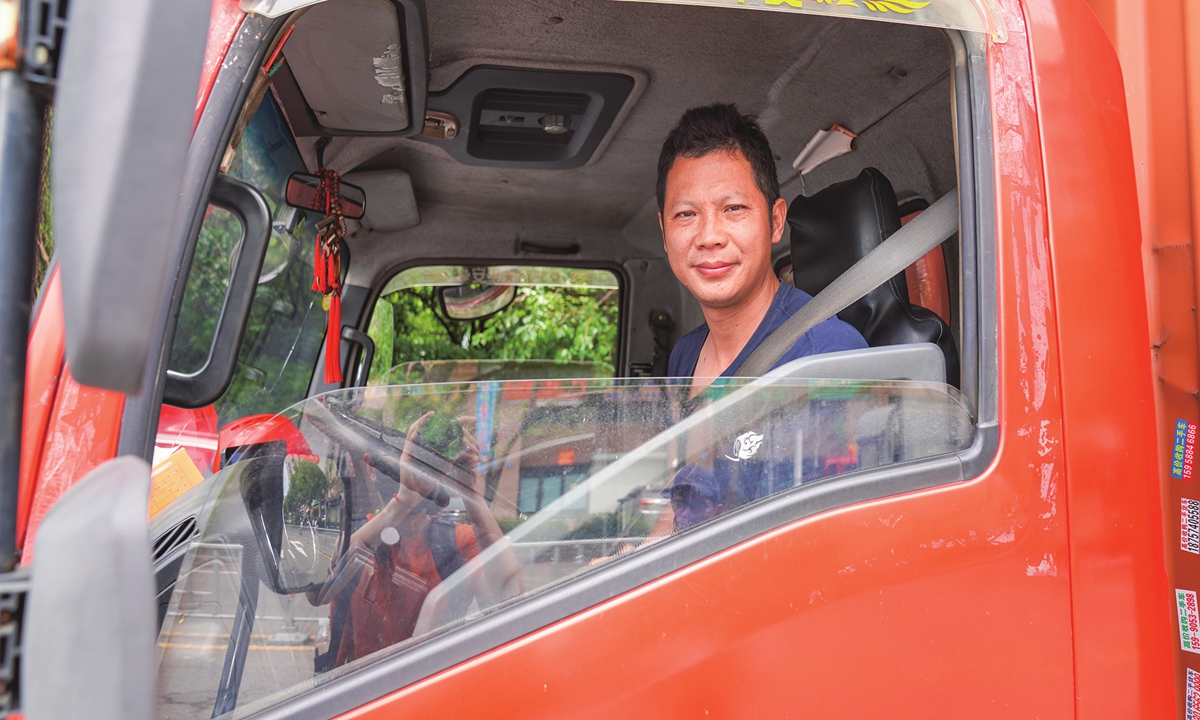
Sun Feiqun Photo: Wang Hongye/Wenyi Bao
For much of Sun Feiqun's childhood, books were not easy to come by.
Born in 1979 and raised in a rural village in East China's Anhui Province, Sun had little access to books beyond his school textbooks. Even the comic books that many of his classmates owned were difficult for his family to afford, despite the fact that at the time a comic book costed less than 1 yuan ($0.15), he recalled.
There was little time to read, either. After school, Sun helped with farm work, cutting grass for the pigs, herding cattle, picking vegetables, harvesting rice and planting wheat.
"There was simply no time for homework, let alone extracurricular reading," Sun recalled.
Now 46, Sun is still working as a truck driver in Ningbo, East China's Zhejiang Province. He has spent 16 years on the road, covering more than 500,000 kilometers and traveling through more than 50 cities.
In July, Sun was invited to the 34th National Book Trade Fair in Hangzhou to share his experiences of reading and writing at a session on New Popular Literature and Art. There, he appeared alongside writers including Wang Jibing, who had received the poetry prize at the ninth Lu Xun Literature Prize. The session also brought together other grassroots writers and reading enthusiasts to talk about how reading and writing fit into their working lives.
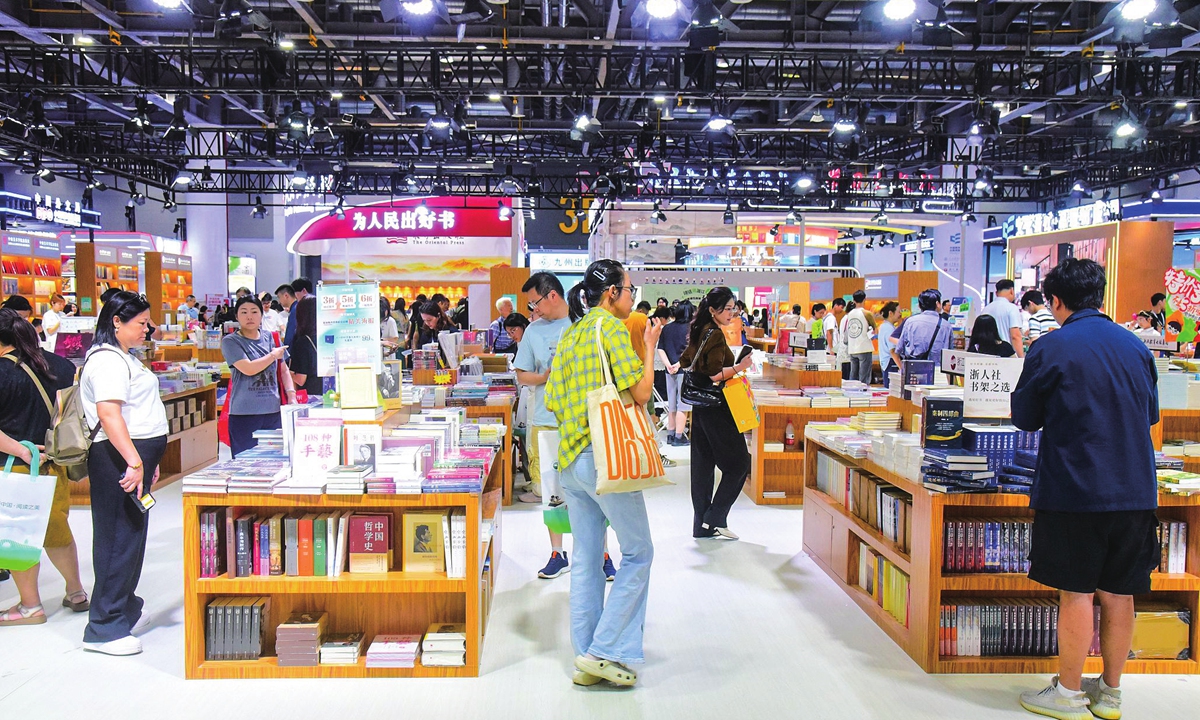
Visitors shop for books at the 34th National Book Fair in Hangzhou, East China's Zhejiang Province on July 25, 2026. Sun Feiqun took part in a reading event at the fair. Photo: VCG
A habit that stayed
Much of Sun's reading still takes place in the time left over from work. But some of the books he encountered as a child have stayed with him for decades.
Among them was a martial arts novel that he had read over and over again simply because there was little else to find.
He came to Romance of the Three Kingdoms after leaving school. Once he got hold of the book, he read it from the beginning to the end many times.
The stories of war, power and changing alliances interested him, so did something else: the poems scattered throughout the novel, often appearing after a story came to an end.
"I would pay particular attention to those poems," he said.
That early interest in poetry eventually became a lasting part of his reading life.
After leaving school, Sun spent his late teens and twenties moving from one job to another. He worked at construction sites, in factories and at hotels, carrying cement, working with steel, making clothes, operating machines and serving food.
With little formal education, he said he had no clear idea of what he wanted to do with his life at the time.
"I was like duckweed drifting with the current," he said.
In 2010, Sun bought his first truck for nearly 60,000 yuan, a significant investment at the time. Before becoming a truck driver, his monthly income had never exceeded 2,300 yuan.
Driving gave him a more stable way to make a living. He began transporting manufactured goods between factories and Ningbo's port, gradually settling into a life shaped by long-distance trips and irregular working hours.
It was during those years on the road that reading became part of the time he had to himself. He mainly reads poetry of the Tang (618-907) and Song (960-1279) dynasties, during which literature flourished in ancient China. His favorite poets include Li Bai, Du Fu, Li Shangyin and Lu You. He does not have a particular preference for one style.
"If the poem is good, I will read it again and again," he said.
What draws him to classical Chinese poetry is its brevity and precision.
"They are short, but very well crafted," he said. "The fact that they have been passed down for so long must have a reason."
His reading has also followed his son's education.
His son is now in high school. Since the boy was in primary school, Sun has often read the classical poems and prose assigned in his Chinese textbooks before asking his son to recite them.
"Before I check whether he has memorized them, I memorize them first," Sun said.
The habit has continued through high school. Sun estimates that he has read more than 80 percent of the Tang and Song poetry included in his son's textbooks.
For Sun, reading has become a way to keep learning after leaving school at an early age, while also laying the groundwork for his own writing later in life.
Roads into poetry
His own writing came much later.
After he had begun making long-distance trips as a truck driver in 2015, Sun started writing lyrics. He often sang while driving to keep himself awake, and gradually wondered whether he could write a song himself.
"I thought if other people can write popular songs, maybe I can try too," he said.
He began writing whenever he had the time. Some ideas went into the notes app on his phone, others were sent to himself on WeChat or written down on scraps of paper.
The lyrics gave him a place to put his thoughts and feelings about work, loneliness and everyday life.
Over nearly a decade, he wrote more than 30 sets of lyrics. But there was a practical problem: lyrics alone do not make a finished song. They still need music, arrangement, recording and production, all of which cost money.
Poetry seemed more accessible. A poem could stand on its own once the words were finished. It also suited Sun's fragmented schedule. He did not need to set aside long stretches of uninterrupted time to write.
In 2025, Sun learned that the Xilin Poetry Festival in Ningbo was calling for submissions. He decided to give poetry a try and submitted Truck Under the Moonlight, a poem drawn from his years on the road. He has since become a contracted poet with the Chinese Poetry.
"Loneliness was where my writing began, and the landscapes and lives I encountered on the road became the material for my poetry," he told the Global Times.
Sun does not describe himself as someone with a fixed writing routine. He does not set out to write every day or plan his themes in advance.
"If something moves me, I'll write about it," he said.
RELATED ARTICLES