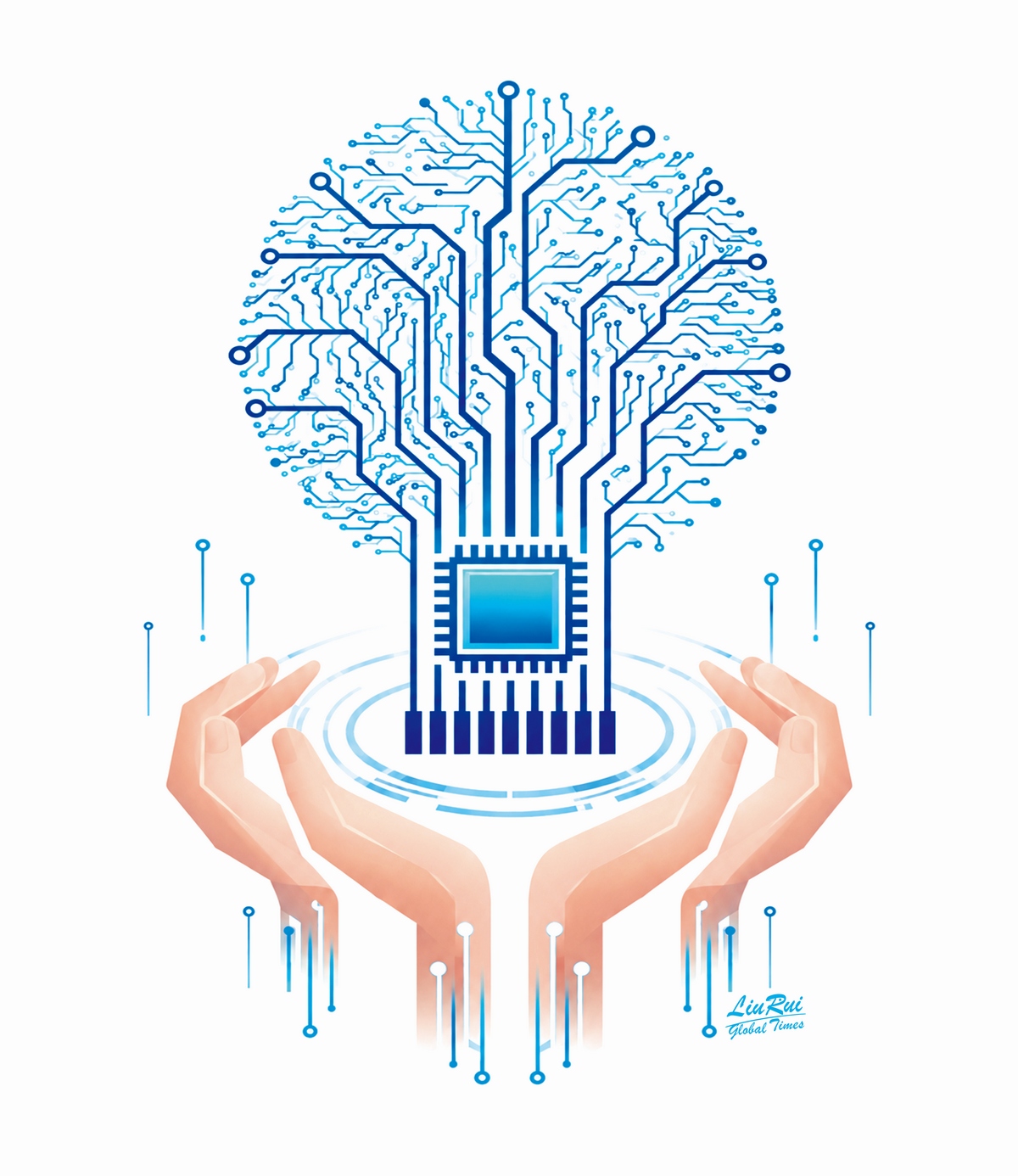
Illustration:Liu Rui/GT
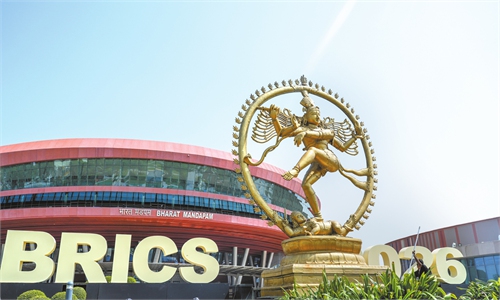
When SEMICON India 2026 opened in New Delhi on Thursday, India's semiconductor story appeared to be entering a new phase. One word keeps coming up: ecosystem. From silicon to systems, India's semiconductor industry is widening its horizons.
As the world moves deeper into the era of artificial intelligence (AI), semiconductors are becoming increasingly important to the global economy, underpinning nearly everything from electronics to high-tech manufacturing. For India, which is seeking to build a stronger manufacturing base, chips are not only a reflection of progress in manufacturing, but also a foundation for industries such as electronics and automobiles that rely on mature-node chips. SEMICON offers a useful window into how far India's semiconductor industry has come and, more importantly, where it is heading. That is what the outside world is watching closely.
The three-day conference and exhibition, running from Thursday to Saturday, is organized around the theme "Silicon to Systems: Building the Ecosystem." The theme reflects the breadth of the semiconductor value chain, from silicon, a foundational material for semiconductor manufacturing, to complete systems.
India has already begun commercial chip production, but its focus clearly extends beyond chip manufacturing. The country is looking to build a broader semiconductor ecosystem. Speaking at the inauguration of SEMICON, Indian Prime Minister Narendra Modi said that the ecosystem is expanding rapidly, creating new opportunities for innovation, investment and growth, according to media reports.
This broader focus suggests that India's semiconductor industry may be entering a new stage of development. Given that India is still relatively new to semiconductor manufacturing, building a broader ecosystem may also bring greater engagement with the global industry, through trade, investment and cooperation across the supply chain.
This year's exhibition offers a glimpse of what this could mean in practice. More than 500 companies from more than 20 countries are taking part, according to the SEMICON India website, showcasing technologies, innovations and solutions across the entire microelectronics ecosystem. Such international participation reflects the trade and investment opportunities in India's semiconductor and related industries, while also pointing to the potential for India to forge deeper links with global supply chains as it continues to build out its semiconductor ecosystem.
Semiconductors may be a strategic industry, but building a semiconductor ecosystem could also call for continued openness and closer integration with global supply chains. The faster India moves to develop its semiconductor industry, the more important those global links may become. This could be particularly relevant to upstream and downstream industries and mature-node chip manufacturing.
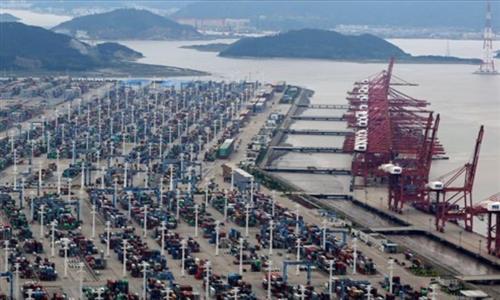
This also makes economic sense. Semiconductors are part of a long and highly internationalized supply chain, spanning raw materials, manufacturing and downstream applications, with economies contributing to different parts of the process and working together across borders. Across Asia, a cross-border semiconductor ecosystem is continuing to develop, with economies in the region becoming increasingly connected to one another through this wider supply chain.
Several economies with advanced manufacturing technologies already have a strong presence in this supply chain, including China and South Korea, while some Southeast Asian economies are also developing rapidly. India could find its place in this wider network and deepen cooperation with other economies across the semiconductor supply chain.
Some may view this through a geopolitical lens, seeing India's efforts to build a semiconductor ecosystem as bringing it into greater competition with economies including China. But from a practical economic perspective, cooperation across the supply chain could also create a more complementary industrial ecosystem. The level of international participation at SEMICON India 2026 offers an early glimpse of how such an ecosystem could develop.
The rapid growth of AI is creating new demand for consumer electronics, which could also lift demand for mature-node chips. Asia's semiconductor ecosystem is large and diverse enough to accommodate more economies across the supply chain. For India, that leaves room to build its own strengths while working with economies such as China.
The author is a reporter with the Global Times. bizopinion@globaltimes.com.cn