ARTS / THEATER
ROK Ambassador calls for ‘new impression’ for cultural ties on as co-produced Verdi opera ‘Rigoletto’ premieres in Beijing
By Published: Sep 18, 2026 06:20 PM

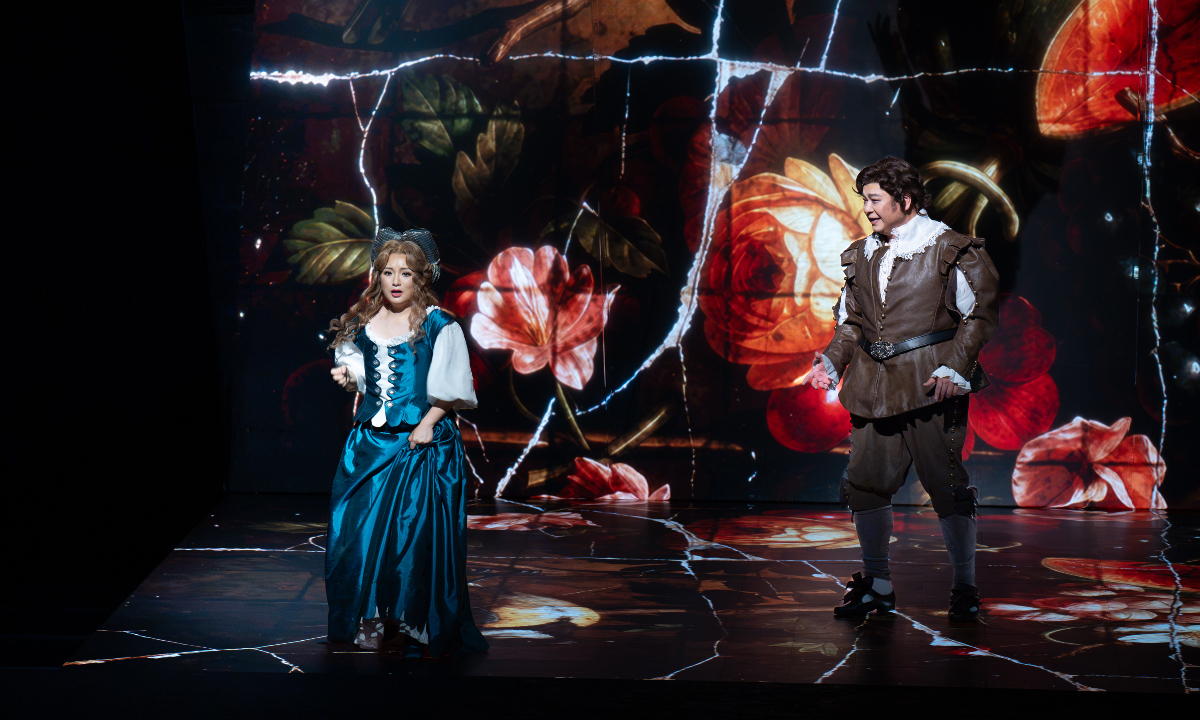
Promotional material for Rigoletto Photo: Courtesy of NCPA
As the haunting melodies of Giuseppe Verdi's Rigoletto filled the National Centre for the Performing Arts (NCPA) on Thursday evening, Ro Jae Hun, ambassador of the Republic of Korea to China, emphasized the timing as a pivotal moment for bilateral cultural exchanges. The performance marked the China premiere of the first-ever opera co-produced by China and South Korea.The production, a collaboration between the NCPA and South Korea's Daegu Opera House, made its debut in Daegu on April 24 before embarking on its run in the Chinese capital, scheduled to continue through September 20.
In an interview with the Global Times, the ambassador noted that the production serves as a cultural bridge as the two nations look toward the 35th anniversary of diplomatic relations in 2027.
He described the shared desire for cultural exchange between the Chinese and Korean peoples as "truly remarkable." Speaking against the backdrop of a consensus on cultural exchanges reached by the leaders of both countries last year, the ambassador emphasized the symbolic weight of Rigoletto gracing the stage of the NCPA.
"The prospects for cultural exchange between South Korea and China are incredibly broad, encompassing pop culture, traditional heritage, and pure art," the ambassador stated. "While our traditional cultures each have their own distinct characteristics, there is vast room for further interaction. What is crucial is that we are actively engaging in this dialogue."
The ambassador stressed that cultural exchanges between ROK and China should not be confined to specific milestones but should be pursued continuously. "Next year marks the 35th anniversary of the establishment of diplomatic ties. We hope to seize this opportunity to further promote cultural exchange and usher in a new impression of South Korea-China cultural relations," he said.
Hwangbo Ran, director general of the Culture, Sports & Tourism Bureau of Daegu, revealed that Rigoletto was a deliberate choice for this historic collaboration.
"Instead of selecting a piece famous only in China or South Korea, we chose a work beloved by the people of both nations," Hwangbo explained in an interview with the Global Times. She noted that as a comprehensive art form, opera is the perfect medium to showcase the high level of artistic achievement in both countries. Furthermore, the production highlights Daegu's unique status as the only city in South Korea with a dedicated opera production theater.
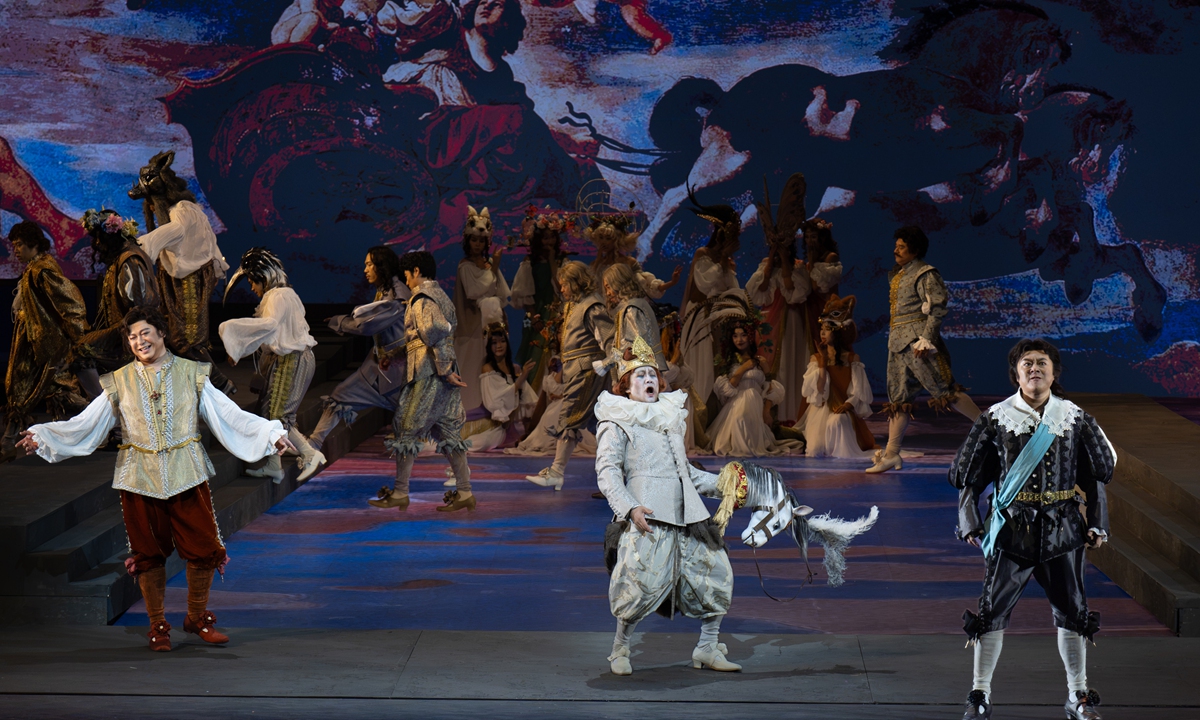
Promotional material for Rigoletto Photo: Courtesy of NCPA
Premiering in 1851 and adapted from Victor Hugo's play Le roi s'amuse, Rigoletto is one of three major masterpieces from Verdi's middle period. The opera is renowned for its tight dramatic structure, vivid characterization, and timeless melodies."This work is very popular; many of its arias are of great interest and beloved by the people of both China and South Korea," Hwangbo added.
This production is directed by Davide Livermore, who is known for his work on NCPA productions such as Lakmé and Die Walküre. Livermore has demonstrated a unique ability to reconstruct classic opera narratives through digital media, guided by the aesthetic principle that "technology serves emotion."
For Rigoletto, Livermore once again breaks away from the limitations of traditional realistic set design. Utilizing LED digital screens and 3D lighting technology, he creates a stage space where virtuality and reality intertwine, capturing the spiritual essence of a 16th-century Italian court. This minimalist yet emotionally charged stage design brings a contemporary aesthetic and infectious energy to the century-old classic.
The co-production is the fruit of a strategic cooperation agreement signed by the NCPA and the Daegu Opera House in 2025 to jointly create high-quality stage productions, said Wang Ban, vice president of the NCPA, according to Xinhua News Agency.
According Xinhua, the NCPA led the creative negotiations, coordinated set production, and provided comprehensive technical support to the Daegu Opera House. The two theaters worked closely to overcome challenges such as language barriers, cross-border logistics, and venue differences, forging a replicable model for international co-production and accumulating valuable experience for cultural exchange.
"From the planning and production to the distribution and performance, the two theaters have advanced the entire process together," Hwangbo told the Global Times. "I believe the best way to work is to learn from and improve upon each other."
RELATED ARTICLES