Matching demand and seeking complementary strengths become new features at CAEXPO
By and Zhang Yashu in Nanning Published: Sep 18, 2026 08:44 PM
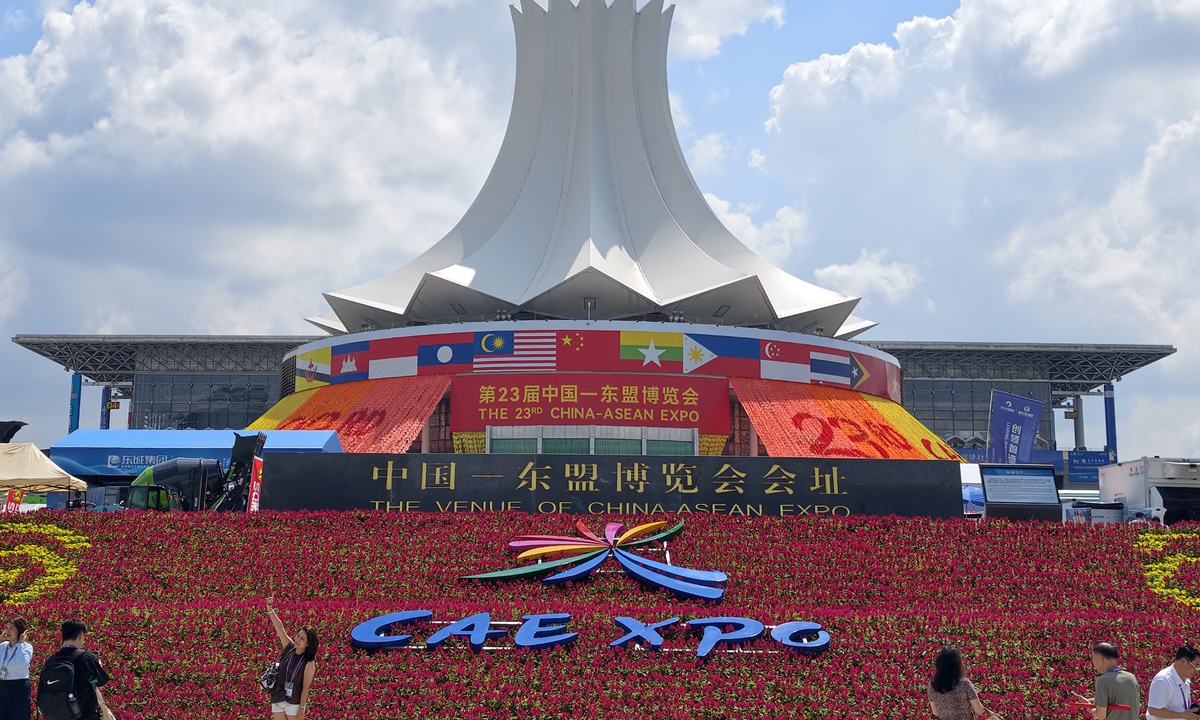
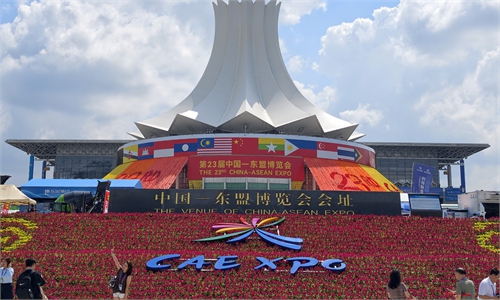
Visitors head to the Nanning International Convention and Exhibition Center to attend the 23rd China-ASEAN Expo (CAEXPO) that opens on September 17, 2026. Photo: VCG
Matching demand and seeking complementary strengths have become key features of the 23rd China-ASEAN Expo (CAEXPO) currently being held in Nanning, South China's Guangxi Zhuang Autonomous Region.
As the mega trade event focusing on trade between China and ASEAN enters its second day, business representatives and government officials have highlighted matching demand as a new trend of this year's CAEXPO. And according to the event's organizer, an "ASEAN Requests, China Responds" Pavilion has been specifically set up at the expo.
The 23rd CAEXPO has drawn the participation of more than 3,400 companies from over 70 countries and regions, and each ASEAN member state, including ASEAN's new member Timor-Leste, has sent a sizable business delegation to the event.
Instead of just promoting their products, which is the usual theme every year, this year's participants have given priority to matching demand, the Global Times observed.
At the Indonesian hall of the expo, Jenny Widjaja, founder of Sagolicious Indonesia Prima, an agricultural company, told the Global Times on Friday that Indonesia has immense resources but lacks certain technologies.
"In addition to demonstrating our products and looking for potential buyers, we have come to seek cooperation, and China has good technologies," said Widjaja, who is also an official with the Indonesian Business Women's Association of Jakarta Utara.
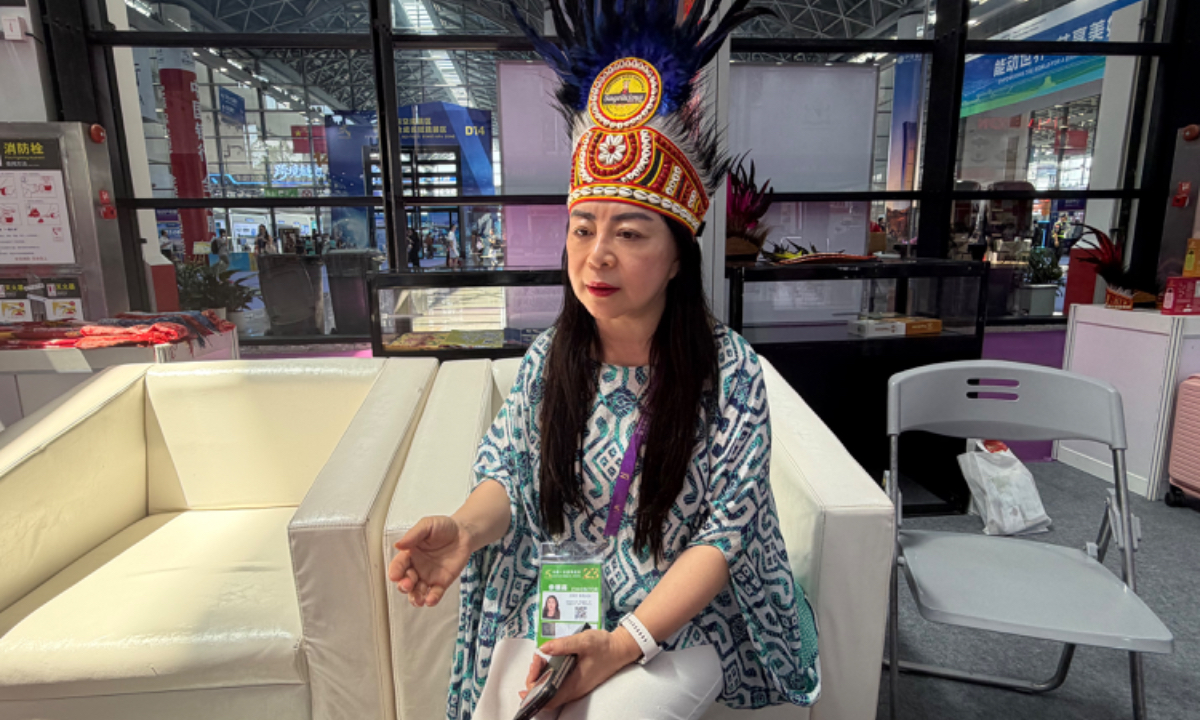
Jenny Widjaja, founder of Sagolicious Indonesia Prima, speaks with the Global Times on September 18, 2026. Photo: Chu Daye/GT
"Some 75 small and medium-sized enterprises came with us, and we are all hopeful about the opportunities for cooperation at the expo," she said.
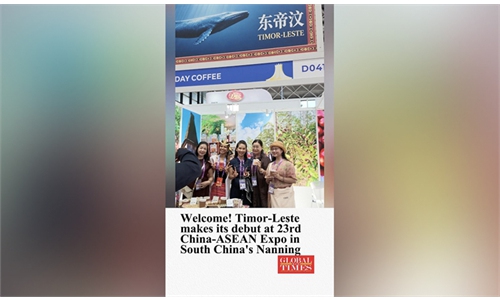
Timor-Leste participated for the first time as a full ASEAN member and a co-host of the expo, following the bloc's expansion.
Nuno Ridenio, founder of Ava Siak, a coffee roasting company from the country, said this was the first time he had attended the event and that he was impressed by its size.
In addition to showcasing his company's products, Ridenio handed out brochures stating "We Are Buying."
"I am very hopeful I could get opportunities to buy machinery, especially those used to process coffee and package goods," said the entrepreneur from Timor-Leste.
"Many products from Laos have the advantage of being natural and original. With the China-Laos Railway as a major transportation corridor and China's huge market right in front of us, we hope that, once the issue of product standardization is resolved, more Lao products can be exported to China," Vilakorn Inthavong, assistant CEO of Lao Product, an e-commerce platform backed by the Lao government, told the Global Times on Friday.
"This would serve as a supplement to the current trade on the China-Laos Railway, which is mainly dominated by bulk commodities such as cassava and ores, and would expand the trade volume and balance the trade structure of Lao exports to China. This is also an important aspect of the China-ASEAN Free Trade Area 3.0," Inthavong said.
Zhang Lizhong, secretary general of the ASEAN-China Centre, told the Global Times in an exclusive interview on Friday that the biggest feature of the CAEXPO this year is its shift from showcasing "what China can provide" to focusing on what ASEAN needs, setting up exhibition areas focusing on ASEAN countries' needs and achieving a two-way match between supply and demand.
The Global Times learned that the ASEAN-China Centre's booth has been set up jointly with Zhejiang China Commodities City Group from East China's Yiwu, and the items on display include silk ties, toys and souvenirs.
The aim is to leverage Yiwu's strengths in the small-commodity industry to precisely match consumer demands in ASEAN markets for everyday goods, Zhang said.
"We hope to promote more practical cooperation between China and ASEAN, so that the outcomes of opening-up can better benefit people's livelihoods," Zhang said.
The signing of the China-ASEAN FTA 3.0 Upgrade Protocol last year is an important milestone and tangible outcome of regional economic integration, Zhang said, noting that it will unleash the dividends of institutional opening-up by improving rules in new areas such as the digital economy, green economy, and supply chain connectivity, simplifying cross-border trade and e-commerce procedures, reducing transaction costs for enterprises, and raising industrial standards to meet sustainability requirements.
The CAEXPO is scheduled to run until next Monday.
RELATED ARTICLES