BRI brings Cambodia, other ASEAN countries, opportunities for exports, jobs, industrial upgrading
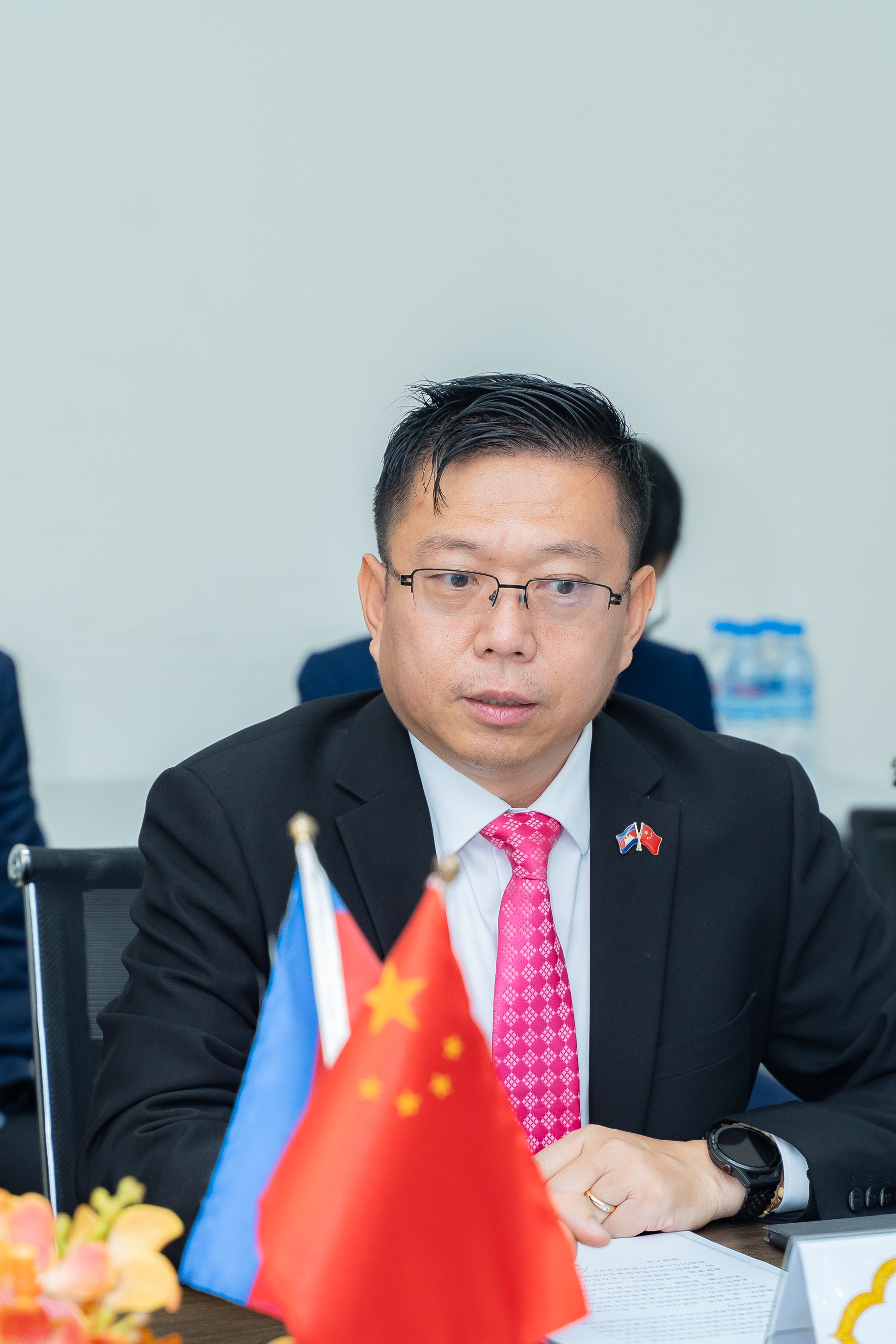
Chea Munyrith
The 23rd China-ASEAN Expo, being held in Nanning, Guangxi Zhuang Autonomous Region, opened on Thursday and will last until September 21. This year’s China-ASEAN Expo is held at a time when regional supply chains are being reshaped. For Cambodian industries, the expo provides an important opportunity for industrial matching, connecting Cambodian businesses with Chinese investment, technology, and regional supply chains, creating concrete opportunities for exports, jobs, and industrial upgrading.
And, Cambodian exhibitors have been moving beyond raw farm products toward processed foods, branded consumer goods and business services. The wider shift is to add more value at home through processing, packaging and branding, while gaining stronger access to Chinese and regional markets.
For example, Cambodia’s agricultural exports include products such as cassava, cashew nuts, rubber, and mangoes. The next step is to process more of these products domestically, develop stronger Cambodian brands, and connect them with Chinese and ASEAN distribution networks.
Last year, the trade between China and Cambodia reached about $19.7 billion, and China remained Cambodia’s largest trading partner. Cambodian exports to China were around $1.69 billion, while imports from China reached $18.04 billion.
Cambodia was an early partner in the China-proposed Belt and Road Initiative. Over the last 13 years a number of BRI projects in Cambodia have changed local livelihoods and benefited tens of millions of people, with some of the clearest economic impacts seen in projects such as the Sihanoukville Special Economic Zone and the Phnom Penh–Sihanoukville Expressway.
The Sihanoukville Special Economic Zone had 217 enterprises in 2025, with a focus on building industrial and supply chains in automobile manufacturing, new energy components, machinery processing, and power equipment. The economic zone demonstrates how an infrastructure and investment platform can develop into a wider industrial ecosystem. The zone has focused on industries including garments, luggage and leather goods, wood products, and more.
At the same time, infrastructure should ultimately be judged by what it enables beyond construction — productive investment, local suppliers, technology transfer, skilled employment, and exports. Smaller ASEAN economies should develop processing industries, logistics services, digital trade, cold-chain facilities, and local supplier networks around these connectivity corridors.
The Phnom Penh–Sihanoukville Expressway, a landmark BRI project in Cambodia, is also an example. The 190-kilometre expressway has created a faster physical connection between the capital and the deep-water port of Sihanoukville, strengthening logistics link between production centers and international maritime trade.
At the regional level, the BRI helps connect Cambodia and other ASEAN economies to wider production and logistics networks by linking industrial zones, ports, roads, and markets. The challenge for smaller economies is to capture more value domestically rather than simply serving as transit corridors, which is exactly what the China-proposed initiative is helping them do.
People-to-people exchange under the BRI has also boomed in recent years. China has expanded visa-free and simplified entry arrangements for more ASEAN travelers, and two-way tourist and business flows have picked up. For Cambodia, the real opportunity is to turn easier mobility into economic mobility — allowing a Cambodian entrepreneur to visit a trade fair, meet a buyer, inspect a factory, establish a partnership, and return home more easily.
I would suggest further simplifying digital visa procedures, creating faster lanes for frequent business travelers, and strengthening customs and border coordination. The goal should be to make cross-border mobility support not only tourism, but also trade, investment, exhibitions, education, and youth exchanges.
China's 134.2-km-long Pinglu Canal in Guangxi Zhuang Autonomous Region became operational on Wednesday. The Pinglu Canal can reduce transport time and costs and give ASEAN economies more efficient links to China and global maritime markets.
As an ASEAN figure, I also see the opening of the Pinglu Canal as a significant new opportunity to strengthen ASEAN–China connectivity and economic cooperation. By linking China’s inland regions more efficiently with the sea, the canal can help improve logistics efficiency, reduce transportation costs, and facilitate the movement of goods between China and ASEAN markets.
ASEAN countries’ greatest expectation is that the Pinglu Canal will bring more efficient, lower-cost and more reliable connectivity with China. We hope it will facilitate the movement of agricultural products, manufactured goods and other commodities, while creating new opportunities for logistics, investment, tourism and cross-border supply chains.
From a broader perspective, the Pinglu Canal demonstrates how infrastructure connectivity can translate into economic opportunities and shared development. By complementing existing rail, road, river and maritime networks, it can contribute to a more integrated regional supply chain and support deeper China–ASEAN cooperation under the BRI.
For my country, Cambodia, this connectivity could create additional opportunities to expand exports, attract investment and participate more deeply in regional value chains. In this sense, the canal can become not only a waterway, but also a bridge linking markets, industries and people, contributing to the principle of mutual benefit and shared prosperity under the China-proposed BRI.
The author is the president of the Cambodian Chinese Evolution Researchers Association.
RELATED ARTICLES