ARTS / CULTURE & LEISURE
From food delivery rider to 336km ultramarathon record-breaker, China’s Zhao Jiaju pushes the limits of human endurance
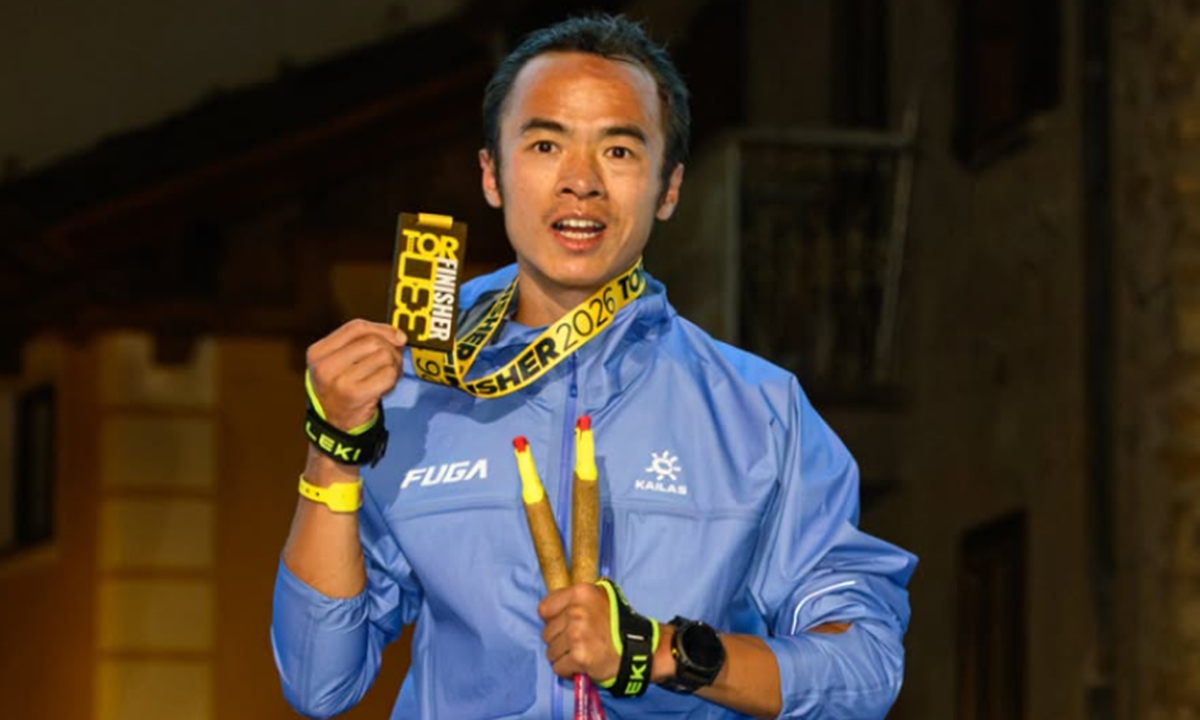
Chinese trail runner Zhao Jiaju becomes the first Chinese and non-European runner to win the grueling TOR330 "Tor des Géants" ultramarathon, setting a new course record. Photo: TORX experience
Chinese trail runner Zhao Jiaju crossed the finish line in Courmayeur, Italy, after 65 hours, 55 minutes and 22 seconds, winning the men's title at the TOR330 "Tor des Géants" ultramarathon and setting a new course record, 13 minutes faster than the previous record of 66 hours, 8 minutes and 22 seconds, set by French-Belgian runner Victor Richard in 2025. He is the first Chinese runner and the first non-European runner to win the race since its inception in 2010.
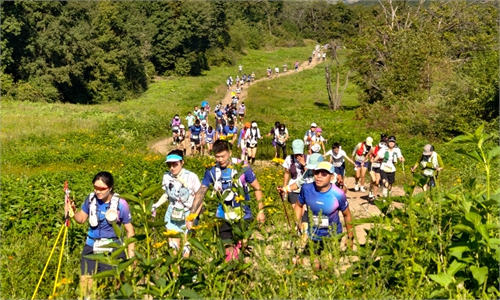
The race covers 336.1 kilometers, roughly the equivalent of completing 840 laps of a standard 400-meter track, and crosses more than 20 mountain passes, with the highest point approaching 3,300 meters above sea level. Runners also face more than 24,000 meters of cumulative elevation gain, nearly three times the elevation of Mount Qomolangma, commonly known in the west as Mount Everest.
The scale of the challenge has left many Chinese viewers stunned. One highly liked comment under a video about the race joked: "After seeing Zhao's performance, even a half marathon or full marathon suddenly seemed surprisingly doable by comparison."
Another commenter took a more heartfelt view: "While others applauded Zhao's victory and praised him, I found myself in tears. What does 336 kilometers in less than 66 hours even mean? For 99.999 percent of the people, it's not about whether they could do it, but whether they would even dare to imagine it."
Beijing-based sports commentor Guo Ai told the Global Times on Sunday that what sets an ultramarathon like TOR330 apart from a conventional marathon is not simply the distance, but the prolonged physical and mental strain.
"Runners must keep moving for more than two days while coping with sleep deprivation, altitude changes, accumulated fatigue and constantly changing terrain," Guo said. "At that point, the challenge is no longer just about running faster or farther; it becomes a test of how long a person can keep their body and mind functioning under extreme fatigue."
Zhao said that at his most exhausted point, his vision had begun to blur and he could see little more than the patch of trail illuminated by his headlamp. To stay awake, he slapped himself and bit his tongue.
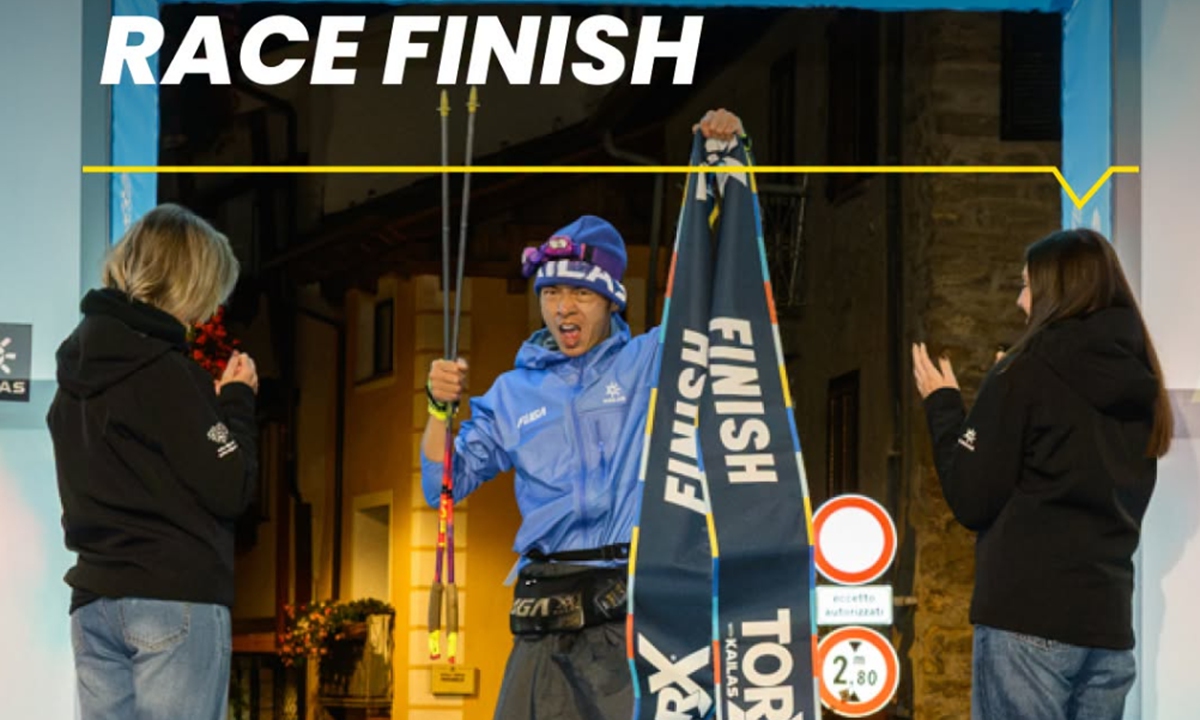
Photo: TORX experience
That ability to keep going over extreme distances has been built over years of experience.Born in Southwest China's Guizhou Province in 1995, Zhao has worked a variety of jobs, including as a security guard, food delivery rider and florist, before becoming a professional trail runner.
Around 2014, Zhao began running marathons. He later turned to trail running and became a full-time trail runner in 2017. He has since won a number of domestic ultramarathons, including having won the Chongli 168 Super Ultramarathon four times.
His experience as a food delivery rider has also frequently been mentioned in accounts of his running career. Zhao told the Shanghai-based The Paper newspaper that when he was delivering food in Wuhan in 2016, he handled just over 20 orders a day at most. Because of the delivery areas and road conditions, he generally chose nearby orders and sometimes ran to pick up and deliver food to save time.
That experience of running as part of everyday life stands in stark contrast to the extreme endurance challenges Zhao takes on today. After having completed the 65-hour race, however, he offered a different perspective on what it means to push one's limits.
According to Zhao, he does not plan to compete in races longer than 168 kilometers in the coming years because he does not know "what it would cost" to break through his current performance again. He also cautioned ordinary outdoor sports enthusiasts against pushing themselves to their physical limits.
"For recreational sports, you have to strike a balance between exercise and life," Zhao said. "Even for me, I will still withdraw from a race when it is time to do so."
RELATED ARTICLES