ARTS / CULTURE & LEISURE
Chinese short-video team turns school textbooks into historical dramas, winning 130 million views
A new life for classics
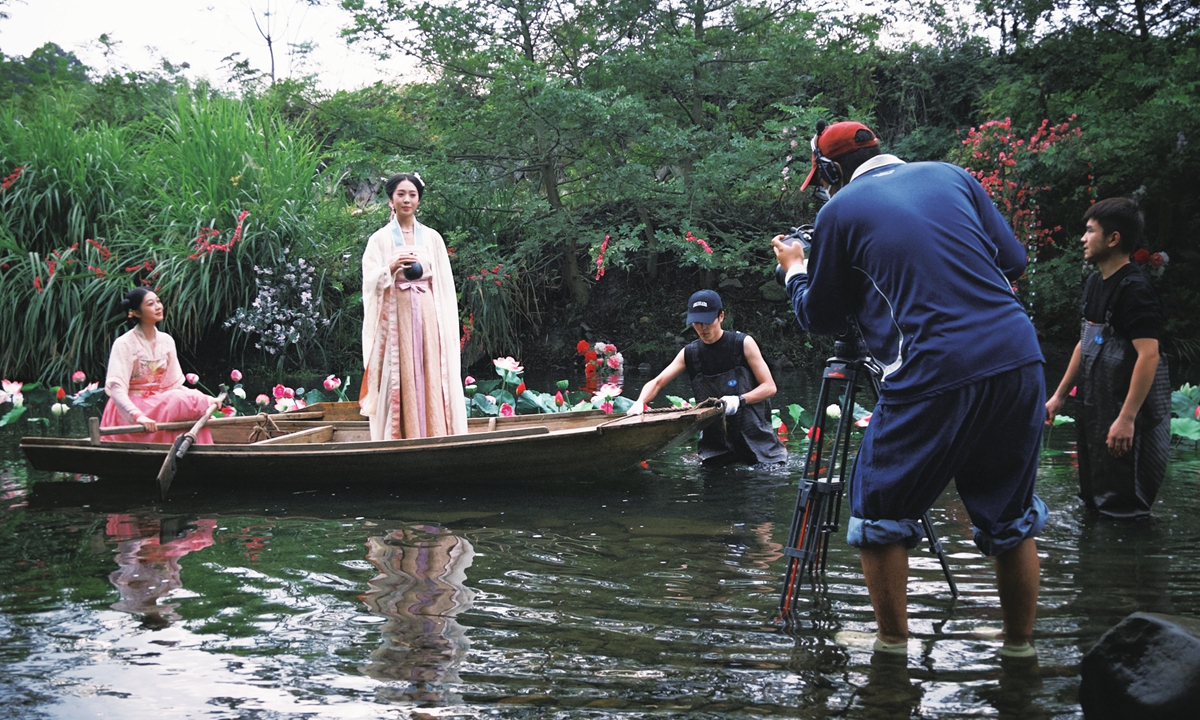
The Haojiahuo team films a water scene for a period drama. Photos: Courtesy of Haojiahuo team
At sunset, rainwater kept seeping into a basement in Lintong, Xi'an, Northwest China's Shaanxi Province, while the stuffy air inside made it hard to breathe. Yet actors and crew members stayed there for an entire day of filming.
The basement was dug out by the young team behind Haojiahuo, a short-video account. The team built the makeshift set themselves to recreate a wartime scene for 1937 Nanjing, a short video series that took nearly a year to prepare, with the script revised more than 30 times and production costing more than 1 million yuan ($139,000).
The team's adaptations of stories familiar to generations of Chinese students from Chinese-language textbooks used in China's nine-year compulsory education, including Kong Yiji, A Letter to My Wife and Monument, have amassed more than 130 million views in total.
Text comes alive
The attention that the team enjoys today was a far cry from what greeted its early attempts.
Zhang told the Global Times that when they filmed Kong Yiji at a restaurant in 2024, the extras were local villagers and the crew had only one borrowed light. After the video was posted, many viewers criticized the acting and cinematography. Having already spent more than 20,000 yuan of their initial budget, the four-people team came close to giving up.
Then came a message from a Chinese-language teacher. A student who was usually mischievous and uninterested in studying had cried after watching their adaptation of the Long March story Monument, telling the teacher, "The Red Army soldiers had such a hard time. I want to study hard."
"That was when I realized that perhaps we were not simply making videos of textbook stories," Zhang noted. "We were doing something more meaningful."
The team then began studying cinematography, acting and historical sources, gradually looking beyond the story itself to the people and historical circumstances behind the texts.
When adapting A Letter to My Wife, written by revolutionary pioneer Lin Juemin to his wife Chen Yiying in 1911, the team did not treat it simply as a love letter. They brought in the historical turmoil surrounding the Guangzhou Uprising and added an interrogation scene that does not appear in the textbook text.
According to Zhang, after the video was released, viewers began paying closer attention to the words of Lin's letter and looking into the history behind it.
"We want people to understand why the story happened and why it was included in textbooks," Zhang said.
That idea also grew out of his own experience as a student. When he was taught Tang Dynasty (618-907) poet Li Bai's famous poem Quiet Night Thought, he remembered being told simply that the poem expressed homesickness. He memorized the answer, but never really understood the circumstances behind the poem.
"There were many things I never fully understood when I was a student," Zhang said. "We want to fill in those gaps for children today before they have the same questions."
That approach has made the team increasingly meticulous.
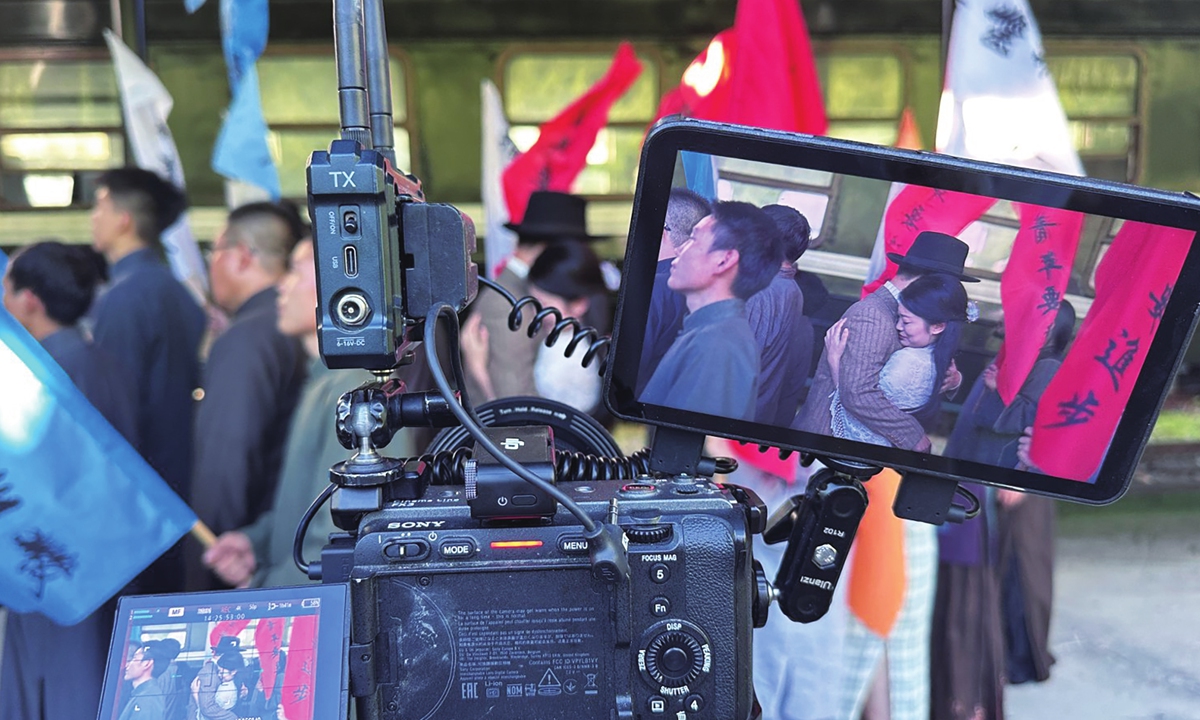
Haojiahuo films A Letter to My Wife, a story from a Chinese-language textbook.
Beyond the flow
Such productions are hardly an easy business for a short-video team. Zhang said a typical video now costs at least 100,000 yuan to produce, while 1937 Nanjing cost more than 1 million yuan. Financial pressure and the demands of regular updates even forced the team to stop posting for nearly two months in late 2025, and they briefly considered switching to contemporary dramas that would be easier to produce and monetize.
Messages from children, teachers and parents asking when the team would return eventually convinced them to keep going. The team resumed posting earlier this year, and 1937 Nanjing later received more than 1 million likes, with some teachers bringing it into their classrooms.
For Beijing-based cultural scholar Wang Deyan, the appeal of such adaptations goes beyond short-video traffic.
"The original textbook stories already contain striking characters, emotions and narratives," he told the Global Times.
"Bringing these stories onto the screen gives young audiences another entry point, making people and settings that once had to be imagined through reading more concrete and accessible."
"A new medium can change how a classic is seen, but it should not sacrifice the characters, historical context or core values of the original for online viewership," Wang said. "Real innovation allows today's audiences to rediscover what remains meaningful in a classic, rather than turning it into something entirely different."
That balance is being tested again by AI-generated video. Haojiahuo has so far chosen to stick with live actors and real locations.
"For us, telling a historical story means eye contact, breath against breath, heartbeat against heartbeat," team member Zhang said. "That is what gives the story a sense of reverence and warmth."
Real-location filming takes more time and money, but Zhang said the team wants to keep people physically present in the settings where history unfolded.
"Real-life settings allow us to bring people closer to the moments we are trying to portray," he said.
With the team having now grown to nine members, Zhang is already thinking about the next stories to tell, from Bethune and The Lily to intangible cultural heritage and other historical subjects.
Today, he no longer worries too much about whether audiences will remember the name "Haojiahuo."
"They don't have to remember us," he said. "As long as they remember this part of history, that's enough."
RELATED ARTICLES