China’s 16-day holiday rail rush begins, to see 284m passenger trips: railway operators
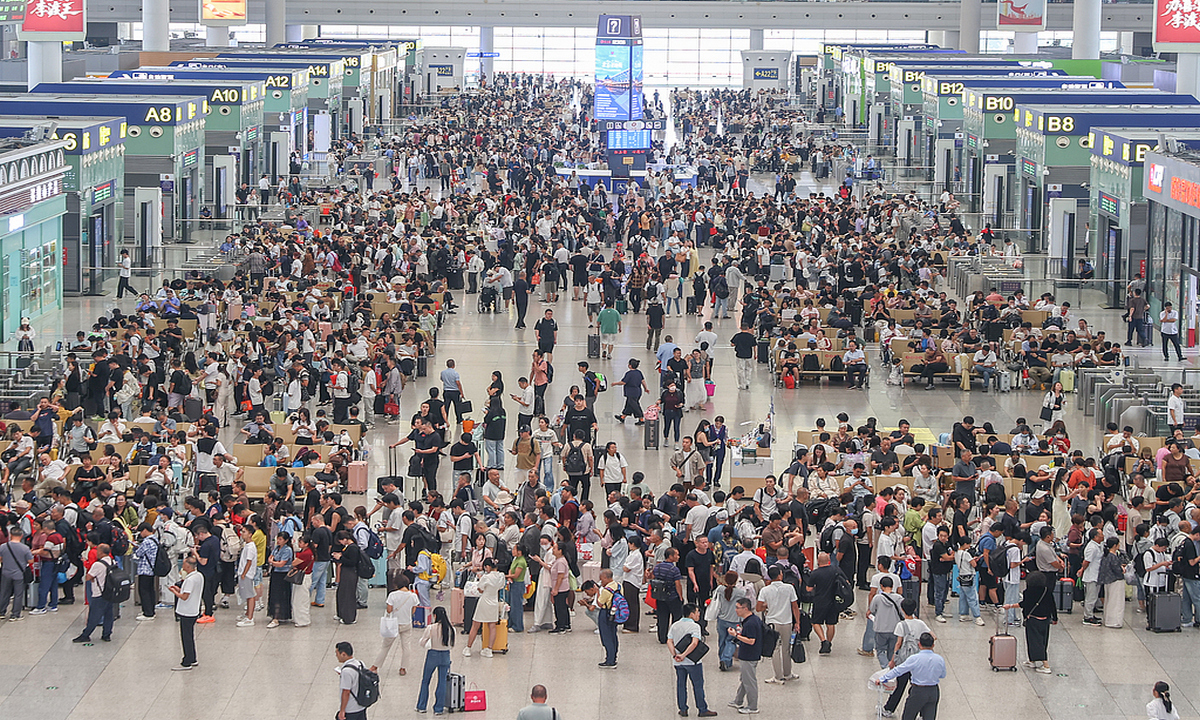
Photo: VCG
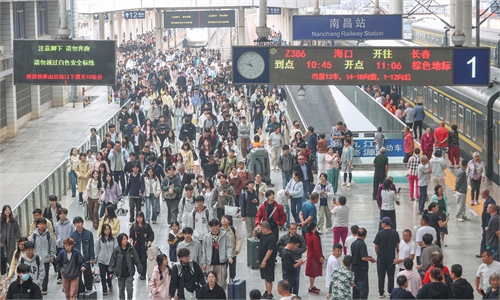
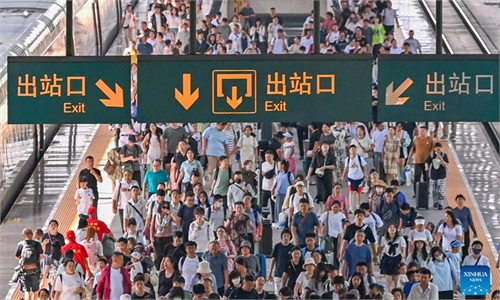
China's 16-day railway travel rush for the Mid-Autumn Festival and National Day holidays officially began on Wednesday and will run through October 8, with the national rail network expected to handle 284 million passenger trips, the state railway operator said.
An average of about 13,000 passenger trains are scheduled to operate daily during the period, while October 1 is expected to see the peak in rail passenger traffic nationwide, according to China State Railway Group Co on Wednesday.
The three-day Mid-Autumn Festival holiday runs from Friday to Sunday, and the week-long National Day holiday will run from October 1 to 7.
China's "double festival" travel rush is expected to put millions of people on the move, underscoring the resilience and vitality of the country's domestic tourism industry, according to industry observers.
This year, the two holidays failing close together are expected to generate strong demand for tourism, family visits and leisure travel. Short-distance trips around the Mid-Autumn Festival and longer journeys during the National Day holiday are likely to overlap, with passenger volumes and daily passengers-flow in multiple railway administrations expected to set new historical records, according to the nation's railway authorities.
Regional railway authorities across China are preparing for unprecedented pressure on passenger transport.
For instance, Guangzhou Railway Group expects to handle 38.6 million passenger trips during the holiday travel period, up 15.4 percent year-on-year. The figure is expected to set a new record for the same holiday period, according to local Guangzhou Daily.
The surge in travel demand reflects not only a strong appetite for family reunions, leisure trips, and short getaways, but also the continued recovery and upgrading of China's consumer market, Jiang Yiyi, a professor at the School of Leisure Sports and Tourism at Beijing Sport University, told the Global Times on Wednesday.
In recent years, improved transportation networks, richer tourism offerings, and growing demand for personalized experiences have helped fuel the expansion of the domestic travel sector. Against this backdrop, the holiday travel boom could provide fresh momentum for consumption growth while further highlighting the role of culture and tourism as a key driver of China's broader economic development, Jiang noted.
To meet the surge in travel demand, railway authorities across China are rolling out tailored transport plans, adding capacity and improving services to support both travel and consumption.
During the holiday period, the group plans to run an average of 3,509 trains per day, up 458 from last year, or 15 percent year-on-year. It will also add 5,839 extra passenger trains, including 4,908 high-speed trains, and operate 2,707 nighttime high-speed services.
Beyond expanding transport capacity, rail authorities are also promoting holiday tourism through themed and customized train services.
China's railways are also stepping up international and cross-border services during the holiday period. Authorities will operate cross-border passenger services on the Guangzhou-Shenzhen-Hong Kong High-Speed Rail, as well as international passenger trains linking China with Laos, Mongolia, Russia, Vietnam and North Korea, to facilitate cross-border travel, shopping and tourism.
During last year's eight-day Mid-Autumn Festival and National Day holiday period, Chinese travelers made 888 million domestic trips and spent a combined 809 billion yuan ($120 billion), according to the Ministry of Culture and Tourism.
Global Times
RELATED ARTICLES