ARTS / CULTURE & LEISURE
China’s cultural authority unveils new findings from joint archaeology projects in Egypt, Tunisia and Kyrgyzstan
By Published: Sep 24, 2026 07:07 PM

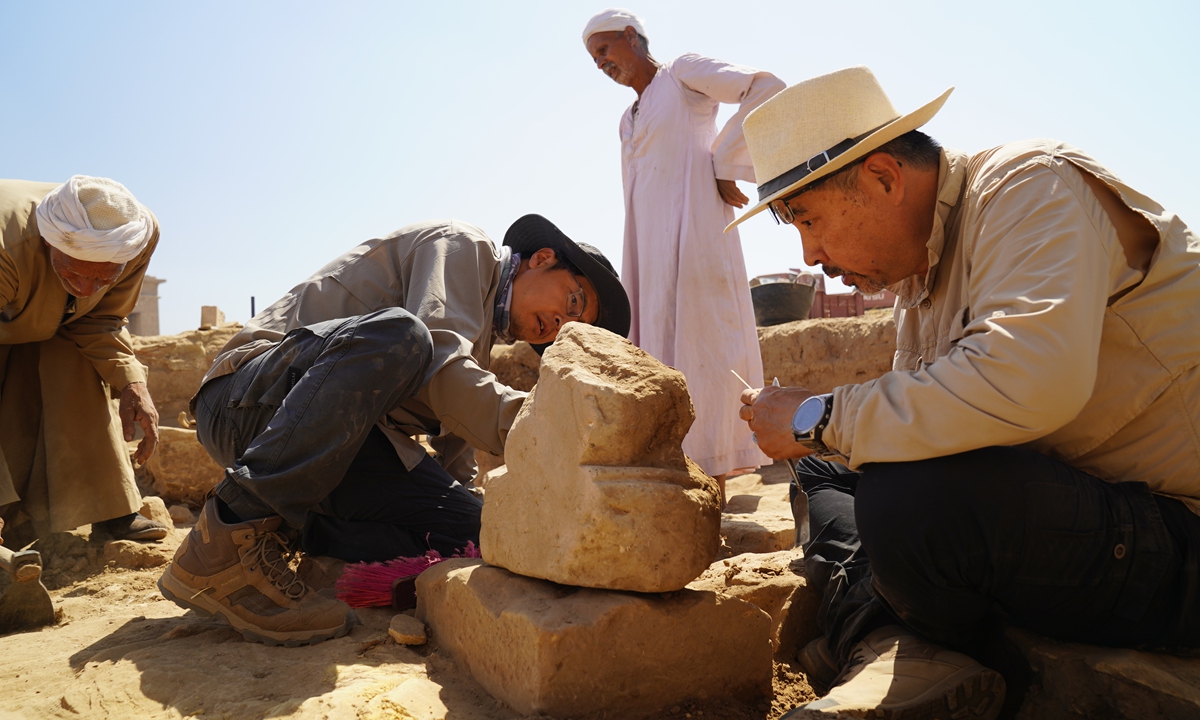
Archaeological teams from China and Egypt clean statues at the site of the Montu Temple in Egypt. Photo: Courtesy of National Cultural Heritage Administration
China's National Cultural Heritage Administration on Thursday announced new results from three overseas joint archaeological projects, including the discovery of twin sacred lakes at the Montu Temple site in Egypt, the Ben Arous Forest site, Punic-to-Roman remains in Tunisia and the Krasnaya Rechka site, a medieval urban layout in Kyrgyzstan.
At the Montu Temple in Egypt, the China-Egypt joint archaeological team has uncovered the complete structures of the second to fifth small Osirian chapels and confirmed the unique layout of two sacred lakes located side by side within the temple complex, the administration said at a meeting on major progress in the "Archaeology China" project in Beijing on Thursday.
The findings provide important clues for studying the rituals and functions of the temple, it said.、
Jia Xiaobing, a research fellow at the Institute of Archaeology under the Chinese Academy of Social Sciences and Chinese team leader for the Egypt project, told the Global Times that since November 2018 the joint team has carried out eight excavation seasons at the Montu Temple complex, uncovering more than 2,000 square meters in total.
"The China-Egypt joint archaeological project is China's first archaeological excavation and research project in Egypt," Jia said. "The Montu Temple site is not only a research base for Egyptian archaeology, but also an important platform for cultural exchange between China and Egypt with international influence."
Archaeologists from both sides have carried out excavation, protection and interpretation in parallel, jointly opening a new chapter in exchanges and mutual learning between the ancient civilizations of China and Egypt, Jia said.
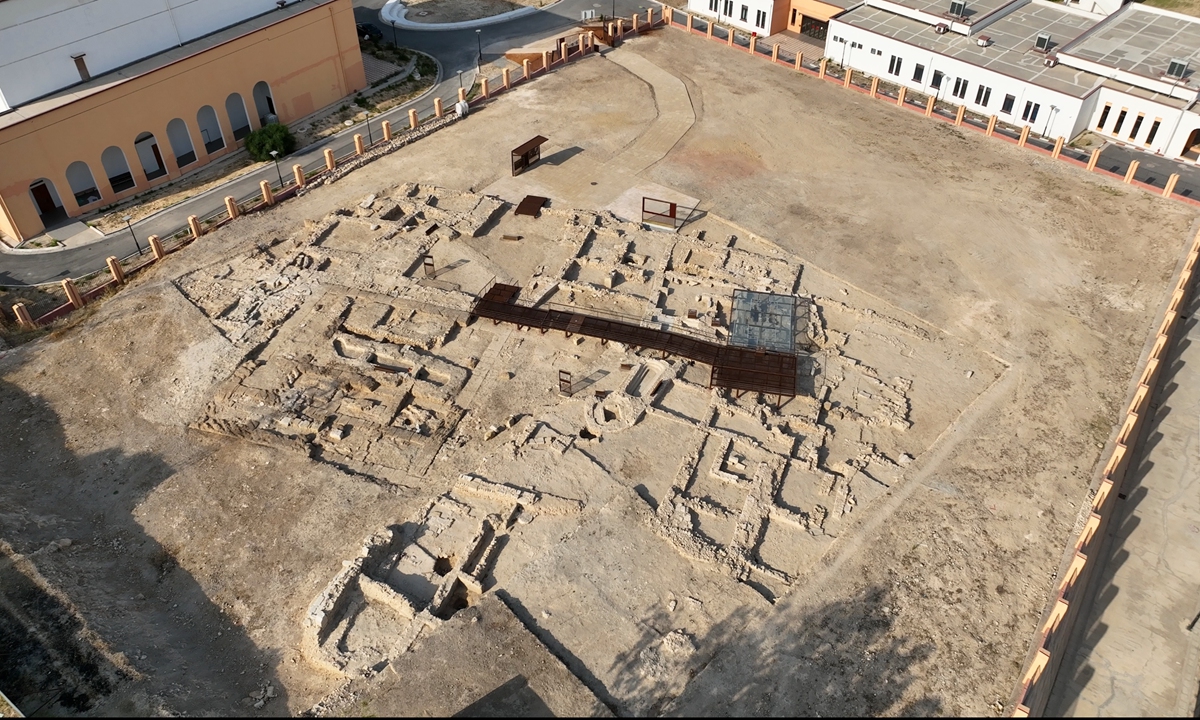
The full appearance of the Ben Arous Forest site in Tunisia after the completion of the archaeological excavation and display project Photo: Courtesy of National Cultural Heritage Administration
In Tunisia, a joint project between the Archaeological Research Center of the National Cultural Heritage Administration and the National Institute of Cultural Heritage of Tunisia discovered architectural complexes dating from the Punic to Roman periods at the Ben Arous Forest site.
The discovery helps refine the archaeological chronology of the transition from Carthaginian to the Roman period, said Yu Fei, associate research fellow at the Archaeological Research Center of the National Cultural Heritage Administration.
A small urban heritage park built on the site has become a cultural landmark for China-Tunisia people-to-people and cultural exchanges, effectively promoting mutual understanding between the two peoples, according to the administration.
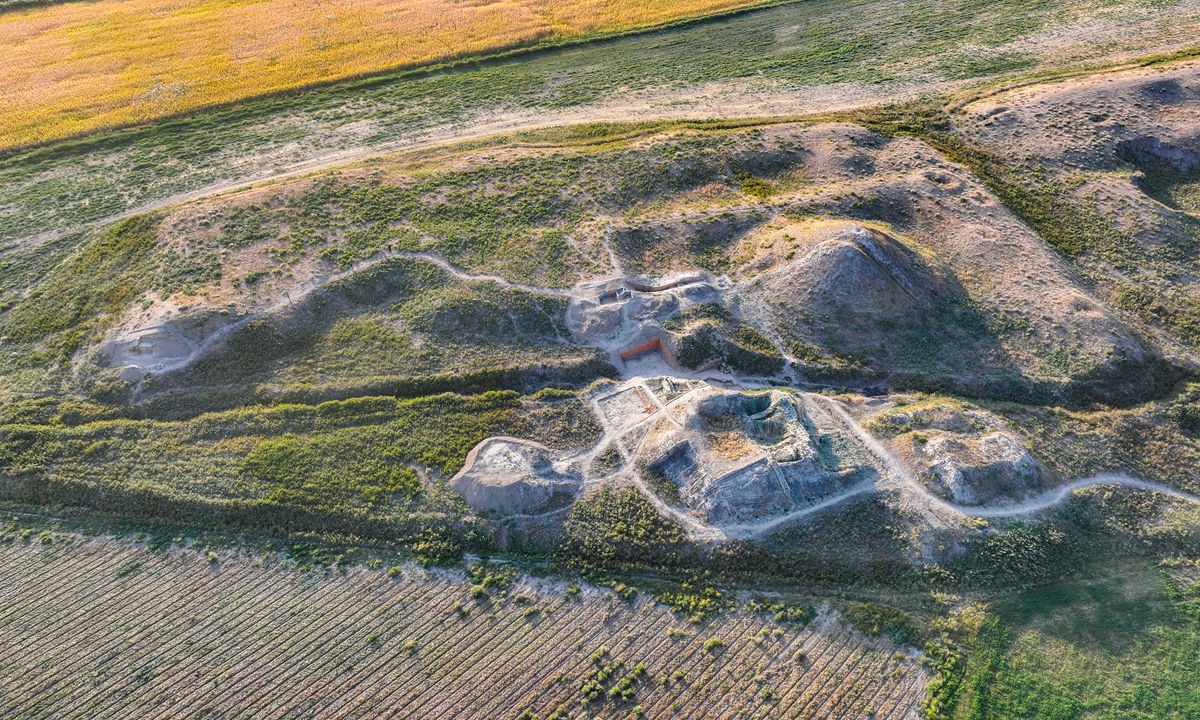
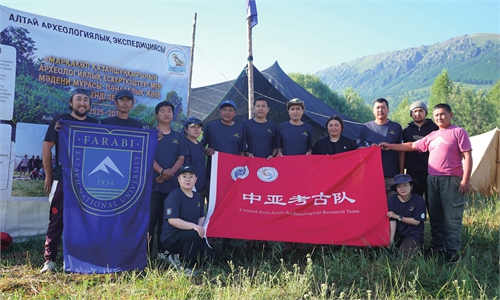
The Krasnaya Rechka site in Kyrgyzstan Photo: Courtesy of National Cultural Heritage Administration
In Kyrgyzstan, archaeological work at the Krasnaya Rechka site has confirmed its overall urban layout, revealing architectural techniques, urban systems and the diverse cultures and religious beliefs of ancient people in the Chuy Valley of Central Asia during the medieval period, the administration said.
The site, located in the Chuy region, dates from the 6th to the early 13th century. Scholars generally identify it as Navekat, a famous Western Regions city recorded in Sogdian and Muslim documents and translated in Tang Dynasty (618-907) texts as "New City."
Shi Yanxin, a research fellow at the Shaanxi Academy of Archaeology, told the Global Times the site offers a vivid picture of exchanges and mutual learning among civilizations along the Silk Road.
"The cultures of the Northern Dynasties, Jiangnan and China's Western Regions merged and gave rise to the splendid Sui-Tang culture," Shi said. "By excavating there, we can better understand why the Silk Road started from Chang'an [former name of Xi'an]."
Wang Wei, a veteran archaeologist with the Chinese Academy of Social Sciences, said that the application of Chinese archaeological methods in the three overseas projects demonstrated their "universal applicability and transferability," rather than representing a one-way transfer of technology.
Since 2020, China has carried out more than 80 joint archaeological projects with 30 other countries, along with over 10 international cooperation projects on cultural relic conservation and restoration, according to Wang.
RELATED ARTICLES