IN-DEPTH / IN-DEPTH
Chinese scientists develop modified-clay technology, helping countries tackle harmful algal blooms
HAB 'extinguisher'
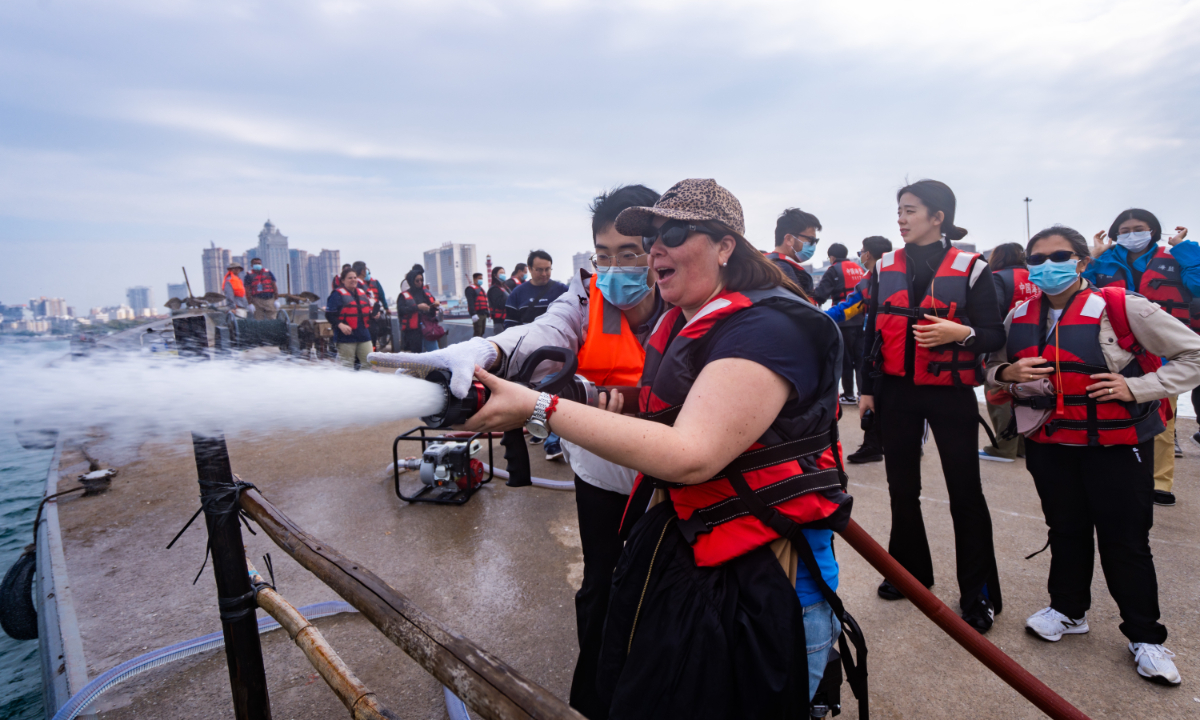
A technician instructs a foreign trainee during on-site training on modified-clay technology for HAB mitigation. Photo: Courtesy of IOCAS
Editor's Note:
As global challenges grow increasingly interconnected, technological solutions are rarely confined to a single country. Through research collaboration, open sharing of expertise and partnerships with international institutions, Chinese scientists, engineers and enterprises are engaging more deeply with the world, contributing tools and experience to problems that demand collective answers.
The Global Times launches the "Tech Seeds, Global Bloom" series, spotlighting China's achievements in advancing tech for good both domestically and internationally. By following these trajectories, the series invites readers to consider a different measure of progress: Not how advanced technology becomes, but whom it ultimately serves, and how widely its benefits can spread.
This is the eighth installment. A disaster that devastated aquaculture in China more than 30 years ago prompted a research team to develop a "extinguisher" for harmful algal blooms. Today, its modified-clay technology is used in many countries including Malaysia and Turkey, while a 15-nation initiative seeks to expand global cooperation.
The seawater changed color. In just a few days, a stretch of once-blue ocean turned a dark, rusty red. Fish floated belly-up, and shellfish died in large numbers. Along the coast, aquaculture farmers stood helplessly beside their fish cages, watching a year's worth of hard work disappear before their eyes.
This heartbreaking scene, witnessed firsthand during a harmful algal bloom (HAB) outbreak, became the starting point for a Chinese research team's decades-long effort to develop a technology that would eventually help countries around the world mitigate the marine disaster.
HABs occur when microscopic organisms in seawater proliferate or accumulate rapidly, triggering ecological disasters. They have been identified as a crucial environmental concern for coastlines worldwide. For decades, the international community lacked an emergency control approach that could be deployed as quickly as an "extinguisher" against HABs.
A team at the Institute of Oceanology of the Chinese Academy of Sciences (IOCAS) developed the modified-clay technology based on flocculation and sedimentation, providing a practical solution to that challenge. Recently, at a UNESCO conference in Paris this summer, a global scientific program on harmful algal bloom mitigation, led by the IOCAS, was unveiled. From the Bohai Sea to Malaysian waters and Turkey's Gulf of Izmir, a technology developed in China has become an increasingly visible tool in global efforts to mitigate HABs.
An innovative solution
The story began in 1989, when a massive HAB struck the Bohai Sea.
Large numbers of farmed marine organisms died, causing economic losses of around 200 million yuan ($29.86 million).
That is a considerable loss, but the figure itself is not what finally stayed with the HAB control team members. What they remember most clearly are the farmers.
"Overnight, aquaculture areas that had been full of life became silent," Yu Zhiming, a member of the Chinese Academy of Engineering at the IOCAS, representing the team, told the Global Times. "The farmers had lost a year's worth of hard work. The despair and helplessness in their eyes left a deep impression on me."
"We realized that a HAB is not simply a marine ecological phenomenon. It is closely tied to coastal economic development and people's livelihoods," Yu said.
It also prompted a question that would shape Yu's career: if scientists could understand why HABs occurred, could they also intervene once they happened?
Previously, countries around the world had conducted years of research on the control of HABs, but with limited success. In the 1970s, natural clay for HAB mitigation was initially proposed in the world; however, this approach has long been constrained by low efficiency, high dosage requirements and heavy sedimentation, which restricted its large-scale application, according to IOCAS.
The research team began experiments in 1991. Through years of exploration, it overturned the prevailing view among previous studies that three-layer-structure clays are more effective than two-layer-structure clays for bloom control. They discovered that enhancing the positive surface charge of the clay and strengthening its bridging interactions with bloom-forming organisms are key pathways to improving mitigation efficiency, thereby establishing the theory of clay surface modification.
Simply put, HAB organisms carry a negative charge, and clay particles in seawater also carry a negative surface charge. As charges repel each other, the efficiency with which clay binds to HAB microalgae is low. By applying surface-modification technology, the team rendered the clay surface positively charged, enabling effective binding to the microalgae and significantly improving mitigation efficacy.
This is a method based on mineral flocculation and a "top-down" control principle, Yuan Yongquan, an associate professor at IOCAS, told the Global Times. By modifying the surface of natural clay particles, they enhanced their interaction with algal cells, causing the organisms to rapidly form flocs and sink.
When sprayed onto affected waters, the modified clay can reduce algal density by more than 80 percent within an hour to several hours, while allowing the water color to return normal. The method can also reduce algal toxins, improve water quality and promote carbon burial, Yuan explained.
Its relatively low dosage, rapid and environment-friendly effects have earned it the nickname of a Chinese-made "HAB extinguisher."
The team now has 11 core members, including a member of the Chinese Academy of Engineering and recipients of the National Science Fund for Distinguished Young Scholars. International peers have described the team as a leading force in the field of HAB mitigation, Xu Yingze, an Engineer at IOCAS, told the Global Times.
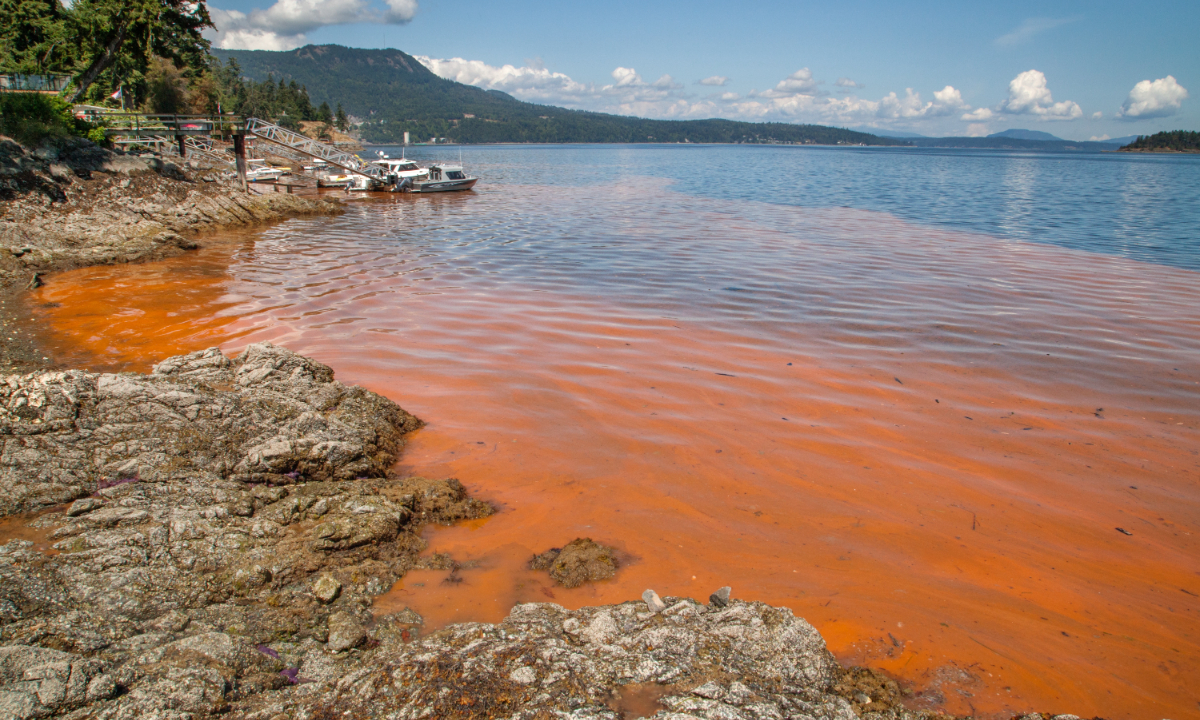
Image of HAB Photo: VCG
Making waves overseas
The modified-clay method is now one of the most representative approaches to large-scale HAB mitigation in China and has increasingly moved beyond the country's shores.
The technology has been introduced in more than 10 countries and used in hundreds of square kilometers of waters. In recent years, it has also been included in project lists under the Belt and Road Initiative and promoted in several participating countries, Yuan said.
In Malaysia, Vietnam and other ASEAN countries, the technology has been practiced to control algal blooms in different types of aquaculture waters. Within 30 minutes of treatment, algae density can fall by more than 90 percent, while dissolved oxygen can increase by more than 1 milligram per liter, helping improve the aquaculture environment, said Yuan.
In recent years, according to IOCAS, large-scale harmful algal blooms have broken out frequently along the coast of Gulf of Izmir in Turkey. The situation was particularly severe in 2024, with toxin-producing dinoflagellate blooms frequently occurred, covering more than 30 square kilometers, resulting in an extremely high mortality of coastal marine organisms. This caused serious degradation of the environment and a big hit to coastal tourism and relative industries.
The introduction of the Chinese modified-clay method helped the mitigation of such toxic blooms. "The mortality of fish along the gulf reportedly fell from 87 tons in 2024 to 17 tons in 2025, while the number of days affected by unpleasant odors dropped by 80 percent year-on-year, according to the statistic of Izmir," Yuan said.
For the team, however, taking the technology overseas is not simply about exporting a ready-made product.
Different countries face different types of HABs, marine environments and management goals. That has pushed the team to work with local institutions, government agencies and aquaculture companies worldwide to adapt the technology to specific conditions.
The team has so far signed cooperation agreements with more than 20 international partners and trained more than 500 people.
At the end of 2024, with support from international HAB communities including UNESCO-IOC GlobalHAB program and the HAB working group of North Pacific Marine Science Organization (PICES), it also launched an initial global training program on prevention, control and mitigation of HABs. More than 190 experts and trainees from 15 countries participated, receiving training through lectures, laboratory exercises and field demonstrations.
Such efforts are helping the technology evolve from an individual treatment method into part of a broader international network for HAB prevention, control and mitigation.
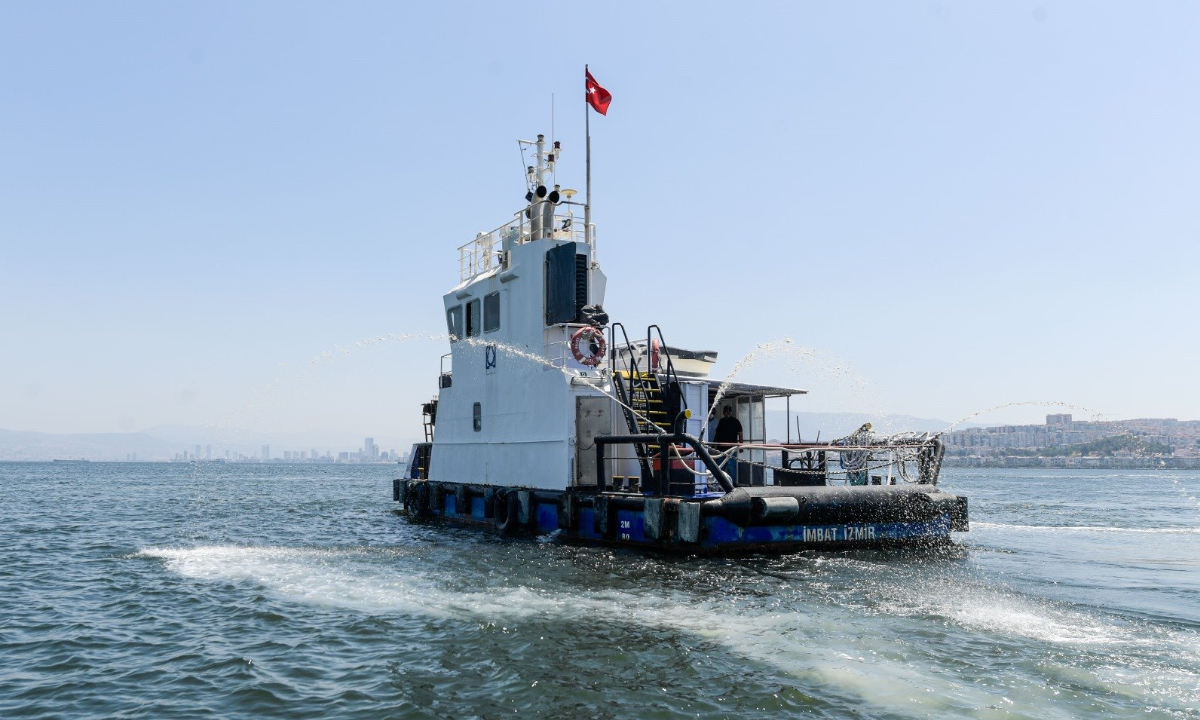
A vessel practices modified-clay technology for harmful algal bloom (HAB) mitigation in Gulf of Izmir, Turkey. Photo: Courtesy of the Izdeniz, Turkey
The next frontier
After more than three decades of research and field applications, the team has established a full-chain system covering the theory, technology and application of modified-clay for HAB mitigation. But the challenge itself is changing.
According to Yuan, global warming and intensifying human activity in coastal waters are altering the dominant species, shifting the distribution and impacts of harmful algal blooms. Rising sea temperatures, for example, can affect the germination and distribution of toxic dinoflagellates, while changing ocean circulation may further complicate the risks posed by algal toxins.
That means the "HAB extinguisher" itself has to evolve, Yu and Yuan said.
In 2026, a large-scale toxic HAB caused by dinoflagellates broke out along the coast of South China's Hainan Province, causing economic losses and raising concerns over human health.
In response to the growing requirements to control different types of toxic HABs, the team has developed new ways of clay surface modification, including functional group grafting modification and microbial composite modification.
The newly developed formulations are designed for high-efficiency algae removal, water-quality improvement and healthier aquaculture. They can reduce algal toxins by more than 80 percent while suppressing harmful algae and pathogenic microorganisms.
The broader goal is to make the technology more targeted: moving from a "general practitioner" that treats a wide range of HABs toward a "specialist" tailored to specific types of HABs.
The team is also seeking to deepen international cooperation. This summer, at the 2026 Global Conference on the International Decade of Sciences for Sustainable Development in Paris, France, three international scientific programs led by IOCAS were presented. One of them, the "Controlling Global Coastal Harmful Algal Blooms" (HAB-C), which was jointly launched by 15 countries, marks a new stage in the internationalization of China's HAB mitigation efforts, shifting the focus from simply taking a technology overseas to helping build an international framework for tackling a shared marine challenge, the team said.
Led by IOCAS, the program has already built a preliminary global cooperation network spanning the Americas, Asia-Pacific and the Europe. Going forward, it aims to focus on integrating HAB monitoring, early warning and mitigation technologies. Through technical training, demonstration projects and policy coordination, it seeks to strengthen countries' capacity to respond to marine ecological disasters, and to keep offering a replicable, scalable "Chinese solution" for HAB mitigation to coastal nations worldwide.
For Yu's team, what matters most is not the wide adoption of a technology itself.
"More than 30 years ago, during that HAB in the Bohai Sea, we saw the despair in the eyes of those aquaculture farmers. We shall never forget it. I hope this international initiative will help ensure that more fishermen and aquaculture farmers no longer have to suffer catastrophic losses because of HABs," Yu said.
