Pakistan Navy’s Hangor-class submarine completes maiden live-fire missile test; expert highlights Chinese-made boat’s feature of easy operation, sound training
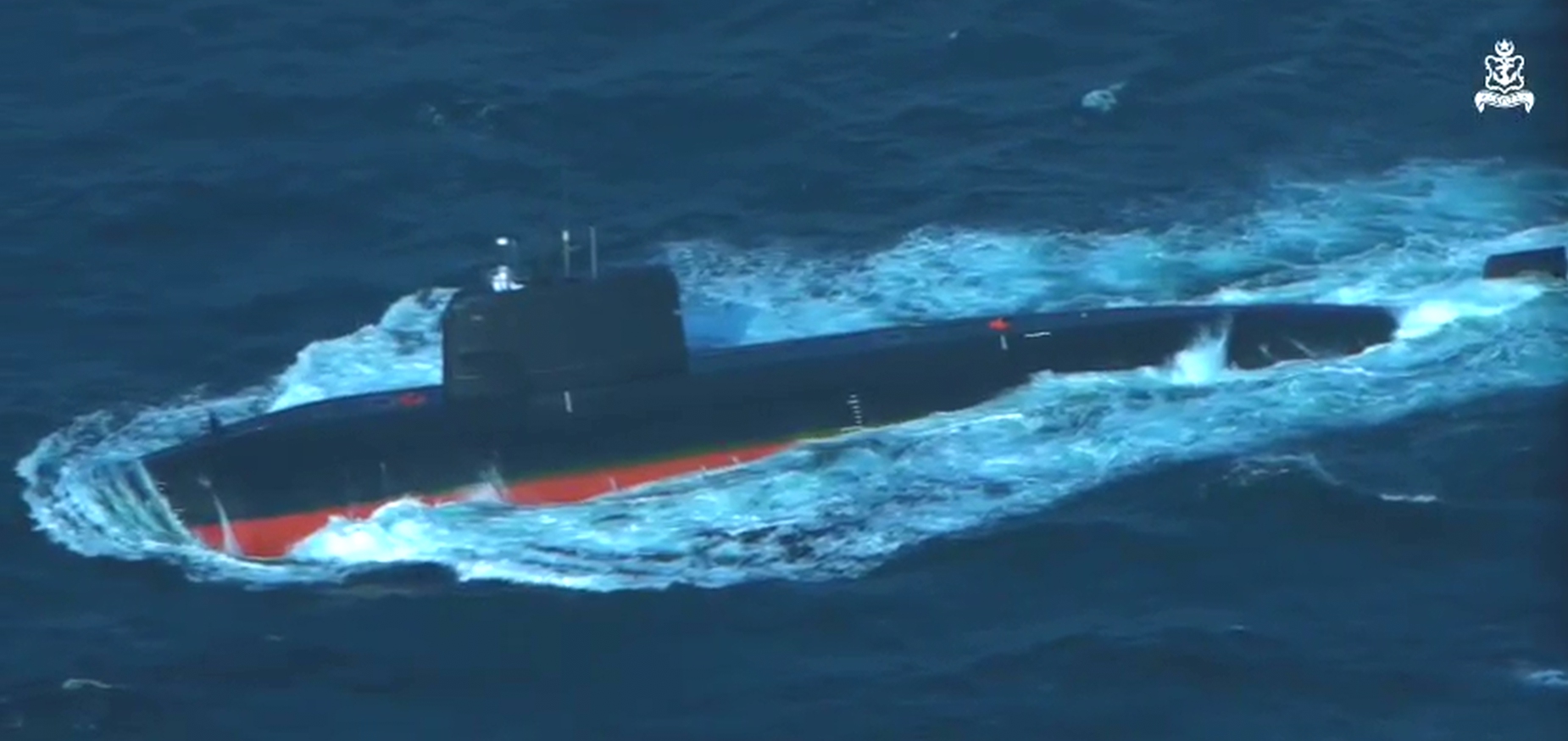
Pakistan Navy's newly inducted submarine PNS/M Hangor conducts its maiden live weapon firing mission in North Arabian Sea. Photo: Screenshot from the Pakistan Navy's Director General Public Relations official X account
The Pakistan Navy's newly inducted submarine PNS/M Hangor successfully conducted its maiden live weapon firing in North Arabian Sea, launching an anti-ship cruise missile and engaging the designated target with precision at extended range, a Pakistan Navy official X account posted on Sunday.Chinese military affairs experts commented on the technical level of the Chinese-made submarine, noting that conducting a live-fire missile test not long after commissioning demonstrates it has achieved initial combat and support capabilities. It also reflects the advantages of China's AIP conventional submarines in that they are relatively easy to operate and backed by sound training.
During the test, the PNS/M Hangor launched an anti-ship cruise missile designed for precision engagement at extended ranges. The submarine engaged the designated target with precision, validating its weapon systems, combat readiness and operational effectiveness, the Pakistan Navy confirmed to the Global Times on Monday.
Admiral Naveed Ashraf, chief of the Naval Staff of the Pakistan Navy, witnessed the live weapon firing at sea, which marked an important milestone in the operationalization of the submarine and demonstrated the growing strength of Pakistan Navy's subsurface warfare capabilities, the Pakistan Navy said.
The submarine is the first of eight Hangor-class submarines being acquired by Pakistan from China as part of the Pakistan Navy's fleet modernization program, according to The News International, a media outlet in Pakistan.
The Pakistan Navy's official X account Director General Public Relations said on April 30 that the Pakistan Navy commissioned the PNS/M Hangor in Sanya, South China's Hainan Province.
The submarine subsequently arrived in Karachi in June, marking its entry into the Pakistan Navy's operational fleet, reported The News International.
On May 9, Jiang Bin, spokesperson for China's Ministry of National Defense, commented on the handover in Sanya, calling it a part of normal equipment cooperation between China and Pakistan and a vivid reflection of China-Pakistan all-weather strategic cooperative partnership. He said the two militaries have long supported each other and achieved fruitful results in strategic communication, joint exercises, personnel training and equipment technology, which plays an important role in safeguarding both countries' security and regional peace.
Zhang Junshe, a Chinese military affairs expert, told the Global Times that Hangor-class submarines are equipped with an air-independent propulsion (AIP) system that gives the submarine strong, sustained stealth capability, maneuverability and endurance. Zhang highlighted its firepower, including torpedoes, anti-ship missiles and mine-laying capabilities, along with advanced underwater detection systems.
Conducting the submarine's live-fire test so soon after commissioning shows it has achieved initial combat capability, Song Zhongping, another Chinese military affairs expert, told the Global Times on Monday.
Moreover, Song noted, citing media reports, that the Hangor was not transported to Pakistan by barge and then launched there. Instead, it was sailed home directly.
This shows that after strict training, China had the Pakistani crew take the submarine home following the handover at the Chinese shipyard, itself a sign of initial support capability.
This also shows that China's training for the submarine handover was sound, enabling Pakistani Navy personnel to operate the vessel skillfully in a short time, a good start for China's AIP conventional submarines in the international market, Song said.
Pakistan signed a contract with China to procure eight Hangor-class conventional submarines in 2015, with the first four to be constructed by China and the rest to be assembled by Pakistan, so as to improve Pakistan's technical capabilities, according to open reports. According to the plan, Pakistan will acquire eight advanced submarines between 2022 and 2028, the Global Times reported previously.
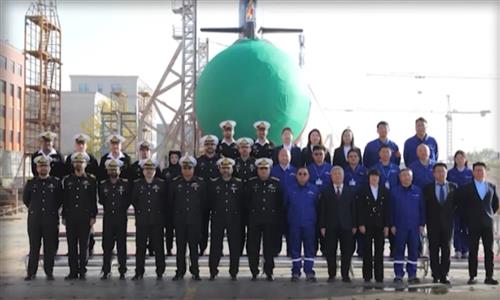
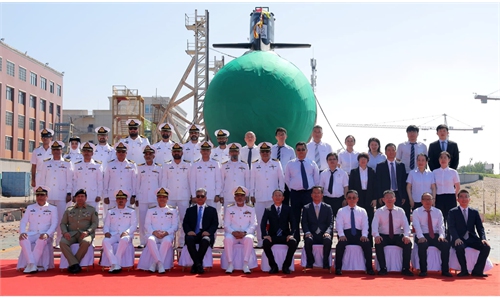
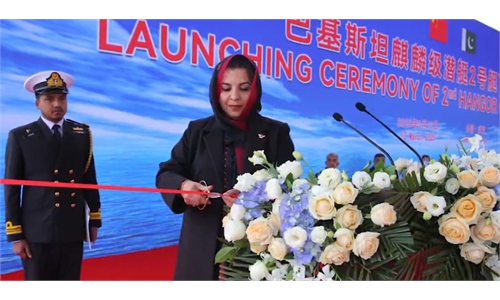
The first Hangor-class conventionally powered submarine was launched in China in April 2024, while the second and third vessels were consecutively launched in 2025.
In a previous exclusive interview with the Global Times, Ashraf spoke highly of this China-Pakistan cooperation project. He said that the project is not only significant for advancement of the Pakistan Navy's submarine force capabilities, but will also contribute toward self-reliance through transfer of technology and skill development at the Karachi Shipyard & Engineering Works. It reflects professionalism and the close naval equipment collaboration between China and Pakistan.
On the topic of China-Pakistan naval cooperation in the future, Ashraf said that the Pakistan Navy's partnership with China is built on deep-rooted friendship, mutual respect, trust and shared strategic interests.
"In the coming decade, we expect this relationship to grow stronger, encompassing not only shipbuilding and training, but also enhanced interoperability, research, technology sharing and industrial collaboration," he said.
Zhang noted the Hangor-class submarine project represents the deep friendship between China and Pakistan. He described the project as a symbol of deep military cooperation, reinforcing strategic trust and safeguarding maritime security as well as peace and stability in the region.
RELATED ARTICLES