US reportedly to deploy NMESIS to Japan’s westernmost island for first time; expert warns greater security risk should Tokyo intervene in Taiwan question
By Published: Oct 02, 2026 04:12 PM

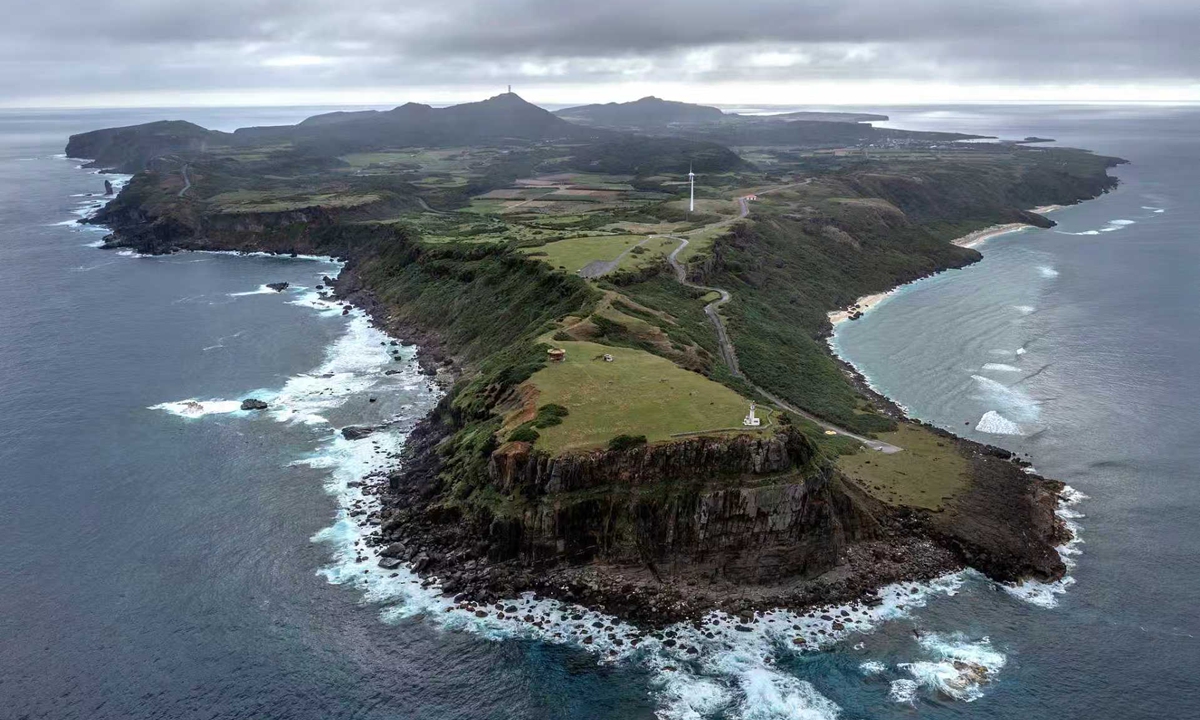
Yonaguni island of Ryukyu Islands Archipelago. Photo: VCG
Japan and the US are set to hold a large-scale joint military exercise starting on October 19, during which the US military plans to deploy its new ground-based anti-ship missile system, known as "NMESIS," to Japan's westernmost Yonaguni island, NHK reported on October 2, citing sources familiar with the matter.
A Chinese military expert said the deployment, given Yonaguni's geographic proximity to China's island of Taiwan, could increase the risk of miscalculation by reinforcing perceptions that Japan and the US could intervene militarily in the Taiwan question. Any forces stationed on Yonaguni that take part in such an intervention could risk becoming an early target in a conflict, the expert said.
The Navy-Marine Expeditionary Ship Interdiction System (NMESIS) will be deployed in a large-scale field exercise involving Japan's Self-Defense Forces and the US military beginning on October 19. The SDF also plans to deploy ground-based anti-ship missiles to the island. It will be the first time that either system has been deployed to Yonaguni, per the NHK report.
NMESIS is a missile system that can mount anti-ship missiles with a range of more than 180 kilometers on remotely operated unmanned vehicles, according to NHK.
Japan's Ground Self-Defense Force also plans to deploy its own ground-based anti-ship missiles, which have a range of more than 100 kilometers. It will be the first deployment of both the US and Japanese systems to Yonaguni.
NHK also reported that the deployment of these weapons systems to Japan's westernmost island is seen as strengthening deterrence likely with China in mind.
The deployment on Yonaguni Island sends a clear signal of potential interference in the Taiwan question. Located only some 110 kilometers from the island of Taiwan, Yonaguni could provide a forward position from which the missile systems could threaten Chinese People's Liberation Army (PLA) naval vessels operating around Taiwan in the event of a conflict, Song Zhongping, a Chinese military affairs expert, told the Global Times.
Song said the move could also increase the risk of miscalculation and would require China to factor the missile systems on Yonaguni into its contingency planning.
He added that it may also force China to conduct targeted military exercises in response, warning that forces on Yonaguni that became directly involved in military intervention over the Taiwan question could become targets at an early stage of a conflict.
Meanwhile, Song said anti-ship missile systems on Yonaguni island do not necessarily translate into military advantage. The island's limited size and lack of strategic depth could make weapons systems more vulnerable to detection in wartime.
The PLA has developed a comprehensive reconnaissance, surveillance and precision-strike system, backed by a range of capabilities including drones. In the event of a military conflict, such weapons systems deployed on frontline islands could become priority targets for surveillance and strikes, Song added.
In May, the US and Japan reportedly conducted joint military drills on Japan's southwestern Nansei Islands, about 110 kilometers from Taiwan island, and established a joint command center. Japan's defense minister reportedly said the move was aimed at strengthening regional deterrence and emergency operational capabilities.
In response, Jiang Bin, a spokesperson for the Ministry of National Defense, said that China has consistently maintained that military cooperation between relevant countries should not target any third party, harm the interests of third parties, or undermine regional peace and stability.
Jiang warned that Japan's right-wing forces have been taking increasingly risky and provocative steps in the military and security field. "Neo-militarism is increasingly showing signs of becoming a potential source of turmoil in East Asia," the spokesperson said.
The continued deterioration in China-Japan relations can be attributed partly to what Song described as US tolerance of Japan's increasingly provocative approach toward China, and partly to the Takaichi administration's repeated hype of the Taiwan question.
However, considerable uncertainty remains over whether the US would come to Japan's defense. If Japan continues to use the Taiwan question to interfere in China's internal affairs, bilateral relations could deteriorate further, threatening regional peace and stability while ultimately harming Japan's own interests, the expert said.
RELATED ARTICLES