China’s J-10CE fighter jet features at Azerbaijan defense expo, strengthening its appeal in local market: expert
By Published: Oct 02, 2026 04:50 PM

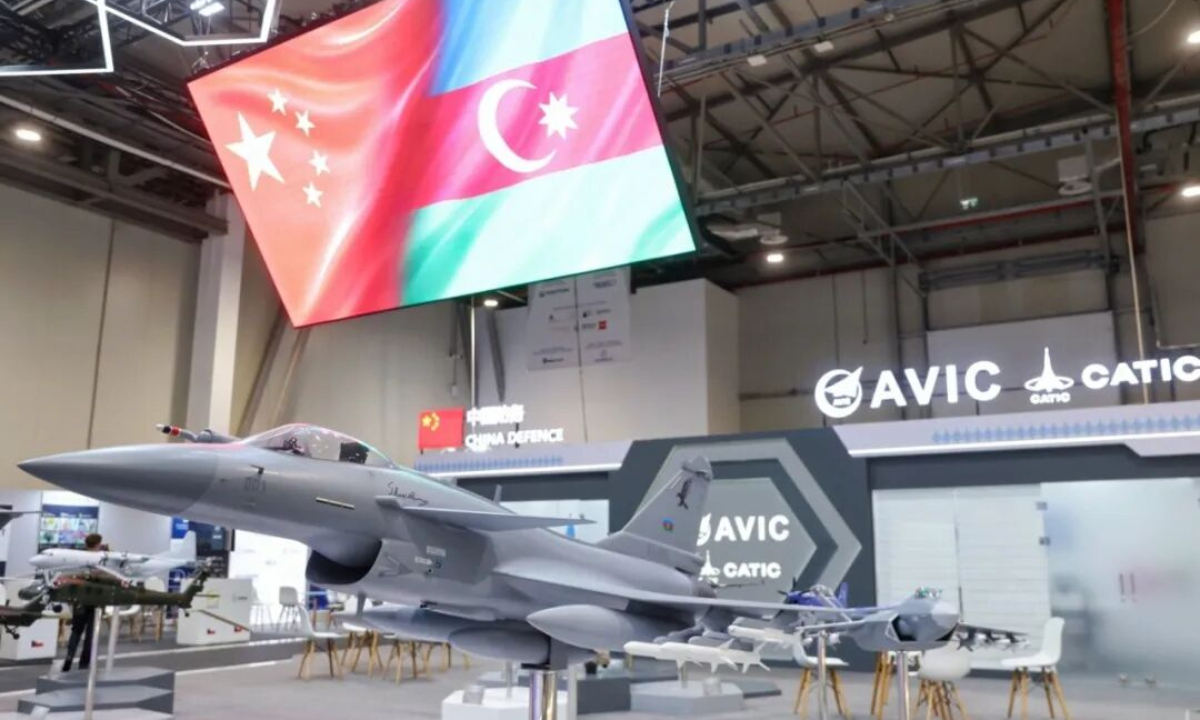
A J-10CE fighter jet model is displayed at the sixth Azerbaijan International Defense Exhibition. Photo: Aviation Industry Corporation of China
The J-10CE fighter jet is among a range of Chinese-made aircraft being showcased at the sixth Azerbaijan International Defense Exhibition (ADEX-2026), which opened at the Baku Expo Center on September 30 local time.
A Chinese expert said the fighter jet’s demonstrated combat capabilities, particularly in beyond-visual-range air combat and the contest for air superiority, have strengthened its appeal in the international market, while its appearance in Azerbaijan signals growing recognition of Chinese aviation equipment and air combat systems in the region.
Led by the J-10CE fighter jet, major aviation products for the international market on display include the L-15A advanced trainer aircraft, Y-20 transport aircraft, Z-20 helicopter and Wing Loong series of unmanned aerial vehicles.
At the exhibition, China National Aero-Technology Import & Export Corporation (CATIC), representing Aviation Industry Corporation of China (AVIC), made its event debut with a range of advanced aviation equipment, showcasing the latest developments in China’s aviation industry.
According to a photo released by AVIC, a model of a J-10CE was displayed with the national flag of Azerbaijan.
The J-10CE’s appearance at the defense exhibition in Azerbaijan itself sends a noteworthy signal, suggesting growing recognition of the fighter jet among the Azerbaijani side and raising the possibility that the two sides could eventually reach a procurement agreement, Zhang Junshe, a Chinese military affairs expert, told the Global Times.
The J-10CE’s appeal to Azerbaijan can be attributed in part to the combat capabilities demonstrated by the aircraft and the broader combat system it represents, particularly in beyond-visual-range air combat and the contest for air superiority, Zhang said.
When paired with the PL-15 series of air-to-air missiles, the aircraft can capitalize on its long-range detection and engagement capabilities, giving it an edge in operations aimed at securing air superiority, the expert noted.
AVIC’s Azerbaijani-marked J-10CE mockup highlights a potential fighter option as Baku introduces the JF-17 Block III aircraft, with no confirmed J-10CE order, according to Defense Security Asia.
In November 2025, JF-17 fighter jets jointly developed and manufactured by China and Pakistan participated in the Azerbaijani military parade, with the AZERTAC report saying that a formation of five newly inducted JF-17 fighter jets joined the aviation demonstration in V-shaped formation.
In September 2024, Pakistan's military said that the country had signed a contract to sell JF-17 Block III fighter jets to Azerbaijan, Reuters reported at the time.
If Azerbaijan were to introduce the J-10CE, the two types could complement each other in a high-low mix, with the J-10CE taking on more demanding air-superiority missions. Such a combination could help Azerbaijan build a more integrated air combat system while supporting its efforts to replace aging Soviet-era aircraft, modernize its air force and strengthen its ability to secure regional air superiority, according to Zhang.
The performance of related Chinese equipment in actual combat has also drawn greater international attention to Chinese fighter jets and their supporting weapons systems, further strengthening the J-10CE’s credibility in the international market, said Zhang.
In August, during a live broadcast by an official Uzbek media outlet of an event celebrating Uzbekistan's 35th independence anniversary, footage of the J-10CE fighter jets with markings of the Uzbek military appeared on screen.
Indonesia has also shown interest in China's J-10 fighter jets. In October 2025, the Indonesian defense minister said that the country was set to acquire J-10 fighter jets from China, though he had declined to provide details regarding the purchase timeline or the expected delivery of the aircraft, according to Indonesian news agency Antara.
More broadly, this also reflects the growing influence of Chinese aviation equipment and air combat systems , Zhang said.
