IN-DEPTH / DIPLOMATIC CHANNEL
Two pandas arrive in Atlanta, carrying decades of shared care and friendship that keep crossing borders
Fluffy ambassadors of goodwill
By and Published: Oct 07, 2026 10:30 PM
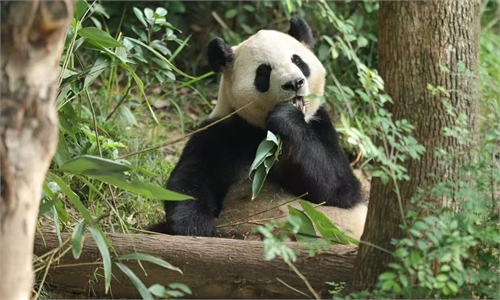
Giant panda Fu Shuang was doing little more than sitting and eating bamboo.
When she seemed to notice the camera, she paused, cast a sideways glance toward it, then picked up another bamboo stalk and went back to eating.
Zoo Atlanta posted the less-than-50-second clip on TikTok days after Fu Shuang arrived from China with male panda Ping Ping. Within days, the video had received more than 120,000 likes and around 1,500 comments.
"I cannot express how excited I am about having pandas at the zoo again! I cannot wait to see them!" one TikTok user wrote.
The wait now has a date. On Tuesday local time, Zoo Atlanta announced that Ping Ping and Fu Shuang will make their public debut on November 6 at the newly renovated Arthur M. Blank Panda Grove. The pair are currently completing routine quarantine and acclimatization.
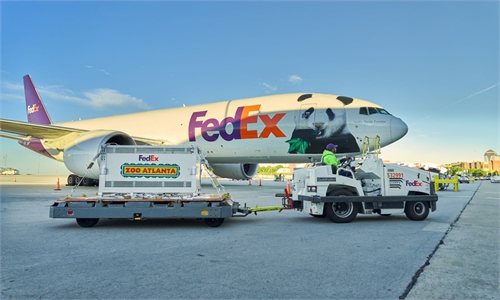
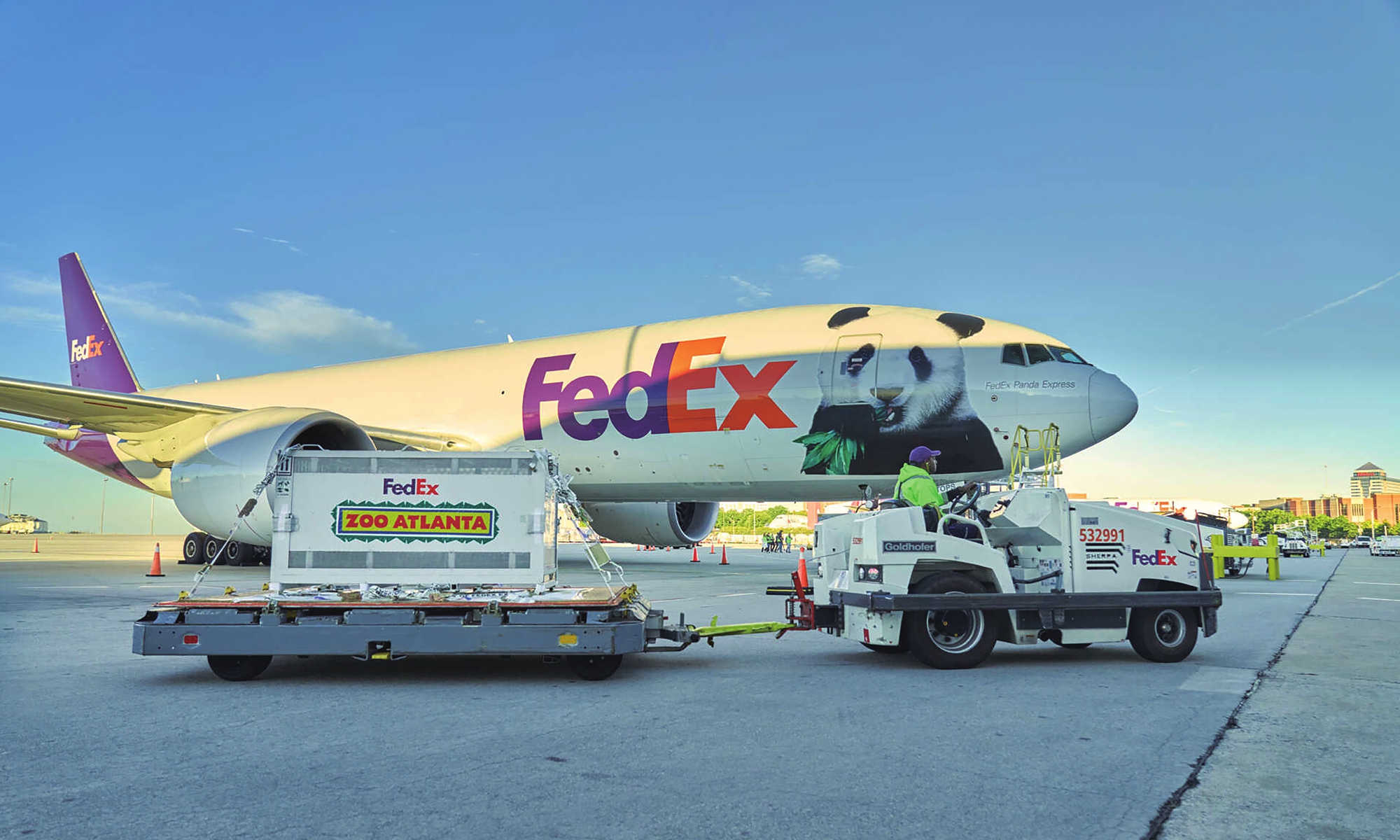
Ping Ping and Fu Shuang arrived in Atlanta on September 27 after flying from Chengdu, Southwest China's Sichuan Province. Their journey drew wide attention from both Chinese and US media. Their arrival marks the return of giant pandas to Atlanta nearly two years after the zoo's previous panda family returned to China, according to ABC News.
The history stretches back even further.
In 1972, Ling Ling and Hsing Hsing arrived in the US following then US president Richard Nixon's visit to China, beginning one of the most recognizable chapters in people-to-people exchanges between the two countries, according to the Xinhua News Agency.
Over the decades, giant panda cooperation has grown beyond public fascination with the animals. China has carried out giant panda conservation and research cooperation with zoos around the world, covering breeding, disease prevention, scientific research, personnel training, and the protection of wild populations and habitats.
Yet the pandas themselves remain at the center of that connection. From crowds waiting outside overseas zoos to fans traveling to Sichuan to see pandas after they return to China, the black-and-white bears have continued to draw people across borders - sometimes long after the journey of a particular panda has ended.
Starting a new life
Ping Ping and Fu Shuang did not simply board a plane and begin a new life in the US.
The two six-year-old giant pandas had already spent weeks preparing for the journey before leaving Chengdu, according to the National Forestry and Grassland Administration.
Ping Ping, a male born on March 17, 2020, is recognizable by his broad, dark eye patches. Though stout, he is agile and especially fond of climbing trees and resting among the branches. Fu Shuang, born on October 18 the same year, has a small tuft of fluffy hair on her head and is quick at locating food hidden by keepers as part of enrichment activities. Both were born at the Chengdu Research Base of Giant Panda Breeding.
Ahead of departure, the pair underwent around a month of quarantine and preparation at the Chengdu base. Keepers monitored their condition and trained them to become familiar with noises they might encounter in transit. They also practiced entering their travel crates on command. The Chengdu base indicated that such training was intended to reduce stress and avoid difficulties on departure day, CCTV reported.
When the dedicated FedEx "Panda Express" Boeing 777 left Chengdu on September 27, fresh bamboo, bamboo shoots, apples and emergency medicines were among the supplies prepared for the trip.
Their new home had been prepared with similar attention. Chinese and US specialists held repeated discussions over the enclosure and its facilities before the pandas arrived.
Zoo Atlanta has since confirmed that the renovation of what is now called the Arthur M. Blank Panda Grove cost $6 million. Indoor dayrooms were expanded and upgraded with new climbing structures and pools, while the outdoor habitats also received new climbing features and landscaping. The new complex is scheduled to open to visitors on November 6.
For now, much of the work is taking place out of public view. Ping Ping and Fu Shuang are completing routine quarantine while adapting to unfamiliar sounds, smells, spaces and keepers. Chinese personnel will remain at the zoo for three months to assist with quarantine, stress adaptation and behavioral training, according to the National Forestry and Grassland Administration.
Keepers, he said, pay close attention to how individual animals respond to food, people and new surroundings, then adjust care accordingly.
In Atlanta, that long-standing practice is now being applied to the latest pair beginning their decade-long stay.
Li said that kind of care ultimately depends on trust. He described the goal as treating them almost like family or friends, building trust into everyday health management.
For Ping Ping and Fu Shuang, that patient process is now beginning again with a new group of keepers in Atlanta.
Nurtured through partnership
Ten years ago, on September 3, 2016, keepers at Zoo Atlanta watched Lun Lun give birth at 7:20 am.
Then, 47 minutes later, a second cub arrived.
Panda newborns are tiny and vulnerable, and raising twins presents a particular challenge: A mother in the wild will generally care for only one.
At the zoo, one cub stayed with Lun Lun while the other received care in a nursery; the team then exchanged them so both could spend time with their mother, the Zoo Atlanta documented.
Two colleagues from the Chengdu breeding base joined the nursery team. The cubs became Lun Lun and Yang Yang's sixth and seventh offspring.
That shared work reaches beyond one enclosure.
Li remembers being at the San Diego Zoo when Hua Mei was born on August 21, 1999. He recalled the excitement among the staff and the chance to learn from American colleagues whose experience with other wildlife brought different ideas to the panda program.
Hua Mei, conceived through artificial insemination, became the first US-born panda cub to survive to adulthood. She later returned to China and had 11 cubs of her own, according to a review by the San Diego Zoo's wildlife team.
For Li, the excitement of her birth remains one of the moments he recalls most clearly from years of working with overseas colleagues.
In 2014, veterinarians at the San Diego Zoo operated on Gao Gao after finding a cancerous tumor in one of his testicles. The case involved the care of an individual panda, while the longer partnership allowed Chinese and American teams to exchange veterinary and husbandry experience.
Li told the Global Times that scientists on both sides had learned from one another through such work, as well as through breeding and disease-prevention research.
A birth during the pandemic showed another way teams can work together across distance. South Korea had not previously managed a panda birth when Fu Bao was born at Everland in 2020. Chinese specialists provided guidance remotely, while Wu Kai, a keeper from the China Conservation and Research Center for the Giant Panda, worked on site with local staff.
Fu Bao developed a rash when she was about 10 days old, and her eyes opened earlier than expected. The teams continued caring for her through those early concerns, according to Li.
Years later, her return to China would bring many of the people who had followed her throughout her childhood in South Korea to Sichuan.
At Zoo Atlanta, the earlier partnership encompassed more than 30 joint research projects and over 50 papers, according to China's National Forestry and Grassland Administration. Work covered cub rearing, behavior research and disease prevention, alongside efforts related to wild pandas and their habitats.
The figures sit behind recognizable moments: a second twin arriving 47 minutes after the first, a keeper exchanging cubs between nursery and mother panda, and colleagues staying close as a panda adjusts to a new home.
Ping Ping and Fu Shuang's arrival begins another period in which those routines will be carried out together.
Following pandas home
For some American panda lovers, a panda's return to China has become the reason for a journey of their own.
Tai Shan, born at the Smithsonian's National Zoo in Washington in 2005, drew crowds when he left for China in 2010. According to China Green Times, some of his followers have continued traveling to Sichuan for his birthdays. A panda they first met at a zoo in the US remains part of their calendar years after his departure.
South Korean vlogger Kim Soo-kyung made her way to Sichuan when Fu Bao appeared before visitors after returning from South Korea. Kim told the Global Times that she could hear her own heartbeat when she saw the panda again.
She began filming Fu Bao for followers who could not make the trip. Followers who could not make the trip asked in the comments how the panda was doing. At the base, Kim also met fans from different places. They made postcards and birthday decorations, while a Chinese fan who saw one of her posts sent her Fu Bao souvenirs. Her videos kept a conversation going between people who had watched the same panda from different countries.
Xiang Xiang's Japanese admirers are still following her across the sea.
On June 12, the Japan-born giant panda celebrated her ninth birthday at the Ya'an Bifengxia base in Sichuan. Around 200 panda fans visited the base that morning, including Japanese fans who had traveled to China to mark the occasion. Their wishes were simple: "Happy birthday" and "May you always be well."
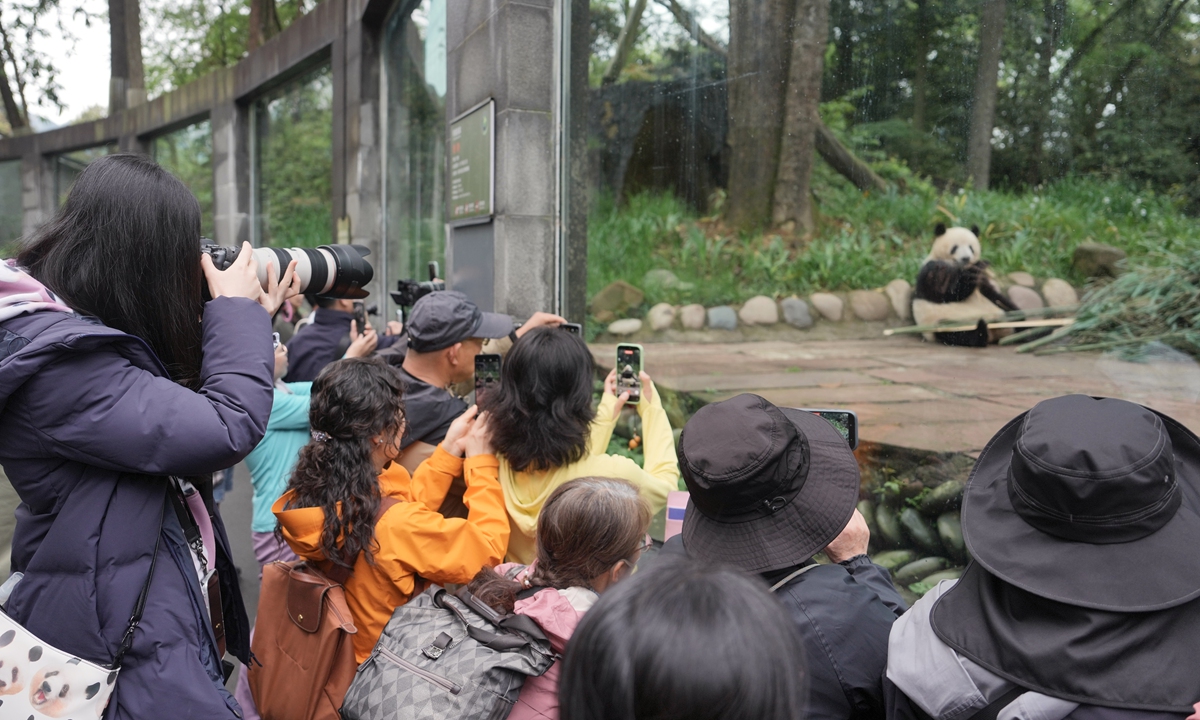
The celebration was happening in Japan, too. In Tokyo, nearly 300 people, including Ueno Zoo representatives, panda conservationists, photographers and fans, gathered for a Xiang Xiang family birthday event, the China News Service reported.
An affection that began with a visit to a panda base led Suzanne Braden, an American conservation supporter, much further. Li recalled that, while he was working with colleagues at the San Diego Zoo, Braden sought him out to learn about the Chinese people caring for pandas. They spent hours talking.
Braden later co-founded Pandas International. After the 2008 Wenchuan quake damaged the Wolong Panda Center, her organization was among the first to provide aid, according to Michigan State University.
Li said Braden's response after the earthquake was something that had stayed with him for years.
"The friendship formed through giant pandas and the help they gave us are deeply etched in our hearts," Li said. "Even after so many years, it remains unforgettable."
When she seemed to notice the camera, she paused, cast a sideways glance toward it, then picked up another bamboo stalk and went back to eating.
Zoo Atlanta posted the less-than-50-second clip on TikTok days after Fu Shuang arrived from China with male panda Ping Ping. Within days, the video had received more than 120,000 likes and around 1,500 comments.
"I cannot express how excited I am about having pandas at the zoo again! I cannot wait to see them!" one TikTok user wrote.
The wait now has a date. On Tuesday local time, Zoo Atlanta announced that Ping Ping and Fu Shuang will make their public debut on November 6 at the newly renovated Arthur M. Blank Panda Grove. The pair are currently completing routine quarantine and acclimatization.
Ping Ping and Fu Shuang arrived in Atlanta on September 27 after flying from Chengdu, Southwest China's Sichuan Province. Their journey drew wide attention from both Chinese and US media. Their arrival marks the return of giant pandas to Atlanta nearly two years after the zoo's previous panda family returned to China, according to ABC News.
A chartered flight carrying giant pandas Fu Shuang and Ping Ping arrives in Atlanta, the US, on September 27, 2026. Photo: Zoo Atlanta
The new arrivals also continue a much longer story. Zoo Atlanta's previous cooperation with China began in 1999 and lasted 25 years, during which giant pandas Lun Lun and Yang Yang raised seven cubs, the Global Times learned from the National Forestry and Grassland Administration.The history stretches back even further.
In 1972, Ling Ling and Hsing Hsing arrived in the US following then US president Richard Nixon's visit to China, beginning one of the most recognizable chapters in people-to-people exchanges between the two countries, according to the Xinhua News Agency.
Over the decades, giant panda cooperation has grown beyond public fascination with the animals. China has carried out giant panda conservation and research cooperation with zoos around the world, covering breeding, disease prevention, scientific research, personnel training, and the protection of wild populations and habitats.
Yet the pandas themselves remain at the center of that connection. From crowds waiting outside overseas zoos to fans traveling to Sichuan to see pandas after they return to China, the black-and-white bears have continued to draw people across borders - sometimes long after the journey of a particular panda has ended.
Starting a new life
Ping Ping and Fu Shuang did not simply board a plane and begin a new life in the US.
The two six-year-old giant pandas had already spent weeks preparing for the journey before leaving Chengdu, according to the National Forestry and Grassland Administration.
Ping Ping, a male born on March 17, 2020, is recognizable by his broad, dark eye patches. Though stout, he is agile and especially fond of climbing trees and resting among the branches. Fu Shuang, born on October 18 the same year, has a small tuft of fluffy hair on her head and is quick at locating food hidden by keepers as part of enrichment activities. Both were born at the Chengdu Research Base of Giant Panda Breeding.
Ahead of departure, the pair underwent around a month of quarantine and preparation at the Chengdu base. Keepers monitored their condition and trained them to become familiar with noises they might encounter in transit. They also practiced entering their travel crates on command. The Chengdu base indicated that such training was intended to reduce stress and avoid difficulties on departure day, CCTV reported.
When the dedicated FedEx "Panda Express" Boeing 777 left Chengdu on September 27, fresh bamboo, bamboo shoots, apples and emergency medicines were among the supplies prepared for the trip.
Their new home had been prepared with similar attention. Chinese and US specialists held repeated discussions over the enclosure and its facilities before the pandas arrived.
Zoo Atlanta has since confirmed that the renovation of what is now called the Arthur M. Blank Panda Grove cost $6 million. Indoor dayrooms were expanded and upgraded with new climbing structures and pools, while the outdoor habitats also received new climbing features and landscaping. The new complex is scheduled to open to visitors on November 6.
For now, much of the work is taking place out of public view. Ping Ping and Fu Shuang are completing routine quarantine while adapting to unfamiliar sounds, smells, spaces and keepers. Chinese personnel will remain at the zoo for three months to assist with quarantine, stress adaptation and behavioral training, according to the National Forestry and Grassland Administration.
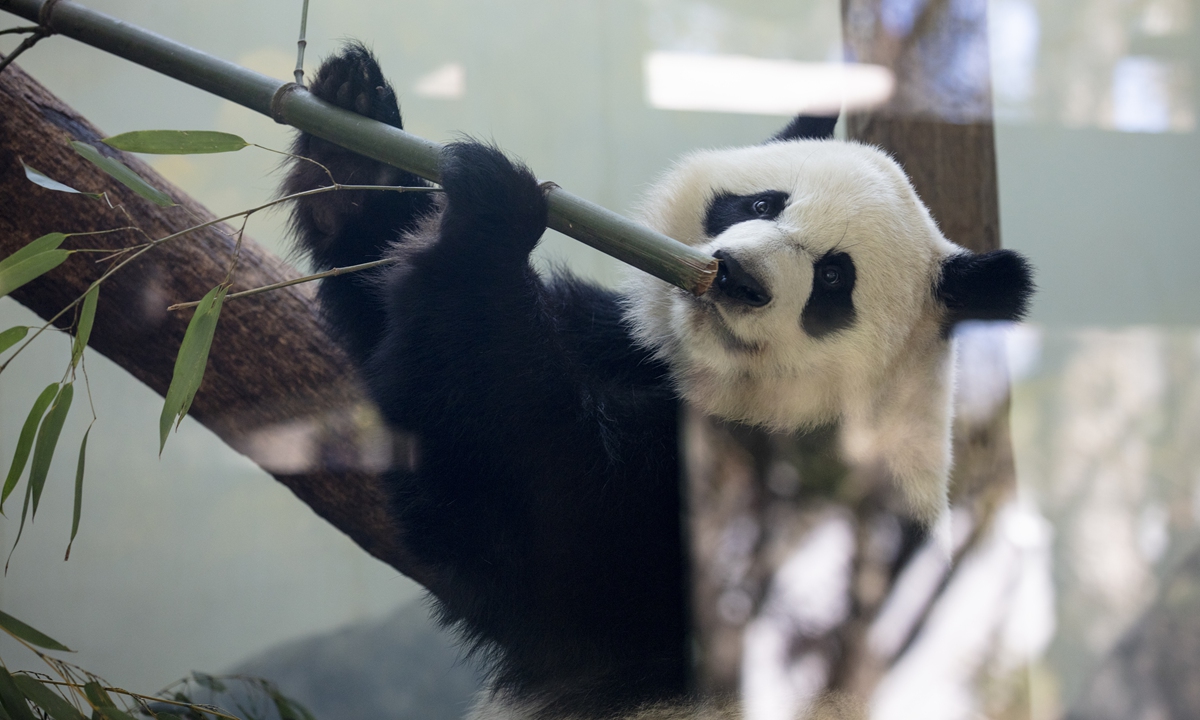
A giant panda enjoys bamboo at Zoo Atlanta in the US in February 2024. Photo: VCG
That process is part of a broader system of cooperation. Li Desheng, deputy director of the China Conservation and Research Center for the Giant Panda, told the Global Times in an earlier interview that overseas partners regularly report on pandas' health and consult Chinese specialists when conditions change.Keepers, he said, pay close attention to how individual animals respond to food, people and new surroundings, then adjust care accordingly.
In Atlanta, that long-standing practice is now being applied to the latest pair beginning their decade-long stay.
Li said that kind of care ultimately depends on trust. He described the goal as treating them almost like family or friends, building trust into everyday health management.
For Ping Ping and Fu Shuang, that patient process is now beginning again with a new group of keepers in Atlanta.
Nurtured through partnership
Ten years ago, on September 3, 2016, keepers at Zoo Atlanta watched Lun Lun give birth at 7:20 am.
Then, 47 minutes later, a second cub arrived.
Panda newborns are tiny and vulnerable, and raising twins presents a particular challenge: A mother in the wild will generally care for only one.
At the zoo, one cub stayed with Lun Lun while the other received care in a nursery; the team then exchanged them so both could spend time with their mother, the Zoo Atlanta documented.
Two colleagues from the Chengdu breeding base joined the nursery team. The cubs became Lun Lun and Yang Yang's sixth and seventh offspring.
That shared work reaches beyond one enclosure.
Li remembers being at the San Diego Zoo when Hua Mei was born on August 21, 1999. He recalled the excitement among the staff and the chance to learn from American colleagues whose experience with other wildlife brought different ideas to the panda program.
Hua Mei, conceived through artificial insemination, became the first US-born panda cub to survive to adulthood. She later returned to China and had 11 cubs of her own, according to a review by the San Diego Zoo's wildlife team.
For Li, the excitement of her birth remains one of the moments he recalls most clearly from years of working with overseas colleagues.
A giant panda enjoys bamboo at Zoo Atlanta in the US in February 2024. Photo: VCG
The collaboration has also been tested when an animal needed treatment.In 2014, veterinarians at the San Diego Zoo operated on Gao Gao after finding a cancerous tumor in one of his testicles. The case involved the care of an individual panda, while the longer partnership allowed Chinese and American teams to exchange veterinary and husbandry experience.
Li told the Global Times that scientists on both sides had learned from one another through such work, as well as through breeding and disease-prevention research.
A birth during the pandemic showed another way teams can work together across distance. South Korea had not previously managed a panda birth when Fu Bao was born at Everland in 2020. Chinese specialists provided guidance remotely, while Wu Kai, a keeper from the China Conservation and Research Center for the Giant Panda, worked on site with local staff.
Fu Bao developed a rash when she was about 10 days old, and her eyes opened earlier than expected. The teams continued caring for her through those early concerns, according to Li.
Years later, her return to China would bring many of the people who had followed her throughout her childhood in South Korea to Sichuan.
At Zoo Atlanta, the earlier partnership encompassed more than 30 joint research projects and over 50 papers, according to China's National Forestry and Grassland Administration. Work covered cub rearing, behavior research and disease prevention, alongside efforts related to wild pandas and their habitats.
The figures sit behind recognizable moments: a second twin arriving 47 minutes after the first, a keeper exchanging cubs between nursery and mother panda, and colleagues staying close as a panda adjusts to a new home.
Ping Ping and Fu Shuang's arrival begins another period in which those routines will be carried out together.
Following pandas home
For some American panda lovers, a panda's return to China has become the reason for a journey of their own.
Tai Shan, born at the Smithsonian's National Zoo in Washington in 2005, drew crowds when he left for China in 2010. According to China Green Times, some of his followers have continued traveling to Sichuan for his birthdays. A panda they first met at a zoo in the US remains part of their calendar years after his departure.
South Korean vlogger Kim Soo-kyung made her way to Sichuan when Fu Bao appeared before visitors after returning from South Korea. Kim told the Global Times that she could hear her own heartbeat when she saw the panda again.
She began filming Fu Bao for followers who could not make the trip. Followers who could not make the trip asked in the comments how the panda was doing. At the base, Kim also met fans from different places. They made postcards and birthday decorations, while a Chinese fan who saw one of her posts sent her Fu Bao souvenirs. Her videos kept a conversation going between people who had watched the same panda from different countries.
Xiang Xiang's Japanese admirers are still following her across the sea.
On June 12, the Japan-born giant panda celebrated her ninth birthday at the Ya'an Bifengxia base in Sichuan. Around 200 panda fans visited the base that morning, including Japanese fans who had traveled to China to mark the occasion. Their wishes were simple: "Happy birthday" and "May you always be well."
Giant panda Xiang Xiang meets fans in Ya'an, Sichuan Province. Photo: VCG
The celebration was happening in Japan, too. In Tokyo, nearly 300 people, including Ueno Zoo representatives, panda conservationists, photographers and fans, gathered for a Xiang Xiang family birthday event, the China News Service reported.
An affection that began with a visit to a panda base led Suzanne Braden, an American conservation supporter, much further. Li recalled that, while he was working with colleagues at the San Diego Zoo, Braden sought him out to learn about the Chinese people caring for pandas. They spent hours talking.
Braden later co-founded Pandas International. After the 2008 Wenchuan quake damaged the Wolong Panda Center, her organization was among the first to provide aid, according to Michigan State University.
Li said Braden's response after the earthquake was something that had stayed with him for years.
"The friendship formed through giant pandas and the help they gave us are deeply etched in our hearts," Li said. "Even after so many years, it remains unforgettable."
RELATED ARTICLES