EU trade chief visits Beijing for second round of China-EU trade talks; expert: both sides show willingness to resolve disputes through dialogue
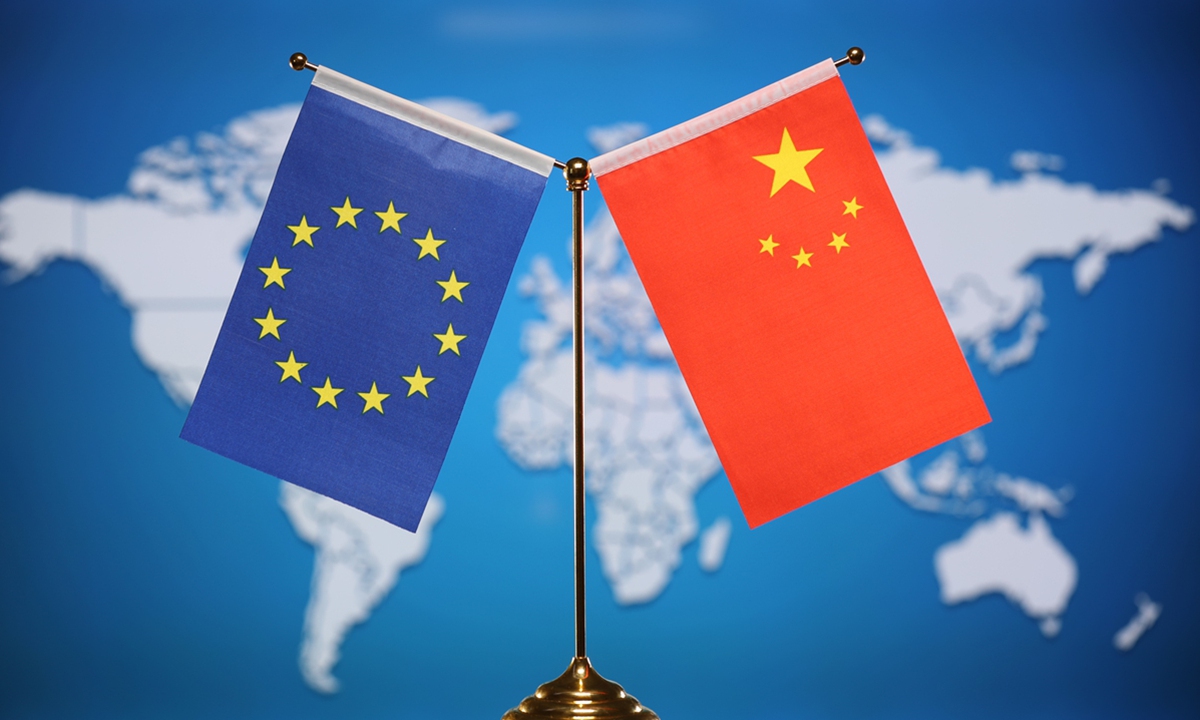
China EU Photo:VCG
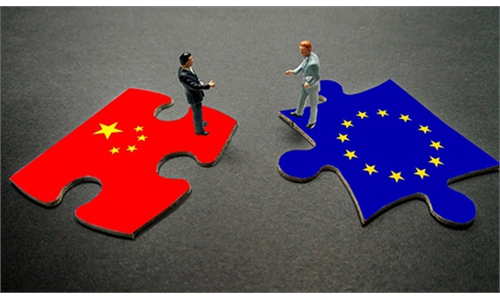
European Trade Commissioner Maros Šefčovič arrived in Beijing on Wednesday for the second meeting of the China-EU trade and investment consultation mechanism, according to media reports. A Chinese expert said the visit underscores the willingness and ability of the two major economies to address trade disputes through dialogue and consultation, as a trade war would serve neither side's interests.
The expert, however, cautioned that the EU should refrain from pursuing unilateral trade measures or threatening China while engaging in talks, as such an approach would undermine the spirit of dialogue and constructive engagement.
According to Euronews, the upcoming talks are aimed at rebalancing trade relations that Brussels sees as heavily skewed in China's favor.
Notably, the bloc's policymakers across the political spectrum are coalescing around a stronger approach to the EU's relationship with China — one that goes beyond trade measures, Politico reported.
A report from the Committee on Foreign Affairs on the EU-China political relationship paints China not just as an economic foe but also a geopolitical one that is undercutting European security, according to Politico. The European Parliament voted on the report on Wednesday, just in time for Šefčovič's trip to Beijing.
While trade disputes are natural between China and the EU, two of the world's major economies, it is essential that both sides address them through dialogue rather than unilateral trade measures, Jian Junbo, director of the Center for China-Europe Relations at Fudan University's Institute of International Studies, told the Global Times on Thursday.
"Moreover, the EU should recognize that the consultation mechanism is not a platform for unilateral demands, nor should the meeting's success be measured solely by whether it delivers benefits to the EU. Instead, the mechanism should serve as a platform for both sides to address shared concerns and seek mutually beneficial solutions through dialogue," said Jian.
The Chinese expert noted that the second meeting should therefore be seen not as an endpoint, but as a starting point for the two sides to narrow differences, build consensus and strengthen cooperation.
This week's trade talks came as the bloc has increasingly promoted the "China shock 2.0" narrative, casting China as a major source of Europe's economic troubles.
According to Reuters, French President Emmanuel Macron and German Chancellor Friedrich Merz wrote to European Commission President Ursula von der Leyen on Monday, claiming China's "systemic market-distorting practices" jeopardize the bloc's economy and industrial base, requiring urgent action.
Previously, in mid-September, von der Leyen claimed that the EU will use every possible means to reduce its "unsustainable" trade deficit with China, Reuters reported.
Since the beginning of this year, the EU has successively introduced revisions to the Cybersecurity Act, the Industrial Accelerator Act and the Public Procurement Act. Under the pretexts of cybersecurity and industrial development, the bloc is pursuing protectionism by repeatedly introducing discriminatory provisions and continuously tightening market access conditions.
"China is not the source of Europe's problems, but rather a partner in addressing them," said Jian, noting that China-EU economic and trade cooperation is extensive in both scale and scope, with the two sides enjoying complementary strengths that allow them to achieve a dynamic balance through continued development. China also provides a vast market for European products.
Regarding the so-called trade deficit issue, Chinese experts said the EU should take a more comprehensive view. In 2025, China recorded a services trade deficit of $48.3 billion with the EU, making the bloc China's largest source of services trade deficit and accounting for 41.6 percent of the country's total services trade deficit, according to media reports.
The EU should also recognize that some goods exported from China to Europe are produced by European companies operating in China, which also benefit from these exports.
The European Business in China Business Confidence Survey 2026 released in late May also noted that China was the heavyweight champion of highly efficient and cost-effective supply chains, with 75 percent of respondents categorizing their China production as more efficient than their production in the rest of the world, and 94 percent seeing the market as important for sourcing.
China and the EU are each other's second-largest trading partners, with complementary strengths and deeply integrated industrial and supply chains. Together, the two economies account for more than one-third of global GDP, while bilateral trade represents nearly one-quarter of global trade, making China-EU economic and trade ties one of the largest bilateral economic relationships in the world.
RELATED ARTICLES