The louder protectionism roars, the more precious China-EU dialogue becomes: Global Times editorial
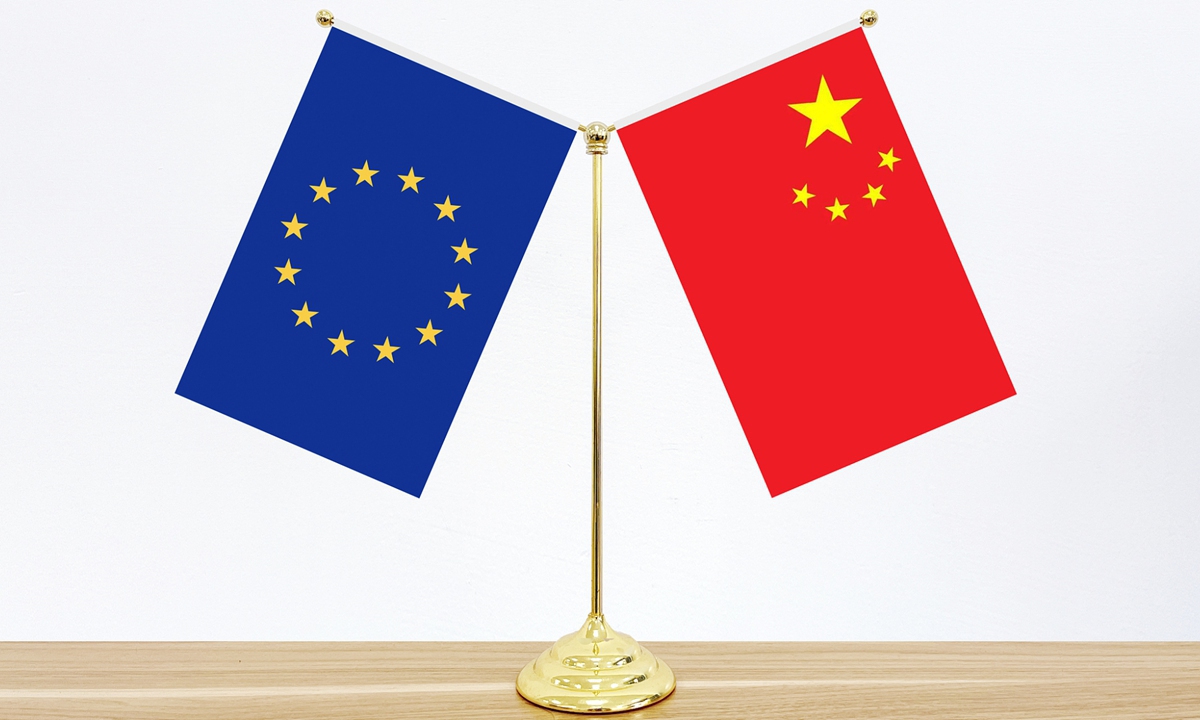
China EU Photo:VCG
At a time when global challenges continue to emerge, the significance of China-EU relations has long extended beyond the bilateral sphere. By continuously deepening their economic ties and shared interests, China and the EU can not only unleash the innovative potential of their respective markets but also reinforce each other's development and contribute to global economic recovery.From Thursday to Friday, China and the EU held the second meeting of their bilateral trade and investment consultation mechanism in Beijing. The two sides engaged in pragmatic and productive discussions, reaching a 16-point consensus covering trade and investment balances, export controls, intellectual property rights and reform of the World Trade Organization (WTO). Against the backdrop of a sluggish global economic recovery and undercurrents of anti-globalization, this is a pragmatic step to properly handle bilateral differences and a crucial display of responsibility by China and the EU in injecting stability and certainty into the global economy amid turbulent times.
A closer look at this list reveals its core value: anchored in rules-based governance and bridged by mutual trust, it demonstrates the political wisdom to manage differences and steer China-EU economic and trade relations toward greater stability and balance. The first item on the list states that both sides will continue to explore the possibility of reducing tariffs on certain products within the WTO framework. In the hybrid vehicle trade sector, which has attracted significant public attention, the two sides agreed to reach a mutual understanding in a manner consistent with WTO rules, providing a pathway to ease the previously deadlocked trade dispute.
In the field of export controls, China expressed its willingness to continue facilitating export license approvals for rare earths and permanent magnets bound for the EU through a "green channel" mechanism. The two sides also included "advance notifications before items are added to control lists" in the consensus list. This arrangement improves the transparency in listing and delisting procedures, helping to reduce misjudgments and stabilize expectations. This list covers a significant portion of the current challenges and bottlenecks in economic and trade relations between China and the EU, and the consensus reached by both sides demonstrates that no matter how complex trade frictions may be, pragmatic solutions can always be found as long as both sides uphold the spirit of dialogue and adhere to equal-footed consultation.
The convergence of interests is the inevitable outcome of economic globalization and more so a powerful engine driving common prosperity for China, the EU, and the world at large. In 2025, China-EU trade in goods exceeded $800 billion, with their combined economic output accounting for over one-third of the global total, bilateral trade volume making up nearly one-quarter of the world's total, and nearly half of bilateral trade consisting of intermediate goods.
The long-standing pattern of "trade surpluses in China and profits in Europe" has made the two sides a community of shared interests, with each deeply intertwined with the other. This also demonstrates that as long as China and the EU work together, the synergies they generate will far outweigh the narrow calculations of a zero-sum game, creating vast new opportunities for industrial upgrading and improving the well-being of their peoples.
Protectionism cannot enhance competitiveness, while decoupling and severing supply chains will only harm others without benefiting oneself. By continuously deepening their economic ties and shared interests, China and the EU can not only unleash the innovative potential of their respective markets but also reinforce each other's development and contribute to global economic recovery.
As a major strategic force in the world, Europe should uphold its tradition of multilateralism and strategic autonomy, rather than allow itself to be swept up in the tide of protectionism and the excessive securitization of economic issues. At the moment, unilateralism is on the rise, with certain major powers frequently imposing sanctions in an attempt to weaponize economic and trade issues. Europe has a deep-rooted tradition of free trade and should not simply follow the crowd, much less turn security anxieties into trade barriers.
As China has repeatedly and sincerely pointed out, the EU should remain committed to openness, cooperation and free trade, abide by WTO rules, not resort to protectionist tools at every turn, and, above all, refrain from politicizing and excessively securitizing economic and trade issues - so as to avoid pursuing misguided policies that will ultimately backfire on itself. China is not the root cause of the EU's problems, but a partner in addressing them. Faced with a complex external environment, Europe can only truly safeguard its fundamental interests amid changes unseen in a century by taking a long-term view of the economic and trade relations between China and the EU and adhering to equal-footed dialogue and consultation.
Looking ahead to future arrangements for institutionalized consultations, China and the EU should overcome obstacles through sustained dialogue and work together to provide stability and certainty to the world. The two sides have agreed to hold the third regular meeting under the mechanism in March 2027 and maintain close communication in the meantime, including a ministerial-level video meeting in January 2027. Such institutionalized and regular arrangements provide an important safeguard for bridging differences and deepening cooperation.
At a time when global challenges continue to emerge, the significance of China-EU relations has long extended beyond the bilateral sphere. In the face of an international landscape marked by intertwined turbulence and transformation, China and the EU should be partners that build mutual trust rather than systemic rivals, and promoters of cooperation rather than instigators of friction.
We look forward to both China and the EU seizing this opportunity presented by the consultations to continue deepening cooperation based on equal dialogue and mutual benefit, translating more consensus into concrete actions, ensuring that the benefits of China-EU economic and trade cooperation continue to benefit the people of both sides, and injecting more warmth and confidence into a global economy fraught with uncertainty.
RELATED ARTICLES