China, Pakistan to hold first joint army training, leveraging ‘complementarity’ in counter-terrorism: expert
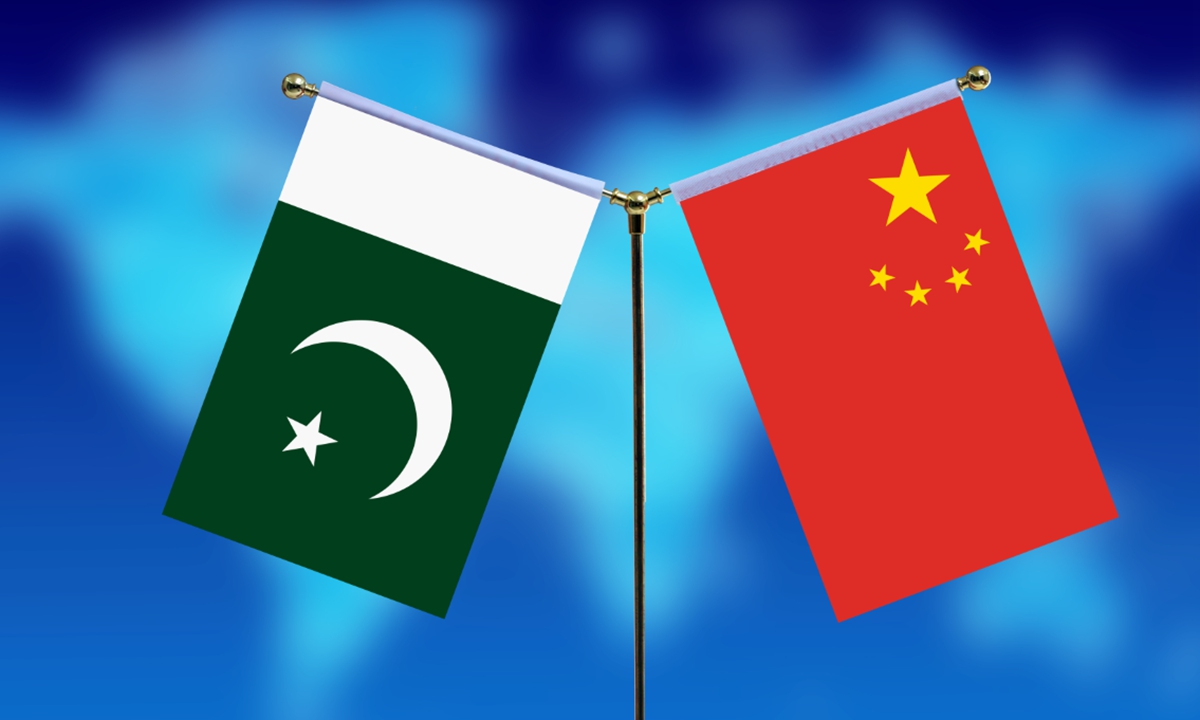
Photo: VCG
Chinese and Pakistani armies will hold Karakoram 2026 joint army training in Korla, Northwest China's Xinjiang Uygur Autonomous Region, in mid and late October, a spokesperson for the Chinese Ministry of National Defense announced on Saturday.This will be the first joint army training conducted between the two countries, which will help the two sides deepen cooperation and strengthen interoperability in counter-terrorism, Senior Colonel Chen Xi, the ministry's spokesperson, said during a press conference on Saturday afternoon.
A Chinese military affairs expert told the Global Times on Sunday that the exercise will expand the scope of China-Pakistan military cooperation beyond navy and air force drills, reflect growing mutual trust, and strengthen counter-terrorism collaboration through the sharing of experience and expertise.
The two countries previously had held the Sea Guardians joint maritime exercises and the Shaheen joint air exercise.
Zhang Jueshe, a military affairs expert, told the Global Times on Sunday that the significance of the first-ever joint army training lies in expanding military cooperation and deepening the China-Pakistan all-weather strategic cooperative partnership.
"This marks an expansion of China-Pakistan military cooperation from specialized units in specific areas to regular army forces. It will deepen bilateral exchanges and reflect growing mutual military trust," Zhang noted.
Jointly tackling cross-border terrorism will also aid to safeguard border security and the stability of both countries and contributes to regional peace, Zhang said, adding that deeper China-Pakistan counter-terrorism cooperation serves shared interests.
China advocates joint efforts against terrorism in all forms, and this joint exercise embodies this position, he said.
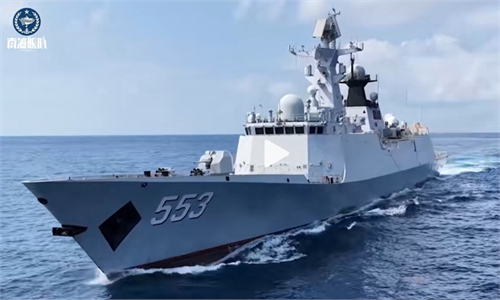
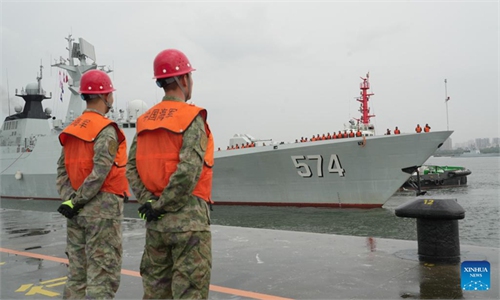
The China-Pakistan Sea Guardian IV joint naval exercise concluded on April 1 this year with the Chinese People's Liberation Army's (PLA) guided-missile frigate Daqing and Pakistani naval vessels parting ways in the northern Arabian Sea, according to a CCTV News report.
The exercise kicked off on March 25 and was conducted in two phases: exchanges while at port and live sea drills. During the joint exercise, ships from both sides took turns serving as the command vessel, per the CCTV report.
In 2023, the Shaheen-X joint air exercise, the 10th such bilateral air force training, was held in Jiuquan and Yinchuan, according to the Chinese Ministry of National Defense.
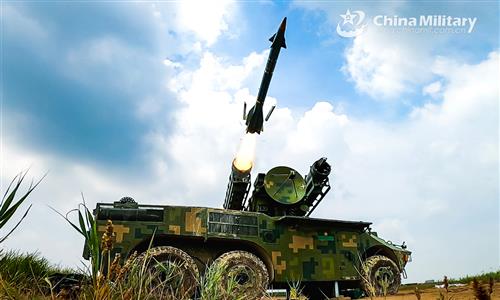
The exercise at that time featured typical combat scenarios, including joint air defense, joint countermeasures and joint seizure-and-control missions to deepen practical military cooperation, enhance both sides' training standards and interoperability, and further advance exchanges and cooperation in military technology.
"The Chinese military stands ready to work with Pakistan to explore new areas of exchanges, foster new highlights of cooperation, continuously enhance the capacity to respond to various security risks and challenges, and jointly safeguard regional peace and stability," a spokesperson for Ministry of National Defence said in 2023.
For the upcoming training, focusing on joint counter-terrorism operations in high-altitude areas, it will include skills training in UAV operation, on-the-move target search and firing, and long-range sniping, and cover joint command and live-force exercises, according to the defense spokesperson on Saturday.
Pakistan's counter-terrorism priorities cover five dimensions: intelligence early warning, military equipment, social governance, border management, legal and institutional building, Zhang said.
Zhang said that China and Pakistan complement each other well in the field of counter-terrorism, while cooperation can be advanced via intelligence sharing, joint operations, technology transfers, experience exchanges and economic cooperation.
"China could provide Pakistan with technical and equipment support, including drones and smart combat platforms, to boost its surveillance and early warning capacity against terrorist groups, and also conduct experience training," he noted.
If the two sides strengthen cooperation in intelligence sharing and joint operations, China and Pakistan may end up establishing a joint intelligence analysis center to share terrorism-related intelligence, conduct joint law enforcement and precision strikes, and build an "comprehensive posture for countering terrorist organizations," he said.
Pakistan's experience in addressing complex border security situations, handling local separatist forces and coordinating counter-terrorism efforts can also provide references for China to tackle similar non-traditional security challenges, Zhang added.
Through comprehensive cooperation, the two countries can strengthen their counterterrorism capabilities and provide a solid foundation for regional peace and stability, Zhang concluded.
RELATED ARTICLES