IN-DEPTH / IN-DEPTH
Scholars' Perspectives: People's daily lives, not skyscrapers, should define urban development
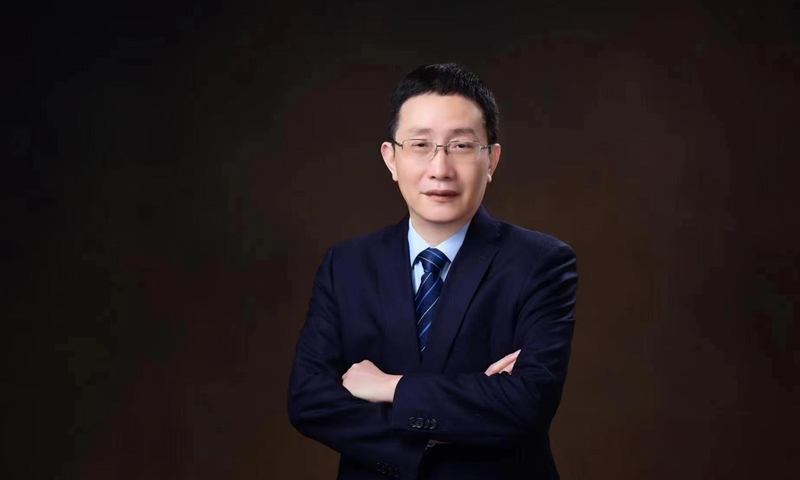
Ni Pengfei, Director of the Center for City and Competitiveness at the Chinese Academy of Social Sciences
Editor's Note:
In November 2019, during an inspection tour in Shanghai, Chinese President Xi Jinping first put forward the concept that "cities should be built by the people and for the people." This July, also during an inspection tour in this city, Xi stressed the need to fully embrace the people-centered philosophy of urban development and adhere to the principle of understanding the people's needs, soliciting their suggestions, and assessing their evaluation of the effectiveness of urban renewal.
Urban renewal initiatives should be carried out in a thorough, meticulous and effective manner to continuously enhance the people's sense of fulfillment, happiness and security, Xi said.
The concept that "cities should be built by the people and for the people," is a concentrated expression of the development thinking of putting people first in urban governance. Volumes I through V of Xi Jinping: The Governance of China include a series of Xi's important remarks on urban work.
In the article "Bring a sense of gain, happiness and security to the people" in Volume III of Xi Jinping: The Governance of China, Xi gave specific instructions on urban shantytown renovation and waste sorting. He said that "we cannot have cities with skyscrapers on the one side and slums on the other," and that "garbage sorting concerns the public's living environment and resource conservation." In Volume V, Xi said "we will carry out urban renewal projects and improve urban infrastructure to build livable, resilient and smart cities," and emphasized, "guided by the principle that cities should be built by the people and for the people, the new era should witness the development of beautiful cities that are green, low-carbon, habitable, safe, healthy, smart and efficient."
In the 29th installment of the special series "Decoding the Book of Xi Jinping: The Governance of China," the Global Times, along with the People's Daily Overseas Edition, continue to explore this theme - "Cities should be built by the people and for the people" - by inviting Chinese and foreign scholars, translators of the work, practitioners with firsthand experience, and overseas readers to engage in a deeper discussion of the practical value and broader significance of this concept.
In the 27th article of the "Scholars' Perspectives" column, Ni Pengfei, Director of the Center for City and Competitiveness at the Chinese Academy of Social Sciences, also expert entitled to Special Government Allowance of the State Council, elaborated on the intonation of People's City concept in Chinese urban development and governance philosophy.
Global Times: In article "Bring a sense of gain, happiness and security to the people" in the Volume III of Xi Jinping: The Governance of China, General Secretary Xi Jinping made instructions on grassroots livelihood work, including urban shantytown renovation and waste sorting. Why does the CPC Central Committee attach such great importance to those seemingly trivial livelihood matters? What kind of "people's city" concept lies behind this?
Ni Pengfei: Shantytown renovation and waste sorting may seem like trivial "small matters" from a broader perspective of urban development. Yet for thousands of households, they are major concerns, difficult challenges, practical needs and urgent priorities that bear directly on people's immediate interests. Among all undertakings of urban development, such livelihood work ranks as the top priority. It is not only a project that improves the city's underlying quality, but above all a "project that wins the hearts of the people," as it directly affects people's most immediate livelihood needs.
The CPC Central Committee's strong emphasis on this work reflects, in essence, its commitment to the people‑centered development philosophy and its efforts to put the "people's city" concept into practice. Urban modernization is ultimately the modernization of the people. The achievements of urban development should be reflected not only in skyscrapers and landmarks, but more importantly in people's daily lives - their clothing, food, housing and transport, and their living environment.
Meanwhile, these livelihood "small matters" also serve as an important means of promoting high-quality urban development, and constitute major priorities in urban governance. Delivering practical livelihood outcomes not only solves the real problems of the people, builds public trust and support, and encourages people to take an active part in urban development; it also fills governance gaps, defuses conflicts at the grassroots level, and enhances people's sense of tangible gains. Moreover, it can also generate a ripple effect, helping advancing urban renewal, grassroots governance, ecological improvement and social equity in a coordinated manner, thereby improving the city as a whole in a systematic way.
These policy measures embody the core concept of the "people's city." First, they uphold the principle of putting the people first. Urban development should respond to people's real needs, prioritizing safe and livable housing so that cities are not only impressive in scale but also warm and people-centered.
Second, they make public satisfaction a key criterion evaluation. The achievements of urban development should be measured by tangible improvements that the people can see and feel, rather than simply by data indicators.
Third, they emphasize refined governance. Grassroots governance should be carried out with the meticulousness of "doing embroidery," translating the goals of modernization into a better quality of life for household across the city.
Fourth, they promote a model of joint contribution, joint governance and shared benefits. The public should be guided to participate in urban governance, with whole‑process people's democracy implemented throughout urban development, so that collective strength can be harnessed to advance development.
GT: This summer's heat waves across Europe have exposed the infrastructure shortcomings in some Western cities, reflecting the global challenge of reconciling old city preservation with modernization. Many Chinese cities still retain historic buildings and now face the challenge of "coexistence between the old and the new." Drawing on typical cases of old city redevelopment in China, how does the "people's city" concept coordinate a city's "living and working" conditions with its function a "carrier of civilization"?
Ni: Old cities in the West often face a disconnect between heritage protection and infrastructure renewal. Restrictions imposed in the name of heritage preservation can hinder infrastructure upgrades and amplify safety risks posed by extreme weather. China, by contrast, has pursued revitalization-based renewal and the integration of old and new, developing a range replicable models in practice.
First, small-scale renewal of historic districts — represented by Yongqing Fang in Guangzhou, Caochang Hutong in Beijing and Cangqiao Zhijie street in Shaoxing. These projects have avoided large-scale demolition and reconstruction, preserving the original street layout, historic character and the everyday lives of long-term residents. At the same time, they have upgraded municipal facilities such as utility networks, firefighting facilities and sewage systems while introducing cultural and creative businesses in a measured way. This approach brings together heritage preservation, livelihood improvement and upgrading of local businesses.
Second, revitalization of industrial heritage — projects such as Beicangli in Chongqing and the Nanyang 1916 industrial park in Wuhan preserve the original fabric of industrial buildings and repurpose them as spaces for cultural and creative activities, offices and public services. These projects also help upgrade surrounding older residential communities, turning the "industrial rust belt" into an "urban show belt."
Third, protective-led development of historic buildings — represented by Xintiandi in Shanghai, which retains the Shikumen (stone-gate) architectural style while modernizing the interiors, linking with the renewal of surrounding alley neighborhoods, and balancing commercial vitality with public well-being.
Grounded in the "people's city" concept, a dynamic balance can be achieved between making cities livable and conducive to business, and preserving their cultural heritage. This can be achieved in three dimensions.
First, adhere to a heritage protection centered on restoration. Distinguish the historic buildings themselves from supporting facilities, upgrade municipal services through minimally invasive interventions, preserve the city's cultural lineage, and address shortcomings in modern living conditions.
Second, embrace the concept of protection through use. Encourage the participation of multiple stakeholders in cultural heritage conservation, ensure that heritage protection serves people's everyday needs. Prevent historic district from becoming over‑commercialization or losing their resident population and everyday vitality, while ensuring that original residents have priority in sharing the benefits of development.
Third, unleash the comprehensive value of cultural heritage. Transform historical assets into distinctive industries and employment opportunities, and use cultural tourism and cultural‑creative industries to subsidize the operation and maintenance of old cities, and foster a virtuous cycle of cultural preservation, industrial development, livelihood improvement and education.
In short, the renewal of old cities should both safeguard the root of civilization and adapt to modern life, enabling old and new to coexist and ensuring sustainable development.
GT: China's urbanization has entered high-quality development. The central authorities have defined six modernization goals for cities — innovative, livable, beautiful, resilient, culturally vibrant and smart. Please elaborate, with typical cases, on the practical connotations of these six dimensions.
Ni: China's urbanization rate of 67.89 percent marks a stage in the country's urban development with a focus on improving quality and efficiency. The six dimensions reinforce one another and form an integrated whole, constituting a comprehensive framework for evaluating urban modernization with Chinese characteristics.
Innovation is the driving force of urban development. Represented by Shenzhen and Hangzhou, cities leverage their strengths in scientific and technological innovation resources and the digital economy to couple urban renewal with industrial upgrading. By revitalizing existing urban spaces to foster new quality productive forces and attracting talent through high-quality public services, they are building innovation ecosystems that deeply integrate industry, city and people.
Livability is the underlying feature of urban development. Shanghai and Hangzhou are advancing the construction of complete communities and future communities, improving the 15‑minute living circle, filling gaps in livelihood services such as elderly care, childcare and housing support. They are also promoting more equitable access to public services, while meeting the needs of both long-term residents and newcomers.
Beauty serves as the ecological foundation of urban development. Anji has practiced the "two mountains" concept, enabling ecological restoration and industrial upgrading to reinforce one another. Xiamen, drawing on its natural landscape of mountains and sea, coordinates the protection of blue and green spaces and developing a low‑carbon, eco-friendly city that is pleasant to live in.
Resilience serves as the safety bottom line of cities. Chongqing is advancing the digital upgrade of urban lifelines and closed‑loop risk management; Zhengzhou is systematically building sponge-city infrastructure and flood control and drainage systems, comprehensively enhancing the city's capacity to withstand risks and recover quickly.
Cultural vibrancy is the heart of a city's identity. Along Pingjiang Road in Suzhou and Pengjia Alley in Jingdezhen, efforts to safeguard living heritage protection, preserving historical elements and the vibrancy of everyday street life. By turning cultural resources into distinctive development advantages, these efforts also help cities avoid becoming increasingly alike.
Smart tools are the key tool for urban governance. Through Shanghai's "one network, unified management" system and Beijing's CIM (City Information Modeling) platform, digitalization empowers refined governance, old city renewal and emergency response, upholding the principle that technology serves people's livelihood and rejecting formalism‑driven construction.
Overall, the six dimensions answer to the theme of urban development in the new era, charting a modernization path in which humanity and nature, development and people's livelihood, material and cultural-ethical progress advance in coordination.
GT: Countries such as Brazil, Saudi Arabia and Egypt are all advancing new city construction. Compared with global practices, what distinctive advantages does China's new city development possess? And how can sustainable urban development be achieved through the coordinated whole-chain management of planning, construction and governance?
Ni: Many countries have encountered common pitfalls in building new cities: prioritizing landmarks over public services, construction over governance and long-term operation, and planning blueprints over implementation. Such approaches often lead to elite enclaves, a disconnect between industrial development and urban life, and fiscal imbalances.
China's has developed its own distinct approach to new city development.
First, it upholds a people-centered, inclusive approach. New cities including Xiong'an New Area and Suzhou Industrial Park integrate education, healthcare and community services at the initial planning stage. This safeguards the rights of new urban residents and relocated communities, preventing new cities from turning into segregated, elite-only zones.
Second, development follows a long-term sustainability principle: ecology before development, underground infrastructure before above-ground construction. Priority is given to utility tunnels, sponge-city systems and green spaces. Strategic lands are reserved, and short-term vanity projects are rejected.
Third, a coordinated mechanism links industry, residents and urban space. Industries are introduced, people gather and public services are advanced in tandem. Industries attract residents, quality services help retain them, and vibrant communities fuel urban growth, avoiding the creation of "sleeping towns" or "ghost cities."
Fourth, a full-cycle closed-loop institutional framework is in place. Authorities adhere to the principle of "sticking to a single blueprint until the end," preserving the legal stability of urban planning while making timely adjustments as circumstances evolve. Governance systems are designed in advance, risks associated with the financialization of land are tightly controlled to sustain sound development.
A modern people's city is not about creating flashy visual landscapes. Instead, it builds an organic symbiosis where people, industries, ecology and society coexist in harmony. It sets its course through scientific planning, lays solid foundations with high-quality construction, and ensures long-term operation via refined governance, offering a Chinese solution for the sustainable development of cities worldwide.
RELATED ARTICLES