Chinese luxury EV Maextro V800 unveils third‑party brake‑pedal findings amid safety row
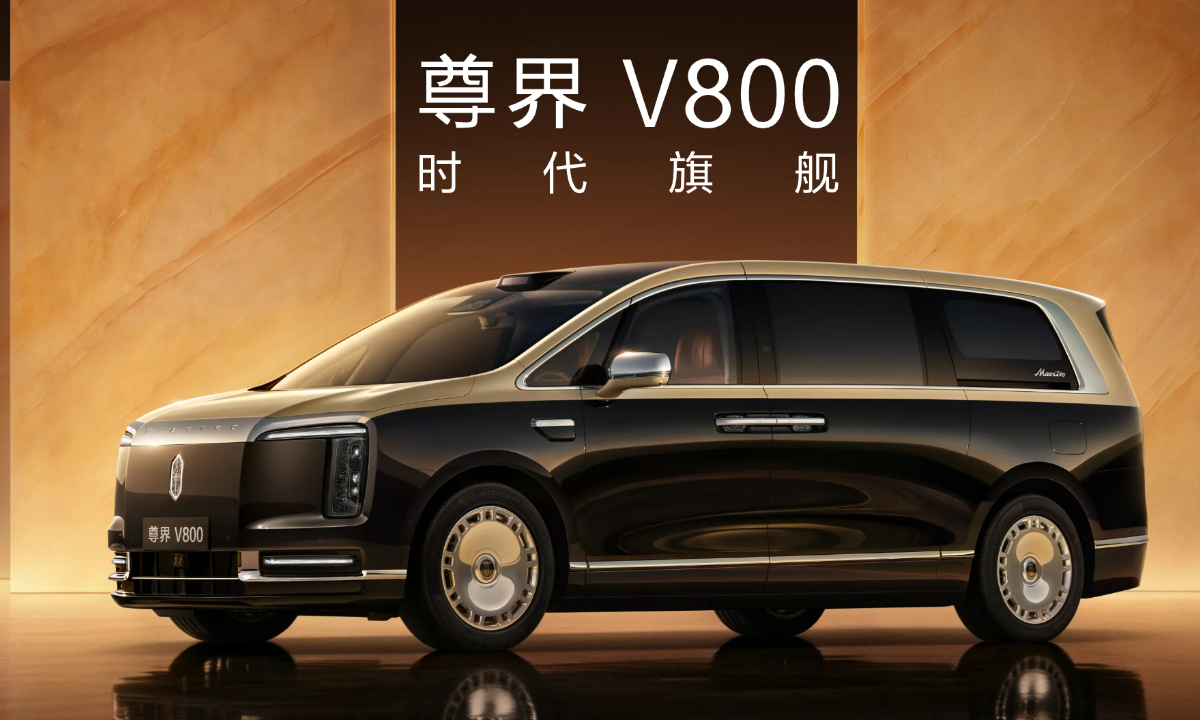
An image of Chinese luxury EV Maextro V800 Photo: Maextro's official website
Maxtor, a high‑end luxury vehicle brand, released third‑party lab results on Tuesday showing its V800 brake pedal meets industry standards with no cracks or damage found on tested samples, pushing back against viral claims of bracket fracture from tests conducted by automotive platform Dongchedi.
The findings have meanwhile drawn fresh questions from the original tester over differences between static lab loading and dynamic on‑road conditions, as public debate continues over the vehicle’s component safety.
Third-party tests show that the Maextro V800’s brake pedal meets industry requirements, with no cracks or damage found on tested parts, according to Findings released by the automaker JAC Motors on Tuesday and reported by Chinese media including The Beijing News.
The brand said in the report an accredited third-party lab ran tests on the Maextro V800 brake pedal assemblies on October 11, and that all strength test results met the industry standard when 1,500N of longitudinal force was applied.
Testers gradually raised the longitudinal force to 3,000N at a rate of 20 mm per minute, held the load for 5 seconds, and then released it, repeating this process five times. They tested 14 complete brake pedal parts, and visual checks showed none had cracks or damage, according to the test report.
A customer representative from Maextro confirmed the test results on Tuesday to the Global Times and said the report is only available to users upon request at sales outlets.
The Maextro V800 is a luxury EV model in China and is priced at a minimum of 766,000 yuan on its official website. Manufactured by JAC Motors, the Maextro V800 adopts Huawei’s intelligent vehicle technologies under the Harmony Intelligent Mobility Alliance.
The controversy started on October 8 when auto information platform Dongchedi posted a video testing three brand-new Maextro V800s. The video showed that all brake pedal brackets snapped during hard emergency stops from 100 km/h to zero, according to the Beijing News.
In response to the test results released by Maextro, the Dongchedi tester posted multiple messages raising questions, including: “Is static loading the same as dynamic loading?”
On October 8, Maextro said in a media statement that user safety is always its top priority. Even under non-standard extreme test conditions, it aims to deliver greater safety margins for customers.
The company will further optimize the component’s design and provide free upgrades for vehicles already delivered. It will also conduct a systematic review and reinforcement of the component’s design verification, test boundaries and production quality management to continuously improve its safety system, according to the statement.
Global Times
RELATED ARTICLES