NEVs make up 53.6% of all new car sales in China in first 9 months, while exports surge 130%
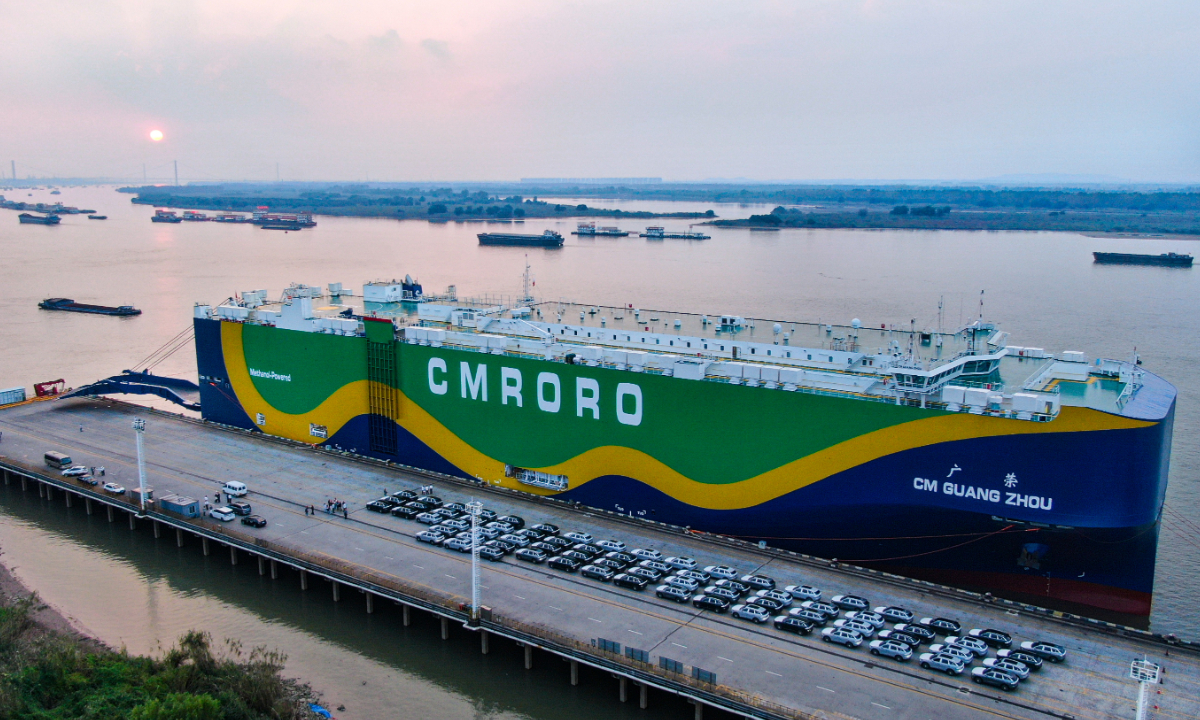
New-energy vehicles await shipment to Europe at Nanjing Port in East China's Jiangsu Province on October 10, 2026. Photo: VCG
China's new-energy vehicle (NEV) output and sales both saw double-digit growths in the first nine months of 2026, with NEVs accounting for 53.6 percent of new car sales in China and exports surging 130 percent year-on-year, official data released on Monday showed.
NEV production and sales reached 12.483 million and 12.472 million units, respectively, from January to September, up 11 percent and 11.1 percent year-on-year, China Central Television (CCTV) reported, citing data from the China Association of Automobile Manufacturers (CAAM).
NEVs accounted for 53.6 percent of all new vehicles sold in China during the period, underscoring their growing share of the domestic auto market.
China's NEV exports jumped 130 percent year-on-year to reach 4.006 million units during the nine-month period, according to the report.
The country’s total vehicle exports topped 1 million units for four consecutive months from June through September, with NEVs accounting for more than half of the shipments, the data said.
Liu Yan, deputy secretary-general of the CAAM, said the growing competitiveness of China's automotive industry has shifted from an advantage based on value for money to broader industry-wide strengths centered on new-energy technology and intelligence features.
The shift has not only injected fresh momentum into the global green and low-carbon transition, but also given Chinese automakers new competitive edge over the longer term, Liu said.
The latest figures come as China steps up efforts to support the high-quality development and international expansion of its automotive industry.
The recently released 15th Five-Year Plan (2026-30) for the development of the intelligent connected NEV industry provides strategic guidance for the sector over the next five years, a CAAM official said.
The plan focuses on breakthroughs in key technologies, closer integration of vehicles, roads and cloud systems, industrial restructuring, better industry governance and global expansion. It is expected to shift the industry from scale-driven growth to higher-quality development and boost the global competitiveness of Chinese auto brands, the official noted.
Chinese-made vehicles had reached more than 200 countries and regions, while Chinese companies had invested in vehicle and auto parts manufacturing in over 80 countries and regions, according to data released by China's Ministry of Commerce (MOFCOM) on September 11.
According to MOFCOM, China's international automotive cooperation has expanded beyond finished-vehicle exports to include cooperation in vehicle assembly, overseas investment and technology licensing, fostering an ecosystem spanning vehicle design, manufacturing, sales and services while supporting the development of global automotive supply chains.
MOFCOM will promote international cooperation across automotive industrial and supply chains by coordinating trade and investment, while improving policy support and overseas services for Chinese automakers.
The ministry will also use recently issued guidelines on overseas competition and compliance, alongside guidance on business integrity and social responsibility, to help companies strengthen their overseas compliance systems and support the steady and sustainable international expansion of China's auto industry.
Global Times
RELATED ARTICLES