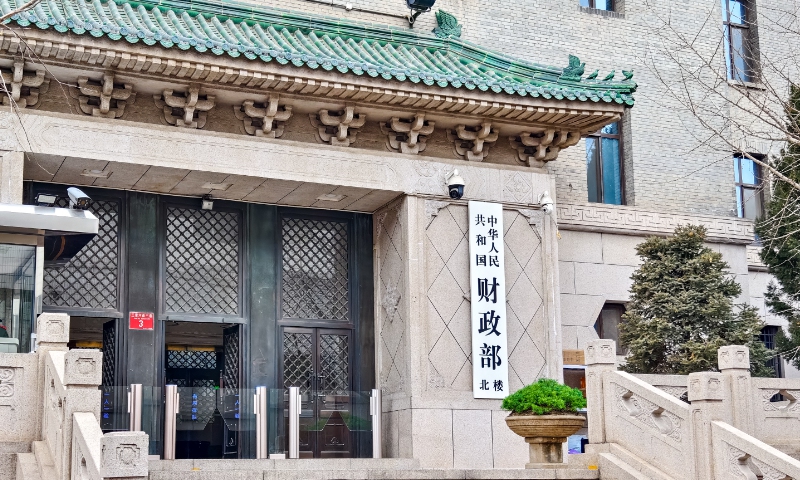
The Ministry of Finance of China File Photo: VCG
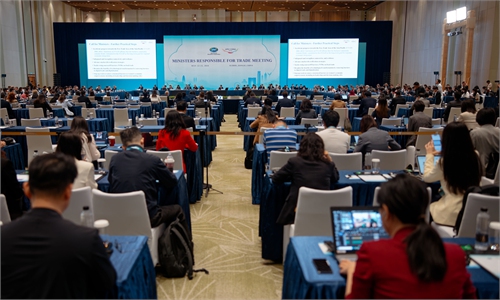
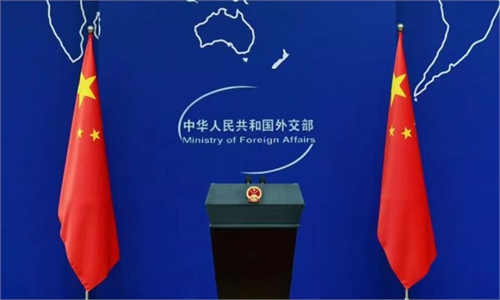
China is ready to work with other Asia-Pacific Economic Cooperation (APEC) economies to uphold multilateralism, strengthen communication and coordination on macroeconomic policies, maintain stable and smooth operations of regional industrial and supply chains, and promote long-term, sustainable economic growth in the Asia-Pacific region, China's Ministry of Finance (MOF) said on Wednesday, noting that the APEC 2026 Finance Ministers' Meeting would be held in the Hong Kong Special Administrative Region on October 20 and 21.
In line with the theme of APEC's "China Year" and its three priority areas, the MOF has put forward four priority topics for the finance track: supporting people's wellbeing through fiscal policy, financing digital infrastructure, promoting financial inclusion in ways tailored to local conditions, and fostering exchanges and cooperation among young finance and economic professionals across APEC.
Amid accelerating changes unseen in a century and a volatile international landscape, Asia-Pacific development faces growing instability and uncertainty. Yet an artificial intelligence-driven technological revolution and industrial transformation are creating new opportunities for innovation and productivity growth. The region's rise as the world's most dynamic growth engine stems from its commitment to open cooperation and mutual benefit, an MOF official said.
"The more complex and severe the external environment, the more important it is for economies to strengthen policy communication, deepen practical cooperation, and jointly safeguard regional economic and financial stability and development," the official said.
Home to one-third of the planet's population, the Asia-Pacific region accounts for more than 60 percent of global economic output and nearly half of world trade, making it a key driver of global economic growth.
"As a responsible member of the Asia-Pacific family, China has always shared opportunities and pursued common development with the region, and remains committed to injecting certainty and new drivers of growth into regional development, while serving as an active advocate and leader of Asia-Pacific cooperation," Song Wei, a professor at the School of International Relations and Diplomacy at Beijing Foreign Studies University, told the Global Times on Wednesday.
China has continuously shortened its foreign investment negative list, expanded the opening-up of its services sector, and granted access to its vast domestic market, proactively opening up to other Asia-Pacific economies. Since 2014, China's overall tariff level has been cut from 9.8 percent to 7.3 percent. China has steadily advanced Asia-Pacific connectivity, promoting cross-regional links through land-sea corridors, digital optical cables and energy networks, and it has become the largest trading partner of 13 APEC economies, the Xinhua News Agency reported.
APEC's "China Year" coincides with the first year of China's 15th Five-Year Plan (2026-30). At this new juncture in history, China is deepening reforms and pursuing higher-standard opening-up, creating new opportunities for the Asia-Pacific region and beyond through its modernization, Song said.
Experts expressed hopes that the 33rd APEC Economic Leaders' Meeting, to be held in Shenzhen this November, will give fresh impetus to the building of an Asia-Pacific community, deepen regional cooperation and promote shared prosperity.
Huo Jianguo, a vice chairperson of the China Society for World Trade Organization Studies in Beijing, told the Global Times on Wednesday that China would play a leading role in shaping the agenda of the APEC finance ministers' meeting, focusing on upholding multilateralism, opposing trade protectionism and promoting greater openness and integration across the region.
Despite differences on some issues, solid trade ties and relatively stable China-US relations would provide a favorable foundation for the meeting, helping Asia-Pacific economies deepen cooperation and advance regional economic integration, Huo said.