BUSINESS / PRESS RELEASE
China and Arab countries explore new avenues for cooperation
Originating in innovation, nurturing excellence
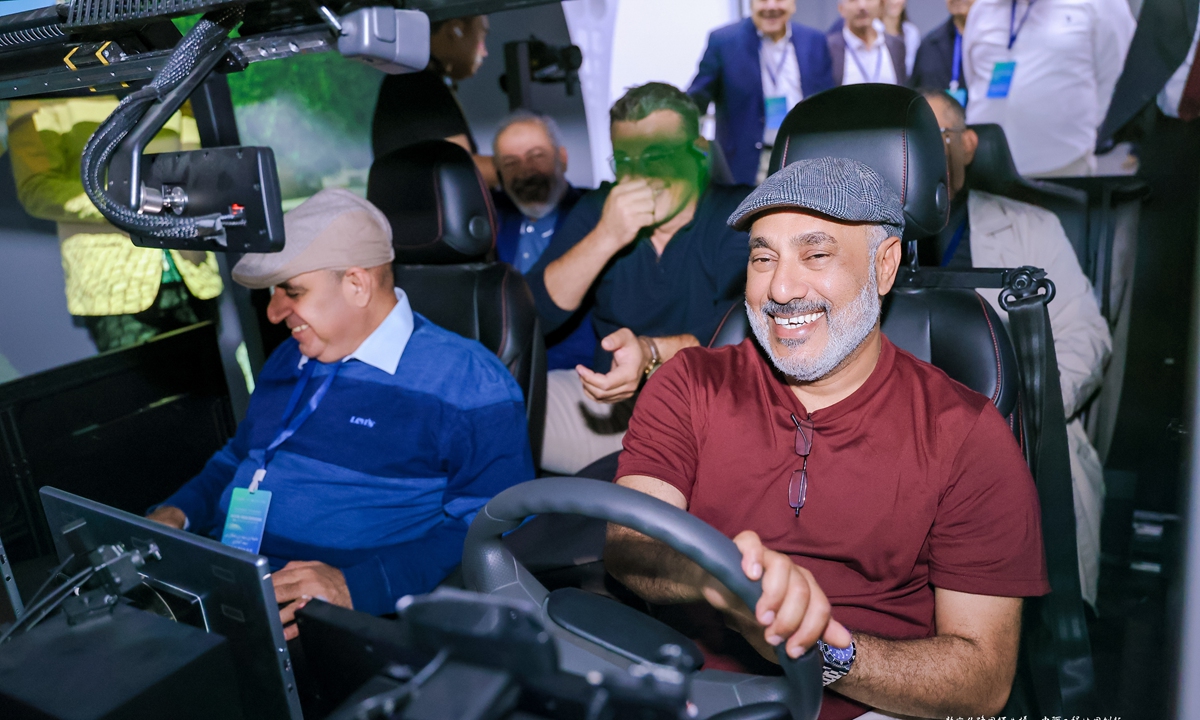
A delegation participates in a live demonstration of intelligent connectivity and autonomous-driving technologies at the event on October 14, 2026. Photo: Courtesy of China Association for Science and Technology
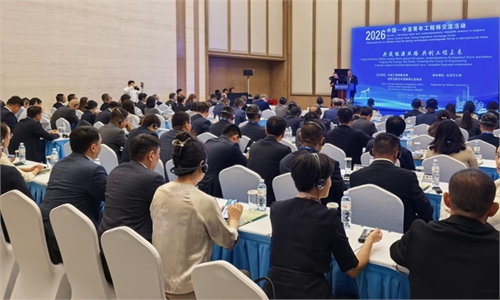
Extreme heat and sandstorms in the Middle East pose specific engineering challenges to new energy vehicles. Battery thermal management, dust protection and charging infrastructure compatible with local power grids all require solutions tailored to local conditions.During the International Month 2026: Openness, Cooperation, Trust with China Association for Science and Technology, an exchange event themed "Digital Silk Road in Resonance: China-Arab Engineering Collaborative Innovation" for engineers from China and Arab countries was held in Beijing from October 12 to 15, bringing together representatives from both sides to discuss capacity building, professional training and technical cooperation. The event explored ways to match technological capabilities with local development needs.
Tian Yushi, deputy general manager of the National New Energy Vehicle Technology Innovation Center, told the Global Times during the event that China's NEV industry has developed capabilities spanning vehicle manufacturing, electric drive systems, batteries, charging infrastructure and operations management.
According to Tian, China and Arab countries could explore cooperation in public transport, including electric buses and airport shuttles, before gradually expanding into integrated solar power, energy storage and EV charging facilities, as well as battery reuse and recycling.
"Practical challenges include differences in technical standards and certification requirements, the capacity of local power grids, and the need to verify long-term reliability under high temperatures, intense ultraviolet radiation and dusty conditions," he said. "More local technical personnel are also needed in areas such as electric drive systems, battery testing and charging facility maintenance."
These considerations are central to the event's focus on engineering cooperation between China and Arab countries.
New possibilities
Digital technologies are opening up new possibilities for engineering design, construction and infrastructure maintenance.
Khalifa Saif Sultan al-Jabri, a professor in the Department of Civil and Architectural Engineering at Sultan Qaboos University in Oman, told the Global Times that tools such as digital twins, building information modeling (BIM) and machine learning can improve coordination among project stakeholders, strengthen quality control and help predict potential failures.
His research illustrates how AI can be applied to engineering. Predictive models can analyze the relationship between the composition of sustainable construction materials and their engineering properties, helping researchers identify suitable formulations while reducing the time and resources required for testing.
"The purpose of these technologies is not to replace engineers, but to help them make better decisions and build infrastructure that is safer, more sustainable and more resilient," he said. Al-Jabri said China and Arab countries could expand cooperation through tailored training, technology transfers and joint research.
"China has accumulated experience in major infrastructure projects, advanced manufacturing and smart construction, while Arab countries have needs in infrastructure modernization, renewable energy and sustainable urban development," he noted.
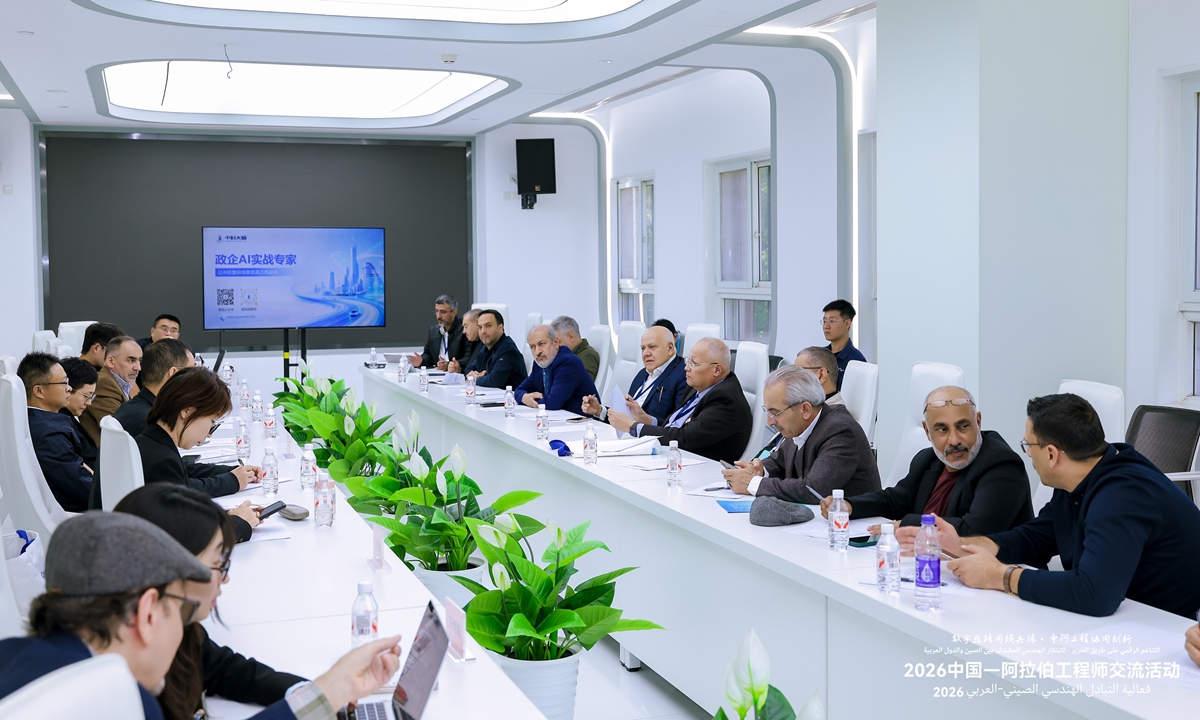
People take part in a discussion session at Zhongguancun Smart City Co, Ltd during the event. Photo: Courtesy of China Association for Science and Technology
Road engineering also highlights the importance of local expertise. Firas Bou Diab, executive vice-president of the World Federation of Engineering Organizations (WFEO), told the Global Times that road safety audits can identify potential hazards during the design stage, including difficult vehicle merges, unsafe intersections and conflicts between pedestrians and vehicles.Digital models and shared project data can also enable engineers from different disciplines to review plans together and address problems before construction begins. But making full use of these technologies requires engineers who can apply them in practice, making professional training a key part of China-Arab cooperation.
Long-term success
The long-term success of technical cooperation also depends on whether local professionals have the skills to operate, maintain and improve the systems involved.
Adil Ibrahim Shahadha al-Hadithi, secretary-general of the Federation of Arab Engineers, told the Global Times that strengthening engineering capacity and professional training is important for Arab countries. As they advance infrastructure development and industrial modernization, cooperation with China can provide opportunities to learn from Chinese engineering practices and develop local talent.
According to Tian, cooperation between the two sides could begin with the electrification of public transport and the development of charging infrastructure, then gradually explore local assembly, maintenance services and power battery testing.
During the event, the Chinese Society of Engineers (CSE) introduced its internationally substantially equivalent engineering competency assessment system and online continuing professional development (CPD) platform. According to the CSE, the platform offers more than 400 credit hours of course content, and the CSE has established partnerships with engineering organizations in 21 countries. It has also invited more than 500 engineers from Belt and Road partner countries to China for training and study visits.
Practical training can further connect talent development with local industry needs. For example, an engineering capacity-building center in Egypt has begun providing hands-on training for young local engineers, according to information provided for the event.
Qusay Fadhel Abdulhameed, an event participant from the Middle East, professor from the University of Technology, Iraq, proposed equipping laboratories at engineering faculties and research centers in Arab universities with advanced equipment from China, alongside training for local personnel.
"This could deepen understanding of Chinese technologies and support long-term cooperation between engineering professionals at universities on both sides," Abdulhameed said. "Exploring links between Arab and Chinese engineering accreditation systems can support future university cooperation."
Other Arab participants also called for technical exchanges to lead to practical outcomes. Fuad Abdulla Moosa Al Kindi, president of Oman Society of Engineers, said the event had demonstrated the potential of AI to improve engineering practice and created opportunities to exchange knowledge and explore educational and practical cooperation. Salim Said al-Ruqaishi, Board Member of Oman Society of Engineers, proposed further joint training and knowledge-sharing, the development of AI solutions for engineering and industry, and closer cooperation in cybersecurity and data protection. "I suggested exploring the possibility of establishing a joint China-Arab academy for technology and cybersecurity and holding regular exchange events."
RELATED ARTICLES