AVIC Chengdu adopts ‘LEGO-style’ modular tooling design, cuts aircraft manufacturing costs
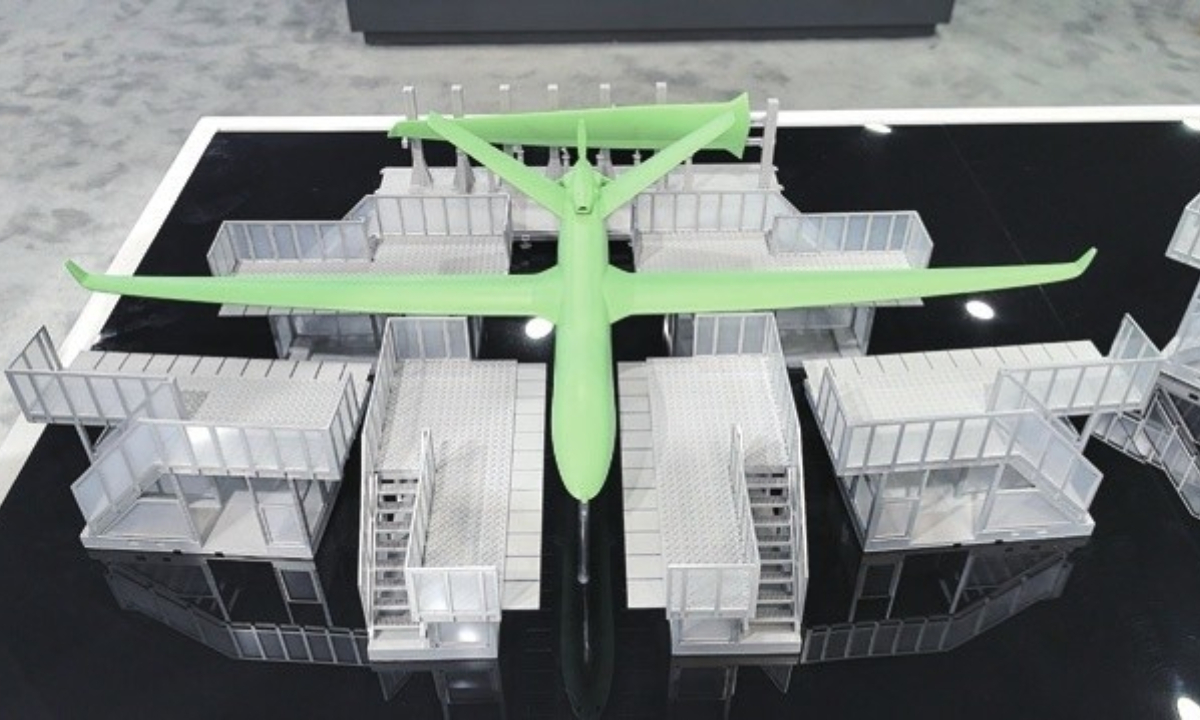
Photo: Aviation Industry Corporation of China (AVIC)’s Weibo account
Chengdu Aircraft Corporation (CAC) under Aviation Industry Corporation of China (AVIC) – the manufacturer of China's J-20 and J-10 fighter series, has adopted a “LEGO-style” modular design approach to aircraft tooling, allowing standardized components to be rapidly assembled and reused across different projects, cutting direct costs by more than 20 percent in some research tasks.
Building an aircraft requires not only the aircraft itself, but also numerous “unsung heroes” behind the scenes – process equipment collectively known as tooling. As a critical part of aircraft manufacturing, the development speed and cost of tooling directly affect an aircraft’s production cycle and manufacturing costs, according to a release from the AVIC’s official Weibo account on Thursday.
Starting at the design stage, CAC has moved away from the traditional model of developing customized tooling for individual aircraft types. Instead, it has adopted a development approach centered on standardized design and shared modular components, while promoting unified tooling design. The tooling is built from standardized modules that can be quickly configured and reused for different requirements, much like LEGO building blocks.
The R&D team launched a technical research program covering five key categories of tooling: assembly tooling, work platforms, transport vehicles, support frames and lifting rigs. Common structures were standardized into 163 shared basic modules, raising the overall modular reuse rate to more than 80 percent. These standard modules can be selected and assembled as needed, enabling rapid reconfiguration and reuse across different tasks and components, according to the release.
CAC is widely known for being the manufacturer of China's premier fighter aircraft, including the J-20 stealth fighter jet and the J-10 fighter series.
This “LEGO-style” modular tooling model can significantly improve design and production efficiency while substantially reducing manufacturing costs. Its advantages are particularly evident in scenarios that require rapid expansion of production capacity, Wang Ya’nan, chief editor of Aerospace Knowledge magazine, told the Global Times on Friday.
Traditionally, different types of aircraft required dedicated tooling because of variations in size, structure, materials, assembly methods and production processes. Each new aircraft therefore needed a complete set of custom-built tooling, from small jigs and templates to large transport platforms. Once production ended, much of that tooling had to be stored or scrapped because it could not be reused for other models. Developing a new tooling system also required dedicated design, R&D and production teams, making the process lengthy and costly, said Wang.
CAC has introduced a unified modular design approach for tooling, centered on standardization. Many tooling components can be shared across different aircraft models, with only the adapter sections that directly interface with the aircraft requiring modification.
Proven modules can be combined with newly designed model-specific parts, avoiding the need to develop an entire tooling system from scratch. This approach shortens development cycles, cuts costs and reduces tooling design complexity, according to the expert.
The AVIC release also noted that the full implementation of unified-type design has yielded tangible results. Tooling development costs have been reduced by about 20 percent, while development cycles have been shortened by roughly 25 percent.
Modular coverage has reached 80 percent for reconfigurable flexible assembly tooling and 90 percent for work platforms. The unified-type application rates for transport vehicles, support frames and lifting rigs have reached 84 percent, 60 percent and 87 percent, respectively.
In certain research projects, tooling can be reused across multiple aircraft, significantly reducing the amortized cost per airframe and delivering direct cost savings of more than 20 percent. The approach has helped address the long-standing challenge of high tooling costs and provides a replicable and scalable model for low-cost development in the aviation process equipment sector, according to the release.
Wang noted that the successful implementation of this approach suggests that CAC has thoroughly assessed its current and near-term production equipment needs, with advance planning and preparations in place for short-notice and large-scale production demands.
