China’s proposed AI tech export controls aim to ensure safety, encourage open-source devt and sharing: commerce ministry
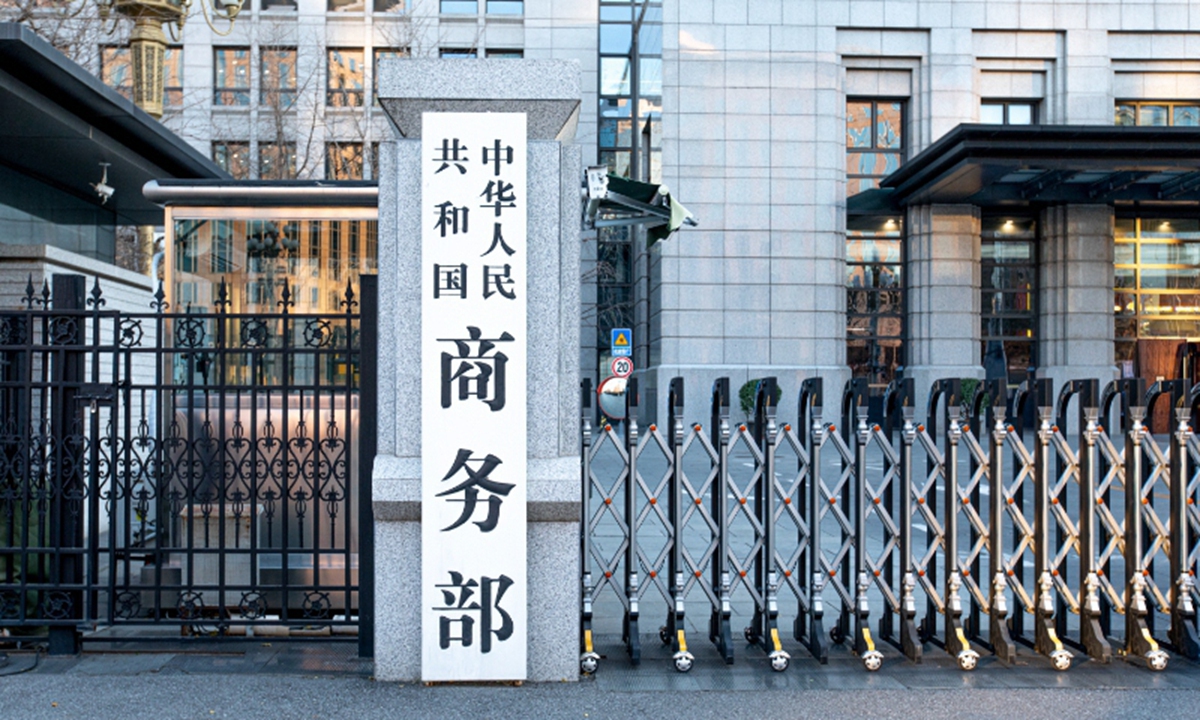
The Ministry of Commerce of China File photo: VCG
The proposed addition of 23 key AI technologies to China’s catalogue of technologies prohibited or restricted from export will ensure that AI remains safe and controllable while encouraging open-source development, cooperation and sharing, a spokesperson for China’s Ministry of Commerce said on Friday.
Under the proposal, relevant technologies already in the public domain through open-source releases or academic publications would fall outside the scope of export controls, the spokesperson said.
The remarks came as China solicited public comments on proposed revisions to its catalogue of technologies prohibited or restricted from export and introduced temporary measures requiring registration before the export of relevant technologies. The proposed revisions would add 23 key technologies related to large AI models, AI agents, computing clusters and information processing to the catalogue.
The spokesperson said risks inherent in AI and those arising from its use have drawn widespread attention. Technologies proposed for control, including those that enable AI to autonomously generate and modify malicious code, could be used to attack sensitive systems supporting critical information infrastructure, national defense and defense industries, and core government operations, or to bypass national security defenses.
If acquired by non-state actors or malicious entities, such technologies could threaten national security and the shared security of humanity, the spokesperson said. China’s necessary oversight is intended to safeguard security, prevent misuse and malicious use, ensure that AI remains under human control, and advance international AI governance.
The spokesperson said China is committed to making AI an important driver of shared prosperity and common security. To support an open-source AI innovation ecosystem, China will facilitate technology exports through automatic licensing and other measures in cases involving open-source AI development, computing centers built and operated overseas by Chinese companies, chip tape-outs and fabrication overseas, joint research and development using overseas resources, and participation in international standard-setting. These measures will allow exports to proceed upon registration, the spokesperson said.
Global Times
RELATED ARTICLES