China adds 40 technologies in AI, biomedicine and PV for export controls in draft revised catalog
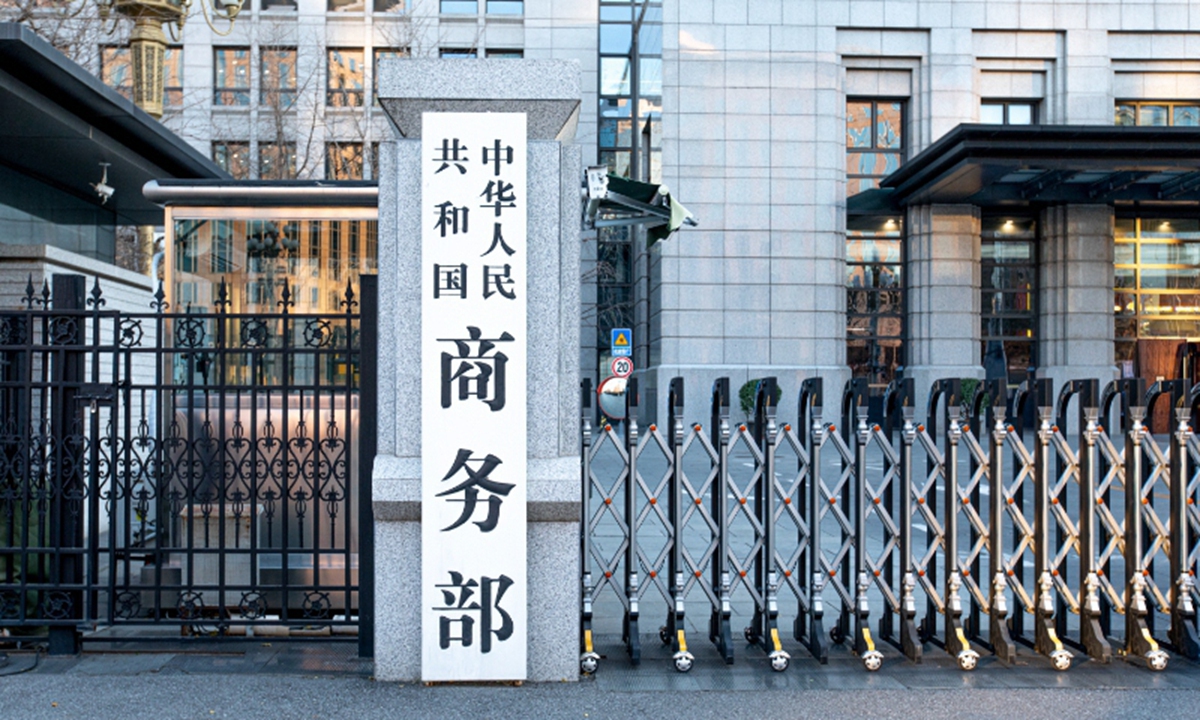
The Ministry of Commerce of China File photo: VCG
China on Friday published a draft revision of its catalog of technologies prohibited and restricted for export, adding 40 technologies in AI, biomedicine and photovoltaic (PV) solar systems to the list.
The draft of the revised catalog, jointly issued by the Ministry of Commerce (MOFCOM) and the Ministry of Science and Technology, features 14 additions to the prohibition category and 26 additions to the restricted category. By sectors, 23 additions are related to AI, 12 additions to PV and 5 additions are related to biomedicine.
In particular, the draft revised catalogue proposed to prevent the outflow of high-technology and core technology. The revised catalogue proposed to prohibit the exports of core technologies of AI large models that are trained with national key sensitive data and AI agents that serve key national information infrastructure, national defense and core government affairs. Design technologies of 2.5-dimensional and 3-dimensional AI chips, as well as 3-dimensional flash memory are both restricted for exports. AI information processing technologies and voiceprint recognition technologies are also added to the proposed restriction catalogue.
However, the proposed rule stipulated those technologies that have entered the public domain through open source, published academic papers, or other means are not included in the scope of management.
For the PV sector, there are 12 additions for the prohibition or restriction categories. They involve the manufacturing technique and core equipment of making polysilicon, silicon wafer and PV batteries. Specifically, technologies related to the perovskite solar cells was added to the prohibited list and the heterojunction technology (HJT) solar cells was added to the restricted category. The former technology has great potential in boosting up a cell's efficiency and Chinese companies enjoy a global lead, the latter has space application.
For biomedicines, five technologies related to cell and gene technology, small nucleic acid drugs, and pathogenic microbiology technology were added. For outbound licensing models that do not involve transfer of ownership, facilitation measures such as automatic licensing apply, according to the draft rule.
The draft revision is currently soliciting opinions from the general public, according to MOFCOM. The public may submit comments on the scope of newly added technologies, indicators, control policies, facilitation measures, and other related aspects from October 16 to November 15.
The catalogue, first published in 2001, had previous revisions in 2008, 2020, 2023 and 2025. Technologies listed as prohibited cannot be exported, while restricted technologies require export licenses.
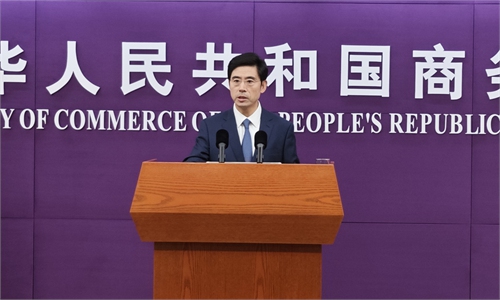
A ministry spokesperson said in a statement on Friday that in recent years, the application of AI, biomedicine, and photovoltaic-related technologies in sensitive fields has continued to expand, and major economies have all implemented export controls to varying degrees. With reference to internationally accepted practices, China exercises necessary management in accordance with the law.
This not only guards against the risks of technology loss of control and improper proliferation, but also safeguards normal international technological exchange and cooperation, and promotes science and technology in a positive and benevolent direction, ensuring it is safe and controllable and benefits humanity, the spokesperson said.
RELATED ARTICLES