ARTS / CULTURE & LEISURE
Yulin’s Great Wall tells stories from line of defense to bridge between cultures
Beyond the Wall
By in Yulin Published: Oct 18, 2026 09:06 PM

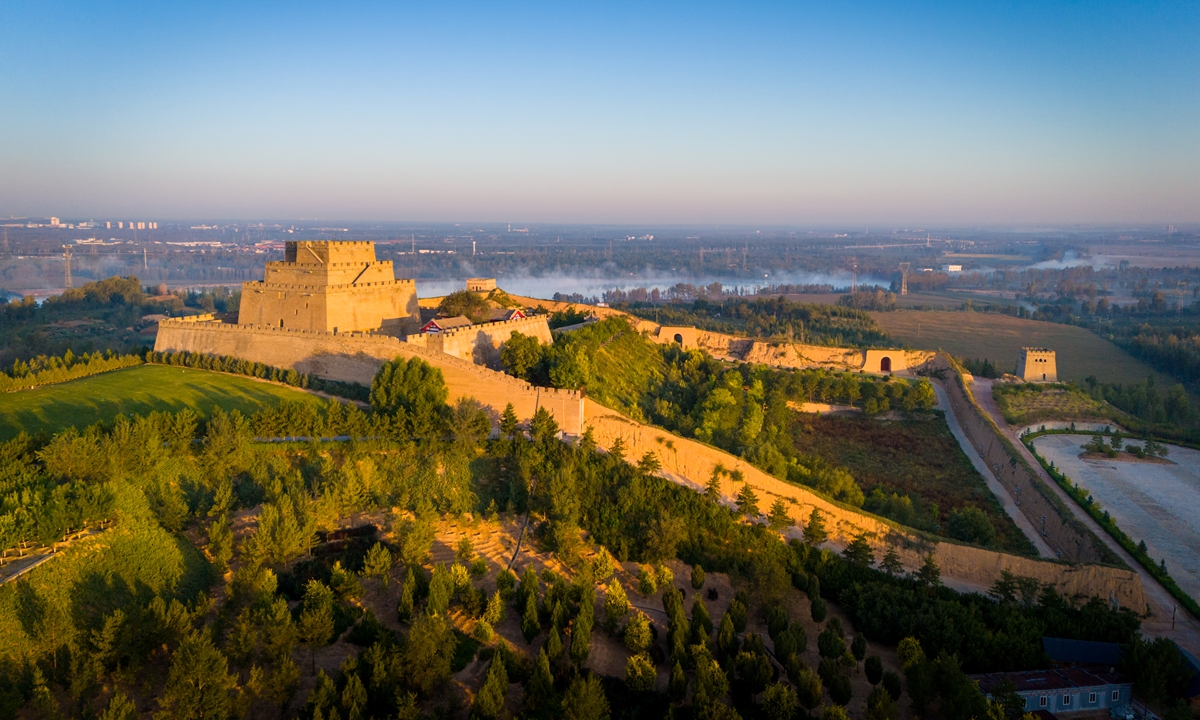
Zhenbeitai, the largest tower along the entire Great Wall, Northwest China's Shaanxi Province Photo: VCG
During China's National Day holidays, I visited Zhenbeitai, the largest tower along the entire Great Wall, Northwest China's Shaanxi Province, where crowds of visitors climbed the ancient watchtower, took photographs against its weathered brick walls and gazed across the vast landscape beyond. Some came to experience the grandeur of the Great Wall; others wanted to bring their children closer to a history they had learned about in books. Watching people of different ages explore the site, I found myself thinking about how much the meaning of this place has changed over the centuries.
Hundreds of years ago, this frontier witnessed both conflict and trade between agricultural communities and nomadic peoples. Today, it draws visitors from China and abroad, offering a shared point of reference for exploring history and encouraging cultural exchange. The same landmark that once helped guard a frontier now invites people to look beyond boundaries and discover the connections that history has left behind.
At Zhenbeitai, an imposing Ming Dynasty watchtower known as the "First Tower of the Great Wall," the view stretches across what was once the northern frontier of the Ming empire. This was a frontier zone where the agricultural communities of the Central Plains met Mongolian pastoral communities to the north, making the region both a strategic line of defense and a place of cultural and economic exchange. Standing on the upper levels, I could see why the location mattered: The open terrain offered a commanding view of the surrounding land, while the ancient city of Yulin lay to the south.
But the most interesting question is not simply how this massive structure was built. It is why, after centuries of border conflict, it also became a witness to trade, diplomacy and peaceful exchange.
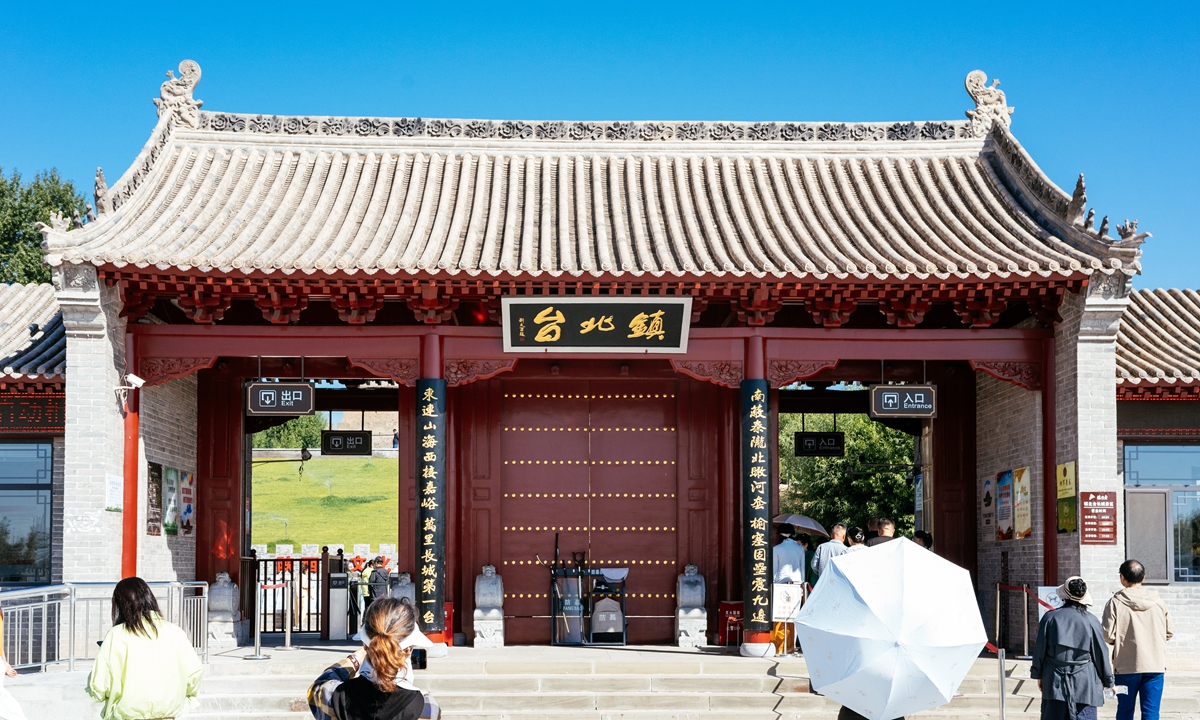
Tourists visit Zhenbeitai scenic area in Yulin, Northwest China's Shaanxi Province, on September 13, 2026. Photo: VCG
More than a military frontier
Zhenbeitai was built between 1607 and 1608, during the reign of Emperor Wanli of the Ming Dynasty (1368-1644). It served as a military observation and command post, allowing troops to watch the surrounding area, relay messages and coordinate defense.
Its scale helped earn it the title "First Tower of the Great Wall." According to China News Service, it is the largest surviving watchtower structure of its kind along the Great Wall and one of the most significant military observation and command sites in the system.
Yulin occupies a transitional zone between China's agricultural lands of the Central Plains and the grasslands traditionally used by nomadic communities. Over centuries, people in this region interacted through warfare, migration, trade and everyday life. Their encounters left marks on local customs, language and food.
The Great Wall played different roles at different times. When relations deteriorated, it functioned as a barrier and a defensive line. When conditions allowed peaceful contact, gates, frontier markets and related facilities enabled people to exchange goods and maintain connections across the border.
A 2024 report by China Tourism News described the Great Wall in Yulin as both a "wall" and a "door" - an effective way of understanding this dual role.
The history of Zhenbeitai is closely connected with the Longqing peace agreement of the Ming Dynasty - a 1571 accord between the Ming court and Mongol leader Altan Khan that helped ease frontier tensions and establish official trade relations - and the development of authorized frontier trade.
A shared heritage
For visitors today, Zhenbeitai is no longer a military outpost. It is a place to explore the past, take in the landscape and consider how history continues to shape local identity.
A foreign visitor told the Global Times during a visit to the site that he had previously associated the Great Wall mainly with Beijing. Seeing Zhenbeitai in person helped her realize that the Great Wall also extends through places such as Yulin, where its history is closely tied to the wider story of China's frontier regions.
What also struck me was the way a centuries-old monument continues to bring people together today. Young visitors from China and other countries can approach the same stretch of wall with different backgrounds and questions, yet share an interest in the people who built it, the lives they led and the exchanges that took place here. In this sense, the Great Wall is not only a record of historical encounters, it can also serve as a starting point for contemporary dialogue and mutual learning between cultures.
Today, that heritage is also becoming part of local tourism. Visitors can combine a trip to Zhenbeitai with walks through Yulin's old city and visits to nearby historical sites. Hiking, cultural tours and educational visits offer different ways to encounter the landscape, while helping travelers connect individual monuments with the larger history of the region.
Yulin is particularly rich in Great Wall resources. The city preserves approximately 1,500 kilometers of Great Wall remains, accounting for about 81 percent of Shaanxi Province's total Great Wall resources. These include sections dating from the Warring States Period (475BC-221BC), the Qin Dynasty (221BC-206BC), the Sui Dynasty (581BC-618BC) and the Ming Dynasty, according to local government.
The scenic area also takes a hands-on approach to routine conservation. In addition to using technology such as drones and security systems, staff conduct daily inspections of Zhenbeitai. They also work with residents of nearby villages to raise awareness of heritage protection and encourage greater public participation in safeguarding the site.
The work reflects a broader challenge facing heritage sites around the world: how to make historical places accessible and meaningful to modern visitors without compromising their authenticity.
At Zhenbeitai, the answer begins with understanding what the structure represents. Its value lies not only in its size or age, but also in the many layers of history that have accumulated around it - military defense, diplomacy, trade and cultural exchange.
As I looked out from the watchtower, the landscape seemed to hold two stories at once. One was the story of a frontier that had to be defended, where conflicts shaped the lives of soldiers and ordinary families. The other was the story of people crossing that frontier to trade, negotiate and build connections. Neither story can be understood in isolation.
RELATED ARTICLES