A skyline view of Nanjing, East China's Jiangsu Province File photo: VCG
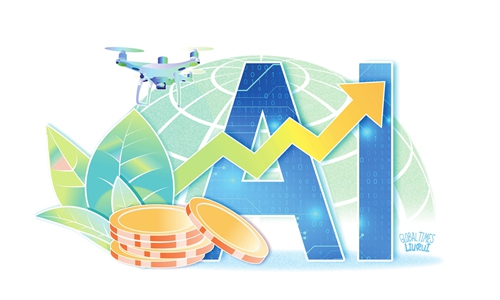
China on Monday released economic data for the first three quarters of 2026, including a 4.6-percent GDP growth rate. Based on the economic data and my on-the-ground observations, I am more convinced than ever that China's economy is maintaining a steady and robust recovery, with new drivers gathering strength and high-quality development advancing on all fronts. The first three quarters have painted a clear picture: consumption continues to serve as the primary engine, manufacturing investment shows strong resilience, new quality productive forces are thriving, and a series of pro-growth policies introduced since the beginning of the year are steadily paying off.At the heart of this transformation is China's accelerating technology-led development. New-energy vehicles, lithium-ion batteries, and photovoltaic products remain flagship exports and symbols of the country's industrial upgrading. Artificial intelligence is being rapidly integrated into manufacturing, logistics, healthcare, agriculture, and public services. The green economy is not a distant goal - it is happening now, with renewable energy installations, energy storage systems, and green building standards advancing at world-leading speed. The vitality of the "new economy" is a testament to China's innovation capacity and industrial ecosystem, and it is precisely these tech advancements that underpin the economy's strong resilience and vast potential.
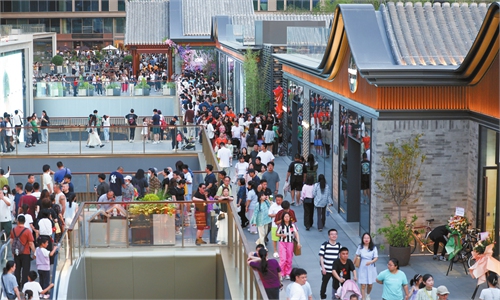
Let me start with consumption, which remains the bedrock of China's growth. Spending on services - tourism, dining, culture, sports, and entertainment - has maintained robust momentum. What I find most encouraging is the breadth of this development. From the bustling commercial districts of Shanghai and Beijing to the vibrant county-level markets and rural areas, the Chinese consumer is displaying remarkable vitality. The "trade-in" programs for automobiles, home appliances, and digital products have unlocked huge replacement demand. Smart devices, green products, and experiential consumption are becoming the new normal.
China's market of more than 1.4 billion people is a strategic asset unmatched anywhere in the world. With per capita income continuing to rise and the social security net steadily improving, household consumption power is being unleashed at an unprecedented scale. The weekend economy, ice-and-snow tourism, museum exhibitions, and live performances are not fleeting trends - they are proof that China's consumption structure is upgrading in depth, creating vast new space for sustainable growth.
On the investment front, the picture is equally encouraging. Manufacturing investment, particularly in high-tech, new energy, digital, and green industries, has shown impressive resilience. Funds are flowing into advanced manufacturing, semiconductor equipment, industrial software, robotics, aerospace, the low-altitude economy, charging infrastructure, and computing power networks. These are not short-term bets; they are long-term commitments to upgrading the real economy.
Infrastructure investment is also evolving - from traditional construction to smart logistics, pumped storage, grid modernization, 5G-A deployment, urban renewal, and flood control systems. The synergy between government guidance and private-sector dynamism is producing exactly the kind of high-quality investment that boosts productivity and lays the groundwork for the next decade of growth.
Policy support has been both timely and effective. Since the start of the year, Chinese authorities have rolled out a comprehensive package of measures to stabilize growth, stimulate consumption, support the real estate market in an orderly manner, and bolster market confidence. The Central Economic Work Conference has set a clear tone: strengthen counter-cyclical adjustment, expand domestic demand, and promote industrial upgrading.
Tools including ultra-long special treasury bonds, local government special bonds, and targeted lending facilities are being deployed with precision - supporting equipment upgrades, consumer trade-ins, major national projects, and green transition. This is not a blunt stimulus; it is a sophisticated, rules-based approach that trades short-term fireworks for long-term fundamentals. The results are already visible: market expectations are improving, business activity is expanding, and the foundation for recovery is consolidating month by month.
The "internal circulation" is gaining depth, and the "external circulation" is gaining new momentum. Trade and investment between China and other developing nations - particularly ASEAN - have repeatedly reached new highs. The full implementation of the RCEP is fostering deeper supply chain complementarity, expanding cooperation in green and digital sectors, and enhancing regional connectivity.
The China-ASEAN Free Trade Area 3.0 upgrade is opening fresh avenues in smart logistics, cross-border e-commerce, low-carbon infrastructure, and digital trade. Cooperation under the Belt and Road Initiative is entering a new phase of high-quality development, with projects in ports, railways, energy, and telecommunications delivering tangible benefits to partner countries.
China's foreign trade is becoming more diversified, more balanced, and more resilient - reducing reliance on any single market while contributing to an open regional and global economy.
All of this gives me full confidence in China achieving its GDP growth target for 2026. This target is well within reach because the fundamentals sustaining China's long-term growth have not changed - and are, in fact, getting stronger. China possesses a massive domestic market, a complete industrial system, a highly skilled workforce, and a policy toolkit that retains ample room for adjustment.
The article is compiled based on an interview with Li Renliang, deputy dean for Academic Affairs, Graduate School of Social Development and Management Strategy, National Institute of Development Administration, Bangkok, Thailand.
bizopinion@globaltimes.com.cn
RELATED ARTICLES