Chinese PLA forces track, monitor USS Charleston after illegal intrusion into waters adjacent to China’s Xianbin Jiao
By and Guo Yuandan Published: Oct 20, 2026 01:32 PM

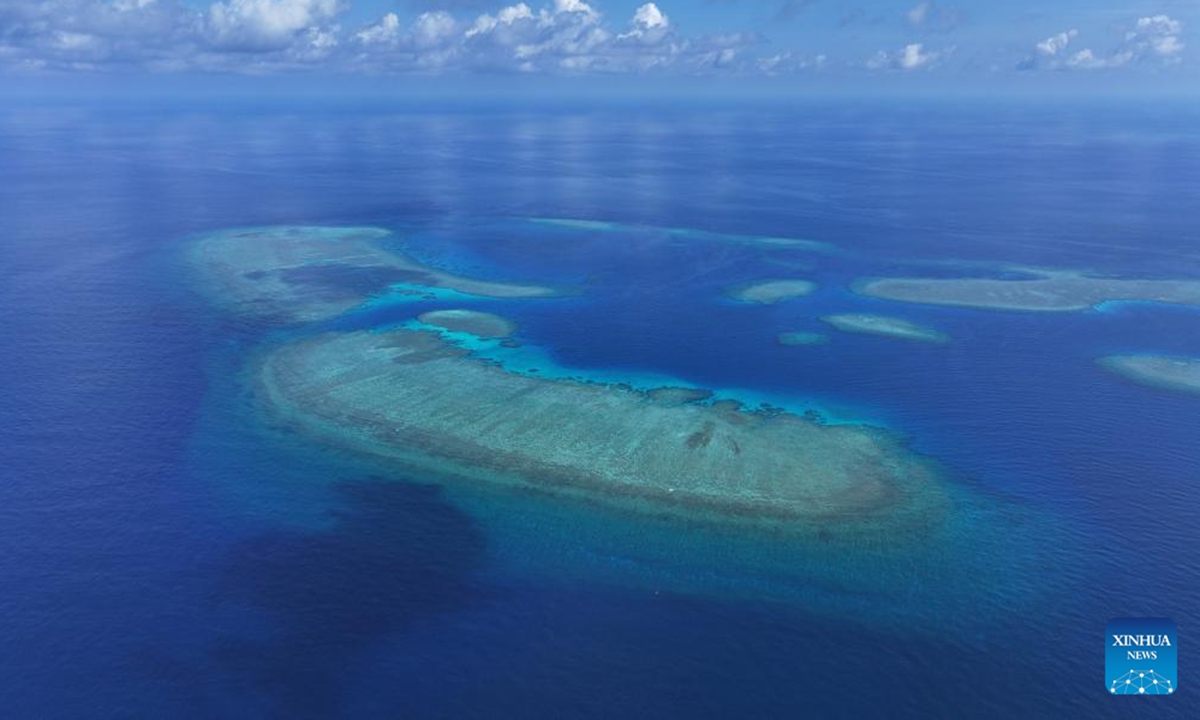
In the early hours of Tuesday, the US littoral combat ship USS Charleston illegally intruded into the waters adjacent to Xianbin Jiao of China's Nansha Qundao without approval from the Chinese government. The People's Liberation Army (PLA) Southern Theater Command Navy dispatched forces to track and monitor the US vessel in accordance with laws and regulations, Yin Gang, a spokesperson for the PLA Southern Theater Command Navy, said in a statement on Tuesday.
China holds indisputable sovereignty over Nansha Qundao and its adjacent waters. The US action infringes upon China's sovereign rights and interests, jeopardizes maritime security, and is detrimental to regional peace and stability. The US side should immediately cease such activities, Yin said.
Forces of the Southern Theater Command remain on high alert at all times to resolutely safeguard national sovereignty and security and uphold regional peace and stability, said the spokesperson.
Xianbin Jiao lies in the southeastern waters of China's Nansha Qundao, and its position along several international shipping lanes gives it significant strategic importance. The US littoral combat ship's close-in provocation there is a calculated move driven by the area's geostrategic value and other considerations, Zhang Junshe, a Chinese military affairs expert, told the Global Times on Tuesday.
Through such calculated provocations, the US seeks to test China's red lines on maritime passage and regional control while obstructing China's law enforcement and sovereignty protection efforts around the shoal. This deliberately challenges China's sovereignty in the South China Sea and undermines regional peace under the guise of so-called "freedom of navigation," said Zhang.
Compared with previous US military operations conducted under the banner of "freedom of navigation," those near Xianbin Jiao have been relatively rare. Yet this latest move suggests that US policy toward the South China Sea remains fundamentally unchanged and that China-US competition in these waters continues. The operation also aims to signal support for the Philippines and underscore the US military presence in the South China Sea, Chen Xiangmiao, a research fellow at the National Institute for South China Sea Studies, told the Global Times.
Xianbin Jiao has been a flashpoint in China Philippines maritime frictions in recent years. For example, in September, a Philippine vessel caused a collision with a China Coast Guard (CCG) boat near Xianbin Jiao in China's Nansha Qundao after ignoring repeated warnings and cutting across its bow, Jiang Lue, a spokesperson for the CCG, said in a statement. Jiang also sternly warned the Philippine side to immediately stop all acts of infringement and provocation, or bear all consequences arising from them.
Zhang noted that Philippine coast guard vessels have repeatedly intruded illegally into waters around Xianbin Jiao and staged beaching provocations, seeking to create a fact on the ground to assert Manila's so-called "sovereignty." By dispatching warships for close-in provocations at this juncture, the US also aims to provide military backing for Manila's risky moves, tie down China's navy and coast guard, and raise China's maritime governance costs while maximizing disruption at minimal cost.
China's swift public response to the US littoral combat ship's incursion into waters around Xianbin Jiao underscores its resolve to defend national sovereignty, territorial integrity, and maritime rights and interests. It also demonstrates the Chinese military's vigilance and readiness to counter security threats, sending a clear message: China will brook no compromise on these core interests, said Zhang.
The prompt official statement following the early-morning incident highlights China's round-the-clock surveillance and rapid-response capabilities in the South China Sea. "Unauthorized intrusions that infringe upon China's rights can be detected, tracked and addressed without delay," said the expert.
RELATED ARTICLES