China EU relations
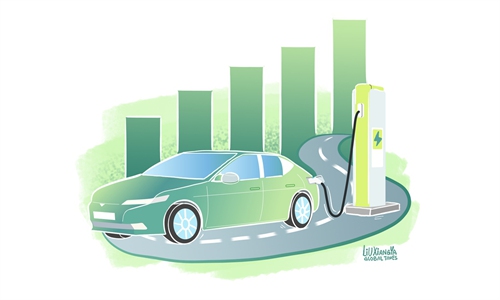
The global new-energy vehicle (NEV) wave is driving a profound transformation in Europe's automotive industry, one driven by market realities and development needs rather than political noise. One of its most striking features is the unprecedented deepening of the bonds between Europe's auto sector and China's NEV supply chain.
Following the official inauguration of Leapmotor B10 production last week, Leapmotor International plans to produce the Leapmotor B05, its second model at the Stellantis manufacturing plant in Zaragoza, Spain, Stellantis announced on its official website on Monday.
Meanwhile, Volkswagen is evaluating bringing some of its China-only models to Europe, and is starting to export to the Global South and countries that have easier access from China than Europe, such as Australia and the Middle East, Volkswagen CEO Thomas Schäfer told Autocar at the Paris motor show.
While these two news items appear to involve different companies and different operational segments, they point to a shared phenomenon against the backdrop of Europe's electric transition: Chinese and European automotive supply chains are integrating far more deeply than expected. Rather than being swayed by political rhetoric, European carmakers have made choices consistent with commercial logic through orders, factories, and export routes.
What makes this phenomenon particularly notable is its sharp contrast with the narrative that some European politicians have been hyping. For some time, there has been no shortage of rhetoric surrounding China-Europe electric vehicle (EV) competition, with certain political forces and extreme voices reducing normal industrial collaboration to a zero-sum game and even pushing protectionist measures. Yet European automakers on the front lines of the transition have chosen to actively deepen ties with China's new-energy supply chain in a thoroughly market-driven way, offering the industry's own response through concrete production arrangements and product launches.
The fundamental driver behind this pragmatic choice is the enormous cost and technology pressure brought by the electric transition. According to a report from the Boston Consulting Group, average vehicle plant utilization across European original equipment manufacturers is roughly 60 percent, compared with the 80 percent benchmark. European automakers also need to invest heavily annually in EV research and development and production line upgrades. This heavy burden has left European vehicle plants operating under pressure.
If European manufacturers were to rely solely on domestic resources to fill gaps in batteries, electrical and electronic architectures, and intelligent vehicle platforms, the process would take a lot of time and costs would escalate. It is under these very real constraints that European automakers have taken the initiative to seek out high-quality partners globally.
Chinese power battery companies now hold impressive global market share, and the country's proven capabilities in full-vehicle development iteration speed, supply chain coordination efficiency and cost control have created comparative advantages that cannot be replicated in the short term. They have naturally become the partners that European automakers turn to. This level of industrial alignment is a rational decision made based on market logic rather than political narrative.
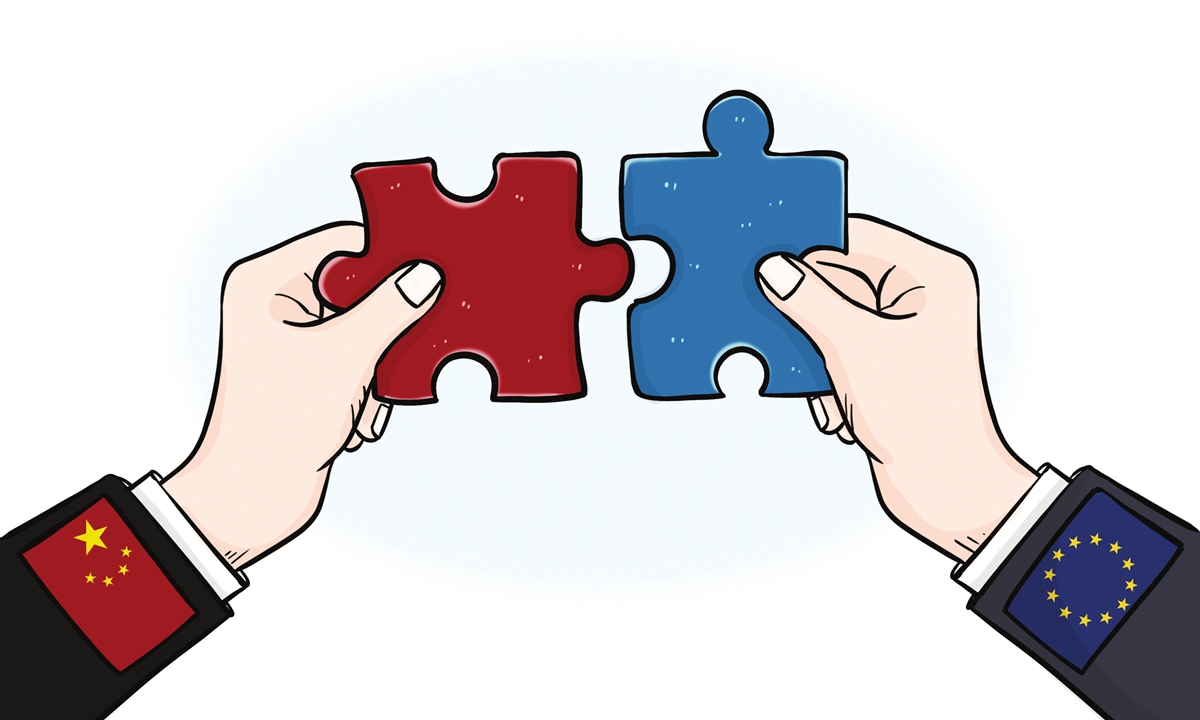
This deepening integration also signals a new phase of global EV competition, one in which competition is no longer simply about whose technology is more sophisticated, but about supply chain integration capability. European automakers have deep foundations in brands, channels, and manufacturing standards, while China's supply chain offers unique advantages in batteries, electrical and electronic architectures, iteration speed, and cost control. Each side has its shortcomings when going it alone; together, they may produce more competitive products. More importantly, the nature of China-Europe vehicle ties is undergoing a shift, with each side becoming an indispensable link in the other's supply chain.
With global protectionism on the rise, businesses will find the most efficient solutions in their own ways, even amid mounting pressure and noise. This is perhaps the truest aspect of China-Europe vehicle relations, and the core logic behind European carmakers' pragmatic choices: whoever chooses pragmatic solutions sooner will seize the initiative in the electric transition.
RELATED ARTICLES