SPORT / MISCELLANY
Marathon boom fuels demand for sports rehabilitation services
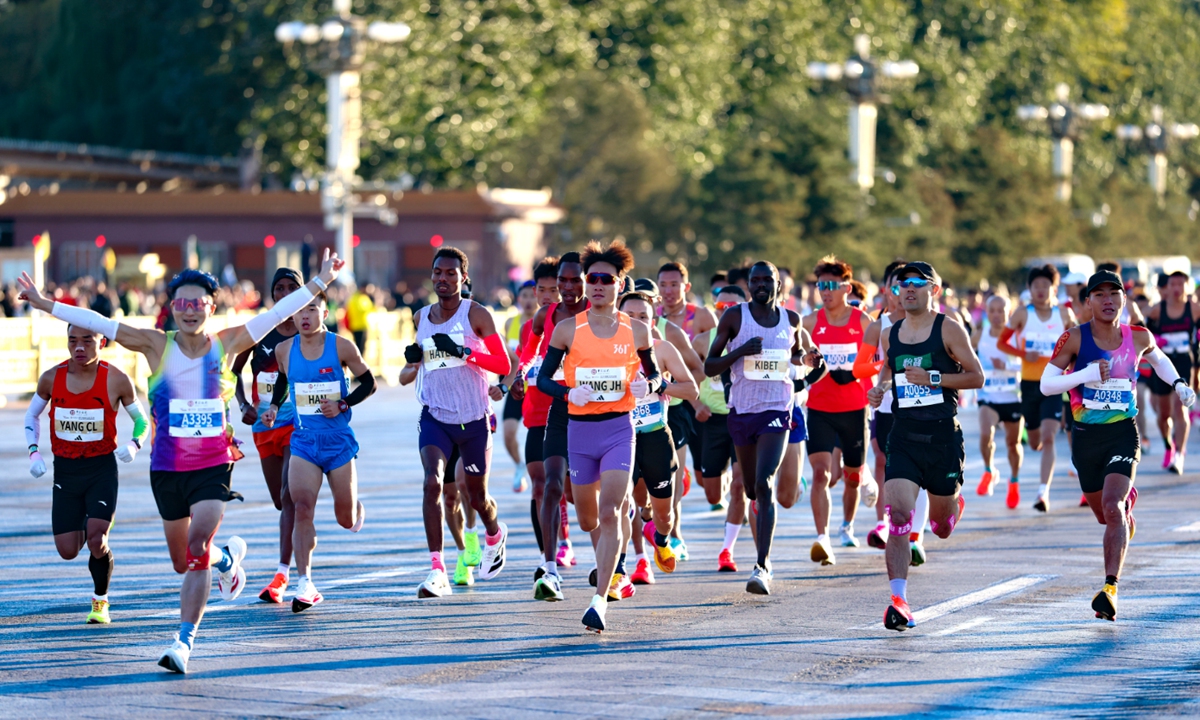
Photo: VCG
As marathon runners took to the streets of cities such as Beijing and Xi'an last weekend, the country's autumn road-running season offered another snapshot of the growing popularity of mass-participation sports.However, alongside the enthusiasm for crossing the finish line, questions about exercise safety and recovery are bringing sports rehabilitation into sharper focus.
On October 6, a 42-year-old man collapsed after finishing the Tianjin Wuqing Half Marathon and subsequently died, according to media reports. His family raised questions about the circumstances of the incident and the emergency response, seeking information from other participants.
The case prompted further public discussion about race safety, although the circumstances surrounding the death should not be taken as evidence that it was caused by marathon running itself.
Against this backdrop, sports rehabilitation services are gaining visibility as more ordinary people take up running, cycling, skiing and other physically demanding activities.
Hospitals in China have begun developing specialized services that combine injury treatment, physical assessment, training guidance and recovery, extending care beyond professional athletes to recreational sports enthusiasts.
Xi'an Hong Hui Hospital has also established the city's only dedicated marathon clinic, bringing together specialists in sports medicine, rehabilitation and cardiology to provide runners with care throughout the race cycle, the China News Service reported.
The clinic offers pre-race health assessments, guidance on responding to emergencies on the course, and diagnosis, treatment and rehabilitation advice for muscle and joint injuries.
In April 2025, the Nanjing Hospital of Traditional Chinese Medicine, also known as Nanjing Sports Hospital, opened a dedicated marathon clinic. According to the Nanjing Municipal Health Commission, the service brings together prevention, diagnosis and rehabilitation, with the aim of helping runners address injuries and improve their training practices.
The Shanghai Second Rehabilitation Hospital followed in September 2025 by launching a multidisciplinary marathon clinic. Its services include pre-race physical assessments, running-gait analysis, individualized training advice, treatment for sports injuries and post-race recovery. The clinic also integrates musculoskeletal rehabilitation and cardiac rehabilitation resources.
The emergence of such services reflects a broader shift in how recreational athletes approach exercise: beyond participation and performance, more attention is being paid to injury prevention, physical condition and sustainable training.
Jiang Chong, a Chongqing-based physiotherapist, told the Global Times on Wednesday that runners should pay attention to their physical condition before undertaking strenuous exercise, rather than focusing solely on completing a race.
"Preparation for a long-distance race involves more than accumulating mileage," Jiang said, noting that training intensity, recovery time and underlying health risks can all affect a runner's ability to tolerate strenuous exercise.
Runners should also learn to recognize when discomfort warrants medical attention, she said. Mild muscle soreness that gradually subsides with rest may occur during recovery, but persistent or worsening pain, swelling or discomfort that interferes with normal movement should not be ignored.
Symptoms such as chest pain, unusual shortness of breath, palpitations accompanied by dizziness or fainting require prompt medical assessment rather than simply more rest, Jiang said.
Pre-race health assessments may also be appropriate for people with underlying health conditions, a history of exercise-related symptoms or previous sports injuries, particularly when they are preparing for strenuous endurance events. The need for assessment depends on an individual's medical history and circumstances.
Sports rehabilitation can help runners address musculoskeletal problems and return to training after an injury, but it has limitations.
"Sports rehabilitation can help identify movement problems, restore strength and mobility after injury, and guide a gradual return to training," Jiang said.
"However, it cannot eliminate every risk, guarantee that an injury will not recur or replace medical evaluation for cardiovascular problems."
RELATED ARTICLES