China steps up support for commercialization of technological breakthroughs
Guidelines aim to bridge research and industry, turning scientific advances into new drivers of economic growth
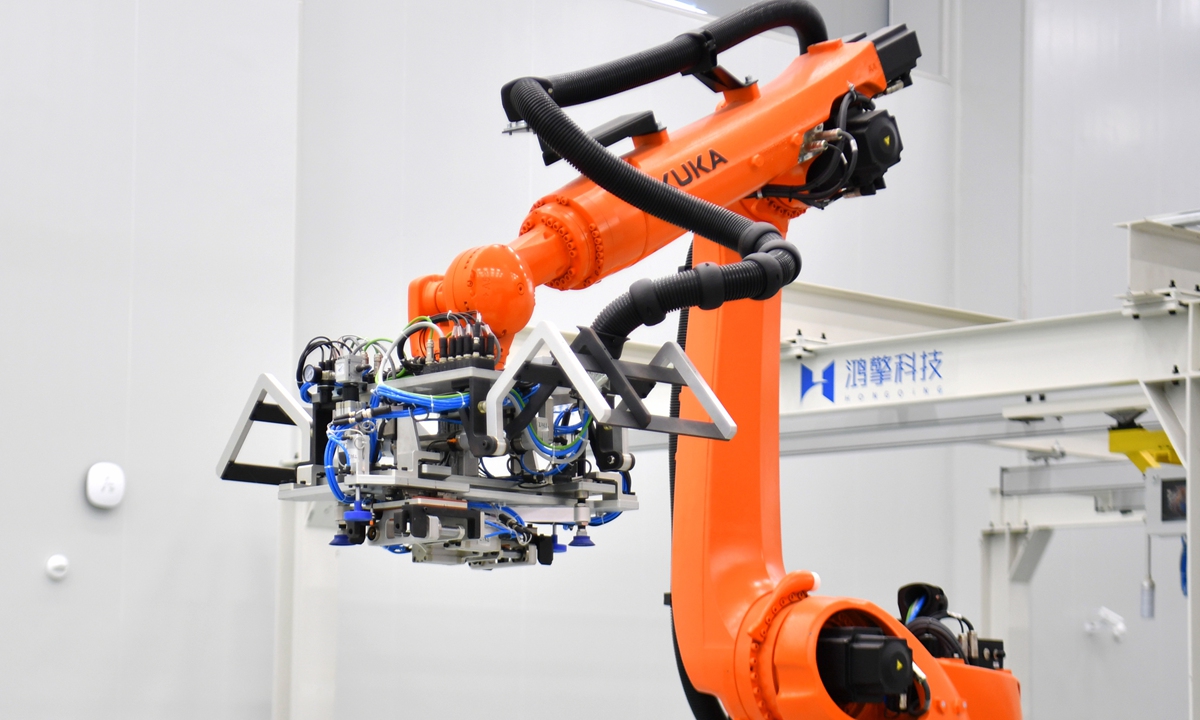
Production line at the satellite intelligent manufacturing pilot base of Hongqing Technology Photo: IC
China on Wednesday outlined guidelines to deepen the integration of technological and industrial innovation, calling for decisive breakthroughs in critical core technologies, faster commercialization of frontier technologies, a stronger role for enterprises in research and development (R&D), and greater support from long-term capital for hard technology.
The guidelines aim to break down barriers between technological innovation and industrial development, shifting away from the traditional approach of considering commercialization only after research results have been produced, a spokesperson for the Ministry of Science and Technology said on Wednesday. The goal is to strengthen the integration of research and industrial applications, with enterprises playing a leading role in translating scientific advances into productive forces, the spokesperson added.
The guidelines place greater emphasis on connecting scientific research with industrial demand and translating technological advances into products and economic output, Chinese economist Hu Qimu told the Global Times on Wednesday. Scientific advances can become productive forces only when applied in industrial settings and translated into products and economic output, he said.
To better connect technological innovation with industrial demand, the guidelines called for reforming the organization of national research projects, with greater participation from enterprises, venture capital institutions and end users in project planning and evaluation. They also seek to facilitate the commercialization of research findings by encouraging companies to lead projects with clear industrial application goals.
The guidelines identified several priority areas for technological breakthroughs, including integrated circuits, industrial machine tools, high-end instruments, advanced materials and biomanufacturing. They also call for breakthroughs in key basic software and advances in basic components, basic materials, advanced foundational processes and industrial technology foundations.
Beyond breakthroughs in existing industrial technologies, the guidelines also seek to foster emerging and future industries.
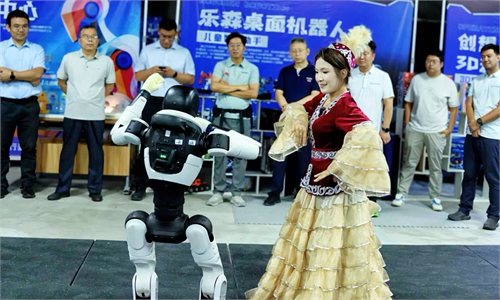
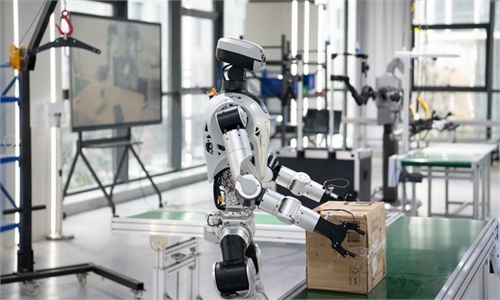
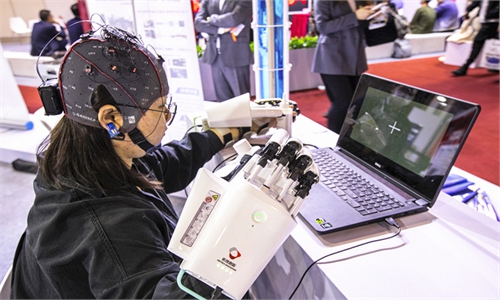
The guidelines also call for accelerating the development of emerging industries such as new energy, new materials and aerospace, while promoting the commercialization of frontier technologies including embodied intelligence, brain-computer interfaces and nuclear fusion energy.
These developments come as China seeks to better align its growing technological capabilities with industrial demand, balancing the pursuit of breakthroughs in frontier technologies with the need to translate research findings into commercially viable applications and sustained economic growth.
"China has accumulated substantial research capabilities and patent resources, yet bottlenecks persist in some industrial technologies, highlighting gaps between scientific research and industrial demand," according to Hu.
"Scientific advances can become productive forces only when they are applied in industrial settings and translated into products, corporate profits and economic output," he said.
The new approach seeks to remove barriers between researchers and manufacturers, allowing industrial needs to guide technological development while enabling new technologies to reshape production models, he stressed.
The guidelines also seek to expand enterprises' access to research resources. They propose opening pilot programs under the National Natural Science Foundation of China to private enterprises, expanding enterprise innovation development joint funds and improving companies' access to major scientific research facilities and instruments. Large enterprises are encouraged to open research platforms, application scenarios and supply chains to smaller businesses.
Patient capital is particularly important for frontier technologies that require years or even decades of sustained investment and repeated technological refinement, Hu said. Relying solely on government funding or companies' own resources may be insufficient, given businesses' need to maintain cash flow and profitability, he added.
"Short-term capital cannot effectively support technological innovation that requires years of sustained effort," Hu said, adding that better matching financing horizons with research cycles would allow companies to concentrate on long-term breakthroughs while providing stronger financial support for the real economy.
The move comes as China continues to increase its investment in scientific research while seeking to improve the commercial returns on innovation. China's R&D expenditure reached 3.93 trillion yuan ($588.71 billion) in 2025, up 8.2 percent year-on-year and accounting for 2.8 percent of GDP, according to data released by the National Bureau of Statistics on October 16. Enterprises accounted for 77.4 percent of total R&D spending.
Notably, despite substantial investment in R&D, challenges remain in translating research into industrial applications.
In 2025, the industrialization rate of invention patents held by Chinese enterprises reached 54.0 percent, up 0.7 percentage points from 2024, according to the China National Intellectual Property Administration. The rates for universities and research institutions stood at 10.1 percent and 17.2 percent, respectively.
Some industries may still need to adapt their production models to accommodate new technologies, underscoring the need for policy support to facilitate the integration of technological advances into industrial applications. Guidance for technologies developed in one sector could also find applications in another, making cross-industry collaboration and access to application scenarios important to the process, Hu said.
RELATED ARTICLES