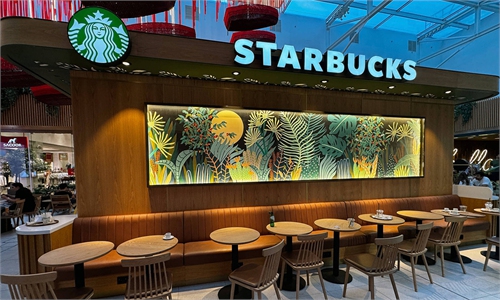
A Starbucks store in Shanghai Photo: Qi Xijia/Global Times
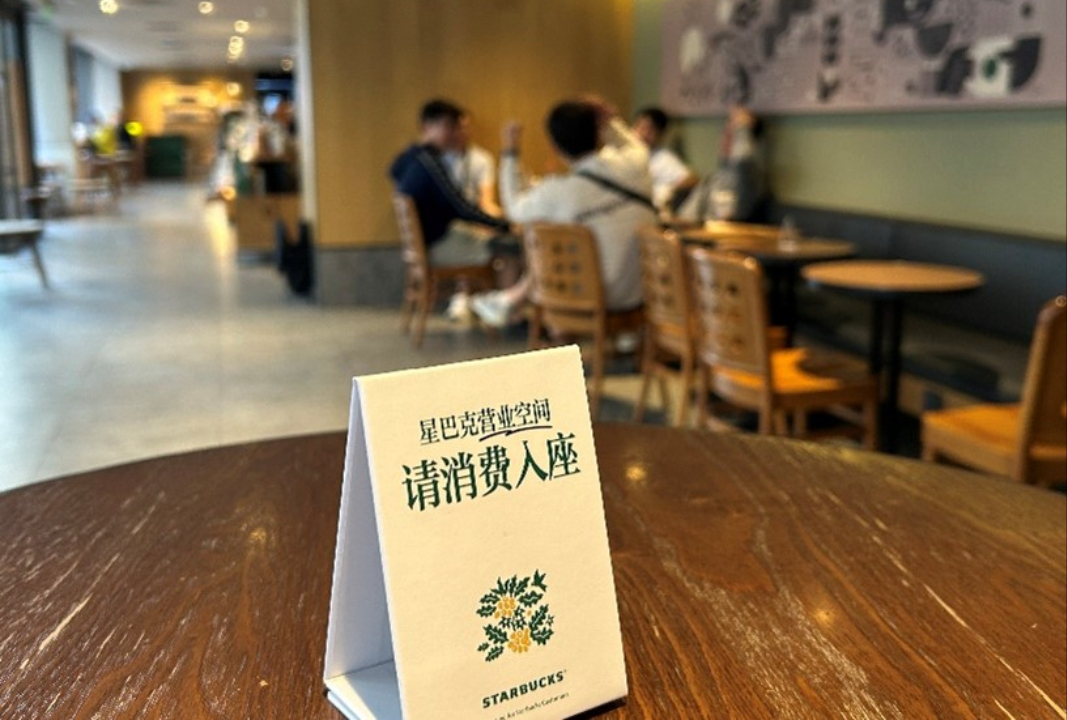
A Global Times reporter visited an outlet in Beijing at 9:30 am and noticed signs reading “Please make a purchase before taking a seat” placed on tables.
While the signage communicates the new rule, enforcement remains flexible on the ground. Some were seated without ordering anything, and the staff workers did not approach them and ask them to leave, a Global Times reporter observed.
When asked about implementation standards, a store worker told the Global Times that the guideline was not being strictly enforced.
One customer told the Global Times that the change to the seating rules made little difference to him, as he usually buys drinks before sitting down anyway. Another consumer backed the measure, calling it basic commercial etiquette.
“Retailers are not obligated to provide free seating for people who do not spend money,” the consumer said.
At a Starbucks store in Shanghai, an employee told the Global Times that short, temporary seating without a purchase would be tolerated, though staff would gently remind visitors to place an order or give up a seat when the shop grew busy.
The new seating norm forms part of Starbucks China’s Third Place Initiative, released on Wednesday. The initiative also calls for considerate seat use, quieter conversations and refraining from bringing strongly scented outside food into stores, Securities Daily reported.
Debates over seat-hogging without purchases have swirled online for months. The discussion centers on non-paying visitors occupying tables while paying customers cannot find seats, or behaving in ways that disrupt other customers’ experience, according to the report.
Danzhu Peng, a Chinese food industry analyst, told the Global Times that the "purchase-to-seat" practice is an international norm. “Cafés are different from public spaces in large shopping malls. Without making a purchase, people cannot expect to occupy commercial premises for an extended period,” he said.
Alongside the initiative, Starbucks announced on Wednesday that it would allocate more than 300 million yuan of additional investment in fiscal 2027 year to revamp in-store experiences. The funds will go toward adding staff during peak hours and at Starbucks Reserve bars, upgrading digital systems and core equipment, renovating roughly 1,000 outlets, and deepening coffee engagement and customer connections.
As of the end of fiscal 2025, China Starbucks posted $3.105 billion in revenue, up 5 percent year-on-year, and boasted 8,011 outlets across the country.
RELATED ARTICLES