SCI-TECH / OTHERS
Chinese chipmakers roll out new RISC-V server CPUs for AI demand
Open instruction set powers heavy workloads
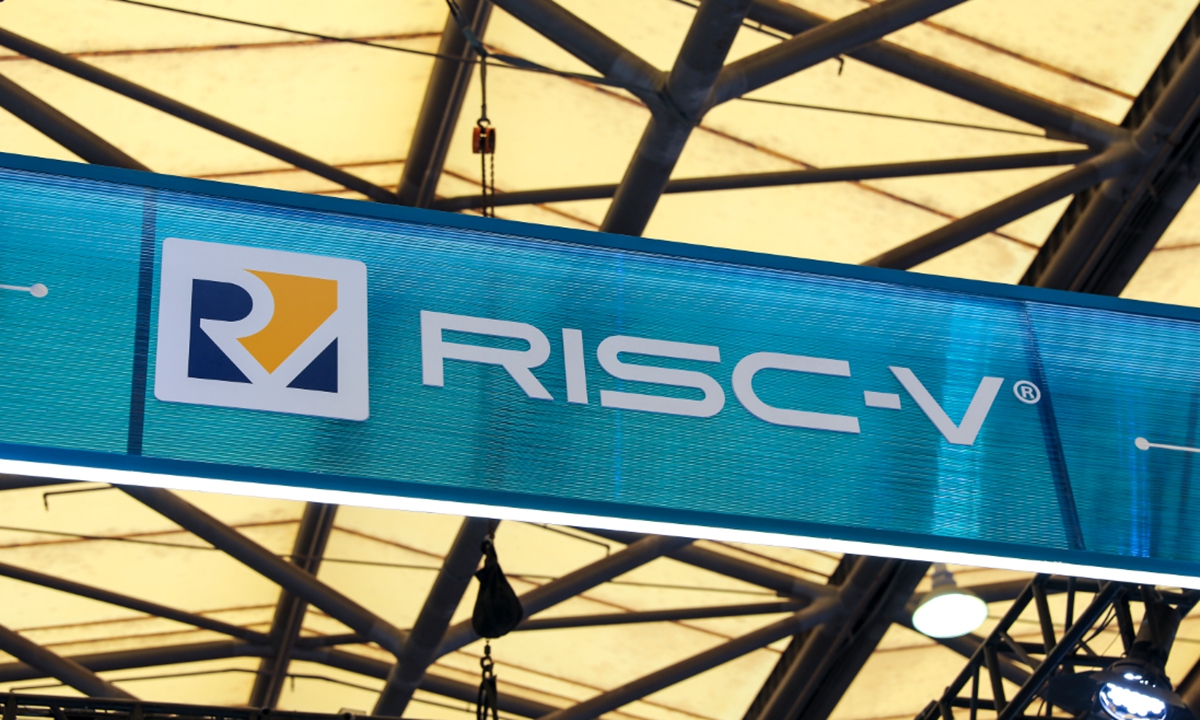
Photo: VCG
A humanoid robot powered by RISC-V can dodge obstacles by moving sideways and engage visitors in multiple rounds of conversation. Nearby, exhibition booths display vehicle control boards, edge AI development boards and complete server systems.At RISC-V Summit China 2026 held in Shenzhen, Guangdong Province from Sunday to Tuesday, these demonstrations showed how the open chip architecture is being explored in applications ranging from robotics to data centers.
One of the most significant developments at the summit was the push to bring RISC-V into AI servers, which require processors to handle demanding computing tasks reliably and work with a wide range of software.
During the summit, SpacemiT, a Chinese chipmaker specializing in RISC-V processors, unveiled its V100 server CPU alongside three server platforms for computing, AI and storage. According to Shenzhen News Network, the V100 was the first general-purpose processor to fully comply with RISC-V server specifications. The launch shows how Chinese companies are seeking to extend RISC-V beyond embedded devices and into the data centers that underpin AI services.
The V100 features 46 processor cores, a maximum clock speed of 2.4 gigahertz, and support for DDR5 memory and PCIe 5.0. It is designed for general-purpose data center computing and AI-related applications. By introducing complete server platforms alongside the processor, SpacemiT is seeking to move beyond chip development and offer systems that can be deployed in practical computing environments.
The launch has drawn attention partly because of what RISC-V offers.
"To put it simply, RISC-V is an open instruction set architecture that defines the instructions a processor can execute. It allows companies to develop their own processors without having to license a proprietary instruction set architecture," Jiang Yahan, an AI industry professional based in Beijing, told the Global Times on Thursday. "RISC-V has traditionally been used in areas such as microcontrollers and smart devices."
"As demand for computing power grows with the expansion of AI, companies are now seeking to bring it into more demanding applications, including servers," Jiang said.
SpacemiT is not alone in pursuing this direction. According to Shenzhen-based Securities Times, Chinese chipmaker Lanxin Computing recently unveiled a computing platform that combines general-purpose processing with AI computing capabilities. The company's LX500 processor integrates 48 RISC-V cores with dedicated AI computing engines. Lanxin said it was adapting its software to large language models including Qwen, DeepSeek and Kimi, with potential applications in enterprise knowledge retrieval, office assistants, financial compliance and industrial inspection.
These developments show that Chinese chipmakers are working to extend RISC-V into AI computing, but bringing the architecture into server environments involves challenges beyond chip performance.
According to Jiang, one key challenge is whether RISC-V-based processors can be integrated into customers' existing hardware and software environments.
"Competition in the server CPU market is not just about the performance of an individual chip. Replacing a processor is not simply a matter of swapping one component for another," Jiang said. "Companies must consider whether operating systems, applications and development tools can run smoothly on the new platform, as well as the costs of adapting software and maintaining the system."
"If adaptation costs are too high, customers may be reluctant to switch, even if the new chip offers technical advantages," she noted.
This helps explain why launching new processors alone will not be enough for RISC-V to gain ground in the server market. An open architecture gives companies flexibility in chip design, but that flexibility becomes a practical advantage only when software runs smoothly, systems operate reliably and customers can deploy them at an acceptable cost.
The challenges facing RISC-V are also reflected in the industry's changing priorities. In an August report, Shanghai-based Jiemian News, republished by Sina Finance, quoted Dai Weimin, chairman and CEO of VeriSilicon, as saying that the industry's focus has shifted from whether chips can be developed to how quickly they can be commercialized and how their ecosystems can be built.
As RISC-V expands into server and AI applications, its prospects will depend not only on chip performance, but also on the maturity of its software ecosystem and whether developers and customers can put the technology to practical use, according to Dai.
RELATED ARTICLES