Rare earth File photo:VCG
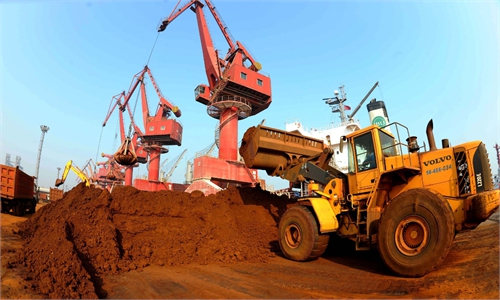
An American recycling company is recovering rare-earth metals from old wind turbines, which The Wall Street Journal said over the weekend could be one part of a drive to help reduce US reliance on China for the materials.
While recycling critical materials from retired equipment can tap existing resources, treating rare-earth magnet recycling as a breakthrough to achieve critical minerals "self-sufficiency" or framing it as a shortcut to shake off reliance on China's supply chain, seriously underestimates industrial realities.
Rare-earth metals are widely used in wind power systems, new-energy vehicles and high-end manufacturing, serving as core components of the modern industrial system. As these industries expand, recycling materials from old equipment has broad long-term potential. But being technically recoverable is not the same as being commercially viable and capable of stable industrial supply. The disassembly, separation and purification of wind turbines involve highly complex processes, which place high demands on specialized equipment, technical expertise and environmental protection treatment. Once transportation, labor and processing costs are added up, whether recycled products can compete with existing supplies on price and quality still has to be tested by the market.
An even trickier hurdle lies in the stability of the feedstock. Wind turbines are generally engineered for service lives of more than two decades. Most large-scale wind farms installed across Europe and the US came online only in the past decade, so very few turbines have reached retirement age. Even if some turbines are replaced with better models, recyclers may still face uneven, scattered and non-standardized feedstock. Without reliable raw material inflows, downstream separation and refining lines cannot run at full capacity, economies of scale remain out of reach, and unit costs stay high. This means recycling can serve as a valuable supplement to critical mineral supplies, but it cannot replace mature supply chains any time soon.
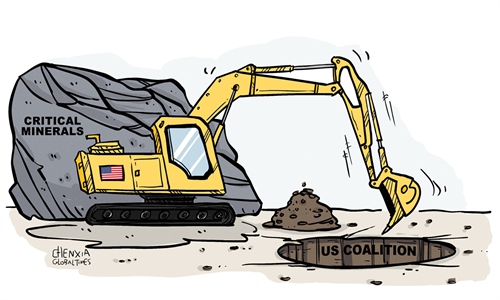
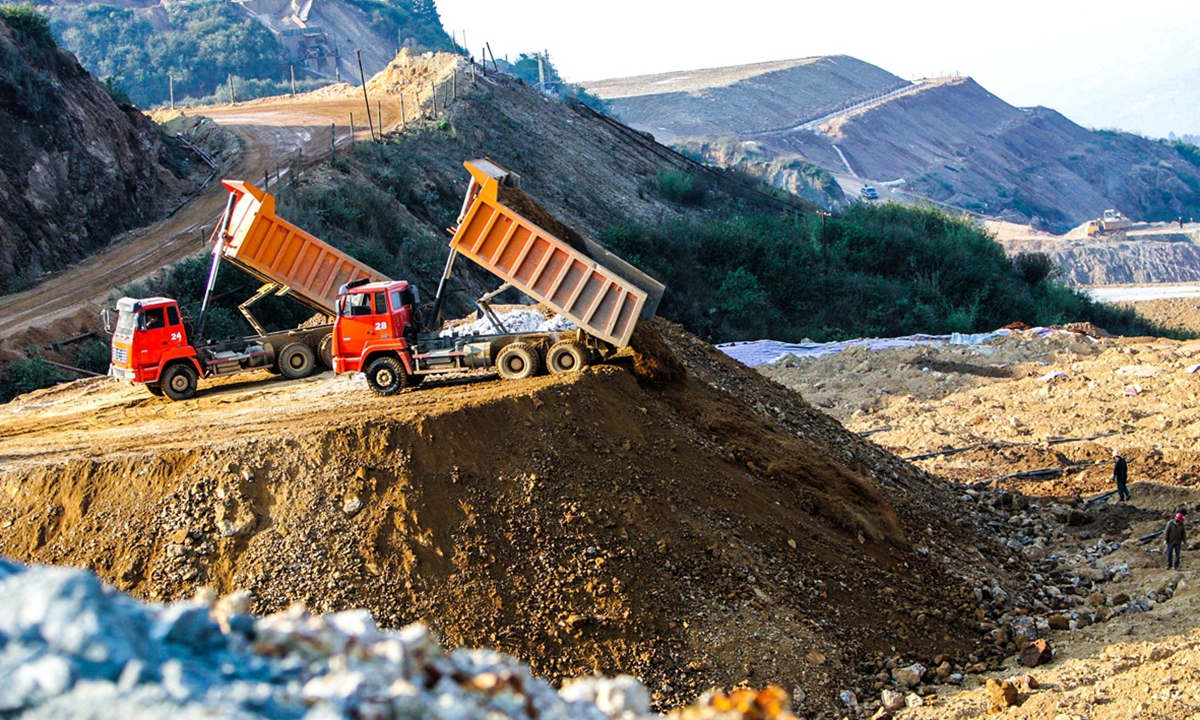
In recent years, some Western countries have repeatedly discussed critical mineral security and rolled out multiple policy initiatives, but actual progress has been relatively limited. The problem is not a lack of political will but the fact that building industrial chains follows its own logic. The global supply of critical minerals is never an isolated contest over a single link or a single technology. It is a systemic ecosystem integrating resources, technical expertise, cost control, skilled talent, specialized equipment and downstream market support. Mine development involves long investment cycles, separation and purification pose high technical barriers, and downstream manufacturing requires decades of accumulated experience.
A shortfall in any single link will drag down the entire industrial chain. Recycling and refining are never simple matters of technological breakthroughs. The chain equally requires a complete process system, stable raw material supply and a sustainable business model, all of which are necessary. Treating recycling as a shortcut to bypass existing mature supply chains underestimates the systemic difficulty of industrial chain construction.
China's rare-earth industry took shape over decades of steady accumulation. Yet today, some economies enjoy the benefits of the global division of labor while framing normal supply relationships as risks and seeking to sever industrial chains.
Meanwhile, there is no such thing as a shortcut in the global critical mineral industrial chain. The formation of a mature industrial system is the long-term combined result of resource endowment, technology accumulation, market scale and cost structure. It cannot be completely rearranged by a few technological breakthroughs or several policy measures.
China's rare-earth export measures are fully reasonable and compliant and have long provided stable, reliable supplies for related industries across the world. By hyping "reducing dependence on China," some economies appear to be pursuing supply chain security; in reality they are narrowing their own path of development. Supply chain security can never be achieved through artificial fragmentation.
Overall, recycling rare-earth metals from old wind turbines is a worthwhile pursuit within the circular economy, but it should be judged as a supplementary industrial strategy - not burdened with geopolitical expectations.
RELATED ARTICLES