ARTS / CULTURE & LEISURE
Saudi Arabia's first cultural counselor to China tells youth to seize 'golden opportunities' in bilateral ties
By and Ma Yongliang Published: Oct 27, 2026 04:42 PM

Editor's Note:
This column, Bridging the Distance: China and Saudi Arabia, is presented jointly by Global Times and Al Riyadh. It brings together the personal stories of 20 Saudi friends who have met China, come to know it, and been changed by it in the process.
From "China-Saudi partners" to "cultural envoys," from teachers of Chinese to builders of bridges between two of the world's oldest civilizations, they are the ones writing the early chapters of a relationship that is still unfolding. Their accounts show how China and Saudi Arabia cross mountains and seas to move forward together.
The series opens with Saleh Al-Saqri, the first cultural counselor of the Saudi Embassy in China. His own story began over 30 years ago, and he helped open the door for Saudi students to study in China — some of whom now hold key positions in the kingdom.
At a time when research in the Arab world, and in much of the global academic community, was largely oriented toward the West, the young Al-Saqri reached for a different direction. He wanted to turn his gaze east, so that "the Arab world could also have scholars who study China, the Far East and Southeast Asia."
That unconventional choice eventually brought him to China. In 2008, he served as the first cultural counselor of the Saudi Embassy in China in Beijing, where he worked to help more Saudi students to study in Chinese universities.
China and Saudi Arabia formally established diplomatic ties in 1990, and by the time Al-Saqri arrived in Beijing, economic and political links had already laid a foundation. "But for us, cultural and educational cooperation was still unfamiliar territory," he recalled. "It was quite stressful."
Sending young Saudis to study in China was a task with no manual. "Chinese universities knew nothing about us, and we knew nothing about them," Saqri said. "We didn't even know how to get to the universities."
The harder task was unlocking the minds of Saudi youth. In the early days, studying in China was still a new idea, and many families were unsure whether "going to China to study was worth the effort." Al-Saqri reassured them: "China is an important country of the future, and your children will be among the first to carry out exchanges between China and Saudi Arabia, and between China and the Arab world."
His judgment proved right. "Not one of those students has regretted coming to China to study," Al-Saqri told the Global Times. Today, they hold many important positions in Saudi Arabia, working in investment, the royal court, universities, economics, social research and even teaching Chinese.
Once the process was unblocked and the reservations dispelled, Saudi students settled into Chinese society faster than expected. Al-Saqri said students were often surprised by the similarities between Chinese society and Saudi and Arab societies, such as the strong emphasis on family. The inclusiveness and acceptance of Chinese society also helped them adapt quickly to life and study in China.
Between 2008 and 2012, China hosted 1,200 Saudi students, while Saudi Arabia hosted more than 200 Chinese students at its universities. The seeds of exchange took root in the students of the two countries, sprouted quietly, and grew into a canopy of connection.
Al-Saqri has remained closely connected with China since leaving the post. "I have not had a single year without contact with China," he said. Now retired, he stays active in cultural exchange between the two countries, visiting China regularly and inviting Chinese scholars to Saudi Arabia, working to bring the scholars, writers and intellectuals of the two countries closer together.
Al-Saqri's 38-year connection with China grew out of a conviction carried through the long history of exchanges between Chinese and Arab civilizations. He noted that the two great civilizations have long engaged in science, culture, medicine, engineering and astronomy, with the ancient Silk Road providing the bridge. Today, links between the two countries are deepening, "not only between ordinary people, but also between the leaders of the two countries."
To young people in both countries, Al-Saqri has one message: Seize the golden opportunities that exist between China and Saudi Arabia. He described the chances now on offer as precious and irreplaceable, spanning economics, diplomacy, academia and the arts. "For me, I am now at a rather late stage of my life, and I only wish I had had such an opportunity when I was young," he said.
"Go to China, study a field in depth, and you will find the space to grow that suits you," Al-Saqri said.
Al-Saqri's China story is far from over. It is both a personal memory and a vivid footnote to the mutual learning between Chinese and Saudi Arabian civilizations and the growing bonds between the two peoples.
This column, Bridging the Distance: China and Saudi Arabia, is presented jointly by Global Times and Al Riyadh. It brings together the personal stories of 20 Saudi friends who have met China, come to know it, and been changed by it in the process.
From "China-Saudi partners" to "cultural envoys," from teachers of Chinese to builders of bridges between two of the world's oldest civilizations, they are the ones writing the early chapters of a relationship that is still unfolding. Their accounts show how China and Saudi Arabia cross mountains and seas to move forward together.
The series opens with Saleh Al-Saqri, the first cultural counselor of the Saudi Embassy in China. His own story began over 30 years ago, and he helped open the door for Saudi students to study in China — some of whom now hold key positions in the kingdom.
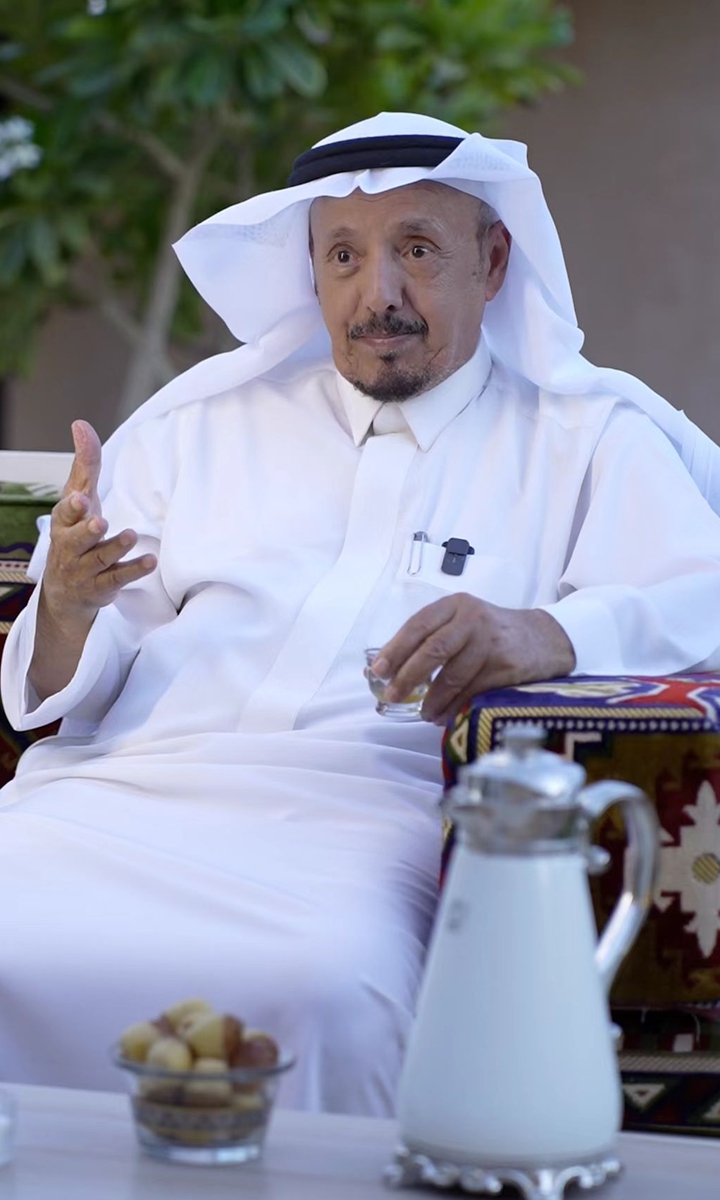
Saleh Al-Saqri, the first cultural counselor of the Saudi Embassy in China, speaks to a Global Times special correspondent in September 2026. Photo: Ma Yongliang
"My bond with China began around 1988," said Saleh Al-Saqri, the first cultural counselor of the Saudi Embassy in China, recalling his student days when studying in the United Kingdom during an interview with the Global Times.At a time when research in the Arab world, and in much of the global academic community, was largely oriented toward the West, the young Al-Saqri reached for a different direction. He wanted to turn his gaze east, so that "the Arab world could also have scholars who study China, the Far East and Southeast Asia."
That unconventional choice eventually brought him to China. In 2008, he served as the first cultural counselor of the Saudi Embassy in China in Beijing, where he worked to help more Saudi students to study in Chinese universities.
China and Saudi Arabia formally established diplomatic ties in 1990, and by the time Al-Saqri arrived in Beijing, economic and political links had already laid a foundation. "But for us, cultural and educational cooperation was still unfamiliar territory," he recalled. "It was quite stressful."
Sending young Saudis to study in China was a task with no manual. "Chinese universities knew nothing about us, and we knew nothing about them," Saqri said. "We didn't even know how to get to the universities."
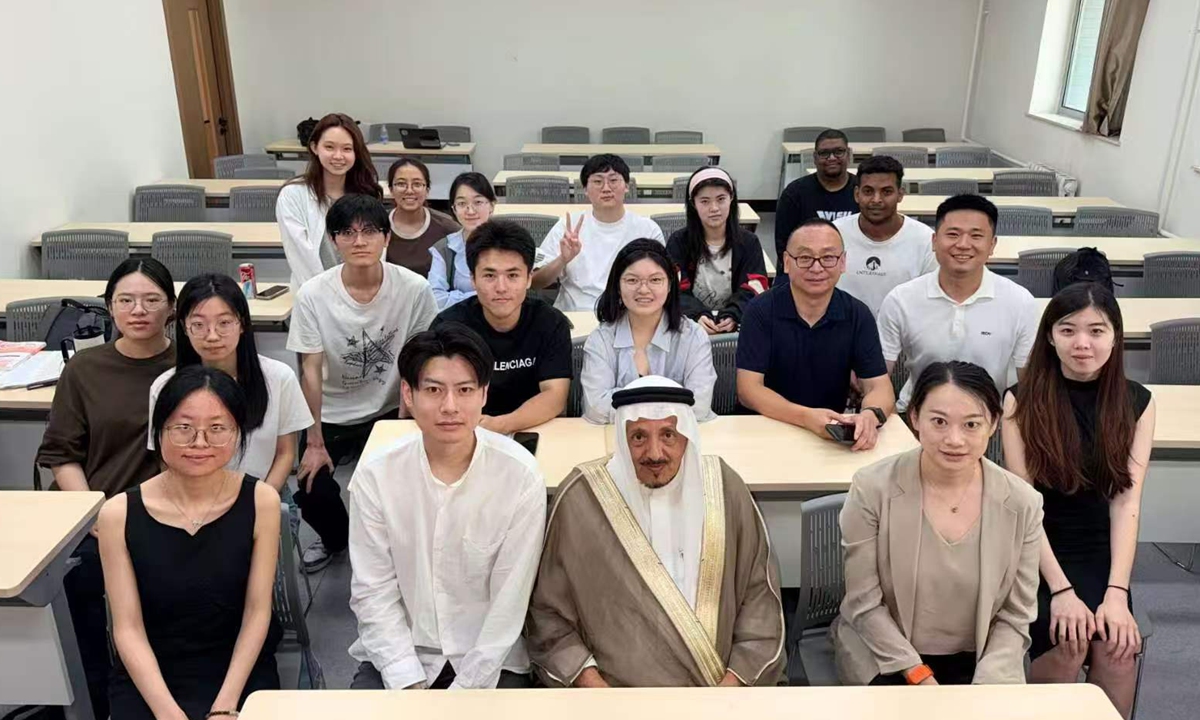
Saleh Al-Saqri talks with faculty and students of the Communication University of China in Beijing in June 2026. Photo: Courtesy of Saleh Al-Saqri
With the help from a Chinese professor who made the introductions, Saqri began visiting universities in Beijing, and early cooperation with Chinese institutions started to take shape. The application process gradually fell into place.The harder task was unlocking the minds of Saudi youth. In the early days, studying in China was still a new idea, and many families were unsure whether "going to China to study was worth the effort." Al-Saqri reassured them: "China is an important country of the future, and your children will be among the first to carry out exchanges between China and Saudi Arabia, and between China and the Arab world."
His judgment proved right. "Not one of those students has regretted coming to China to study," Al-Saqri told the Global Times. Today, they hold many important positions in Saudi Arabia, working in investment, the royal court, universities, economics, social research and even teaching Chinese.
Once the process was unblocked and the reservations dispelled, Saudi students settled into Chinese society faster than expected. Al-Saqri said students were often surprised by the similarities between Chinese society and Saudi and Arab societies, such as the strong emphasis on family. The inclusiveness and acceptance of Chinese society also helped them adapt quickly to life and study in China.
Between 2008 and 2012, China hosted 1,200 Saudi students, while Saudi Arabia hosted more than 200 Chinese students at its universities. The seeds of exchange took root in the students of the two countries, sprouted quietly, and grew into a canopy of connection.
Al-Saqri has remained closely connected with China since leaving the post. "I have not had a single year without contact with China," he said. Now retired, he stays active in cultural exchange between the two countries, visiting China regularly and inviting Chinese scholars to Saudi Arabia, working to bring the scholars, writers and intellectuals of the two countries closer together.
Al-Saqri's 38-year connection with China grew out of a conviction carried through the long history of exchanges between Chinese and Arab civilizations. He noted that the two great civilizations have long engaged in science, culture, medicine, engineering and astronomy, with the ancient Silk Road providing the bridge. Today, links between the two countries are deepening, "not only between ordinary people, but also between the leaders of the two countries."
To young people in both countries, Al-Saqri has one message: Seize the golden opportunities that exist between China and Saudi Arabia. He described the chances now on offer as precious and irreplaceable, spanning economics, diplomacy, academia and the arts. "For me, I am now at a rather late stage of my life, and I only wish I had had such an opportunity when I was young," he said.
"Go to China, study a field in depth, and you will find the space to grow that suits you," Al-Saqri said.
Al-Saqri's China story is far from over. It is both a personal memory and a vivid footnote to the mutual learning between Chinese and Saudi Arabian civilizations and the growing bonds between the two peoples.
RELATED ARTICLES