Chinese investment in Vietnam expands into AI, other high-tech sectors, as businesses eye deeper cooperation
Vietnamese firms eye AI cooperation as Chinese investment grows
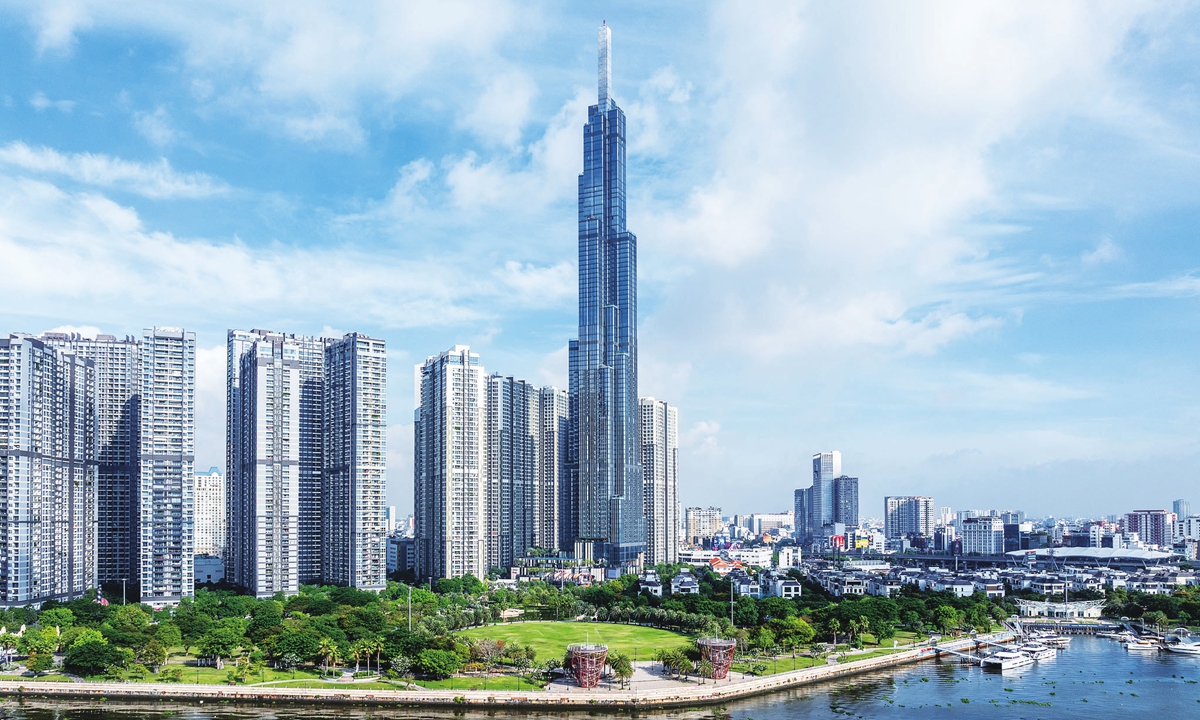
A view of Hanoi, Vietnam Photo: VCG
Chinese investment in Vietnam is expanding beyond traditional manufacturing into emerging sectors such as artificial intelligence (AI), the digital economy and semiconductors, while Vietnamese businesses are seeking closer cooperation with Chinese companies in advanced technologies, attendees said at an investment forum in Beijing on Tuesday.
The growing interest in high-tech cooperation was highlighted at the China-Vietnam Economic, Trade and Investment Cooperation Exchange Meeting, jointly hosted by the Vietnamese Embassy in China and the China Overseas Development Association, where businesses explored investment opportunities and potential partnerships in emerging industries.
"Bilateral economic cooperation is characterized by expanding trade, diversified investment, and a clear shift toward high-quality, technology-intensive sectors," Do Quang Tung, counselor at the Vietnamese Embassy in Beijing, told the Global Times on Tuesday.
China remains Vietnam's largest trading partner, with bilateral trade reaching about $256.5 billion in 2025 and exceeding $253 billion in the first nine months of 2026, according to Do.
Chinese investment in Vietnam has also expanded. In the first nine months of 2026, China registered $2.27 billion in newly licensed capital. It ranked first in the number of new projects with about 850 projects in the first seven months of the year, Do said.
Notably, Chinese investment is shifting from traditional processing to infrastructure connectivity, especially railway links, clean energy, the digital economy, AI and semiconductors, according to Do.
The growing presence of Chinese investors is already visible in Vietnam's industrial parks, where Chinese manufacturers are bringing businesses that lie along their supply chains.
Bui The Long, general manager of Vietnam's Green i-Park Corp, told the Global Times at Tuesday's event that the company's industrial park has 36 Chinese investors, mainly operating in electronics and electrical appliances, agricultural equipment, and lighting products.
As these Chinese companies established operations in the park, their upstream and downstream suppliers also followed, Bui said. In the past, Chinese companies investing in Vietnam were generally smaller in scale, while South Korean and Japanese enterprises accounted for a larger share of foreign investment; however, Vietnam is now seeing a growing number of large Chinese companies investing in the country, according to Bui.
Beyond traditional manufacturing, AI is emerging as an important area of interest for Vietnamese businesses seeking cooperation with Chinese companies.
Bui expressed hope that Chinese companies would develop AI projects in Vietnam, noting that Vietnam's AI sector is still at an early stage of development, while China has already developed the industry on a much larger scale.
One purpose of his visit to China was to learn from Chinese companies and seek their guidance in developing AI-related projects in Vietnam, Bui said.
He Zhenwei, president of the China Overseas Development Association, told the Global Times that the next stage of China-Vietnam economic and trade cooperation should focus not only on expanding trade in terms of volume but also on improving the quality of cooperation, particularly in emerging sectors such as AI and the digital economy.
Cooperation in AI could focus on the localization of large-language models and big data applications in Vietnam. "Rather than simply introducing Chinese technologies for use in Vietnam, cooperation should promote their local application, help Vietnam improve its industrialization, intelligent development and modernization, and strengthen related infrastructure," He noted.
For Chinese businesses looking to expand in Vietnam, closer cooperation also requires a better understanding of local policies and investment conditions.
"I believe one of the most important outcomes of today's event is that the parties have gained a better mutual understanding, particularly regarding the policies of both countries and the specific needs and strengths of each side. This enhanced understanding serves as a crucial foundation for establishing long-term partnerships," Do told the Global Times.
Looking ahead, Do called for more frequent exchanges and welcomed more Chinese enterprises to invest and expand their businesses in Vietnam, particularly in high-quality, technology-intensive and environmentally sustainable projects.
RELATED ARTICLES


