Illustration: Chen Xia/Global Times
China's clean technology exports this year could cut carbon emissions outside its borders by an amount equivalent to Brazil's annual emissions from fossil fuel consumption, Reuters reported on Thursday, citing a study by the Finland-based Centre for Research on Energy and Clean Air (CREA). The figures highlight what is at stake in making clean technologies more widely available.
The findings come ahead of COP31, the UN climate change conference scheduled for next month. Expanding access to affordable clean technologies can help economies meet rising energy needs while cutting emissions, turning climate goals into practical action.
One factor that deserves particular attention is artificial intelligence (AI). As its use expands, the world will need much more electricity. The International Energy Agency expects global electricity demand to increase by an average of about 1,100 terawatt-hours a year through 2030, up from an annual average of 700 terawatt-hours between 2015 and 2025. This raises a fundamental question: How can the world meet growing energy needs while cutting emissions?
Yet cutting emissions is just as urgent. The UN Environment Programme's report said that global greenhouse gas emissions would need to fall by 18 percent by 2030 and 45 percent by 2035, relative to 2025 levels. Does meeting these targets have to come at the expense of economic development?
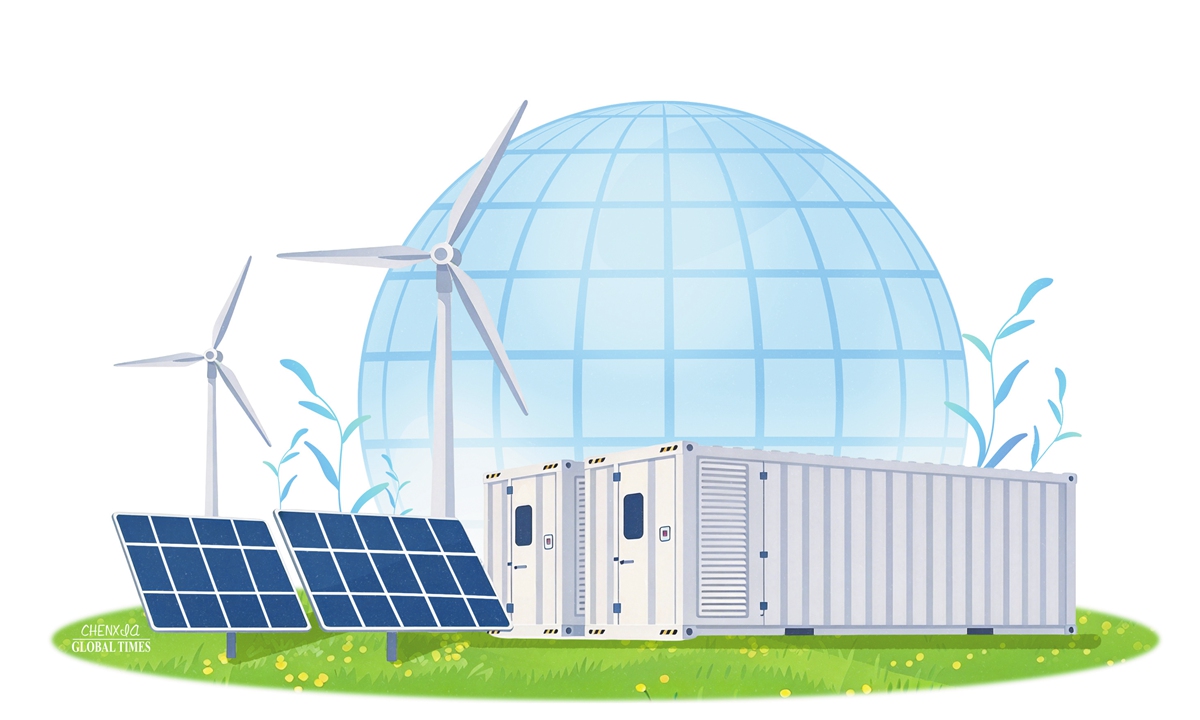
One answer lies in clean technologies. Solar and wind power, batteries and other low-carbon technologies can help economies expand energy supplies while reducing reliance on fossil fuels. As electricity demand grows, making these technologies more affordable and widely available will help countries meet their development needs while cutting emissions.
The CREA study offers a measure of this potential. According to Reuters, China's exports of solar panels, wind turbines, electric vehicles and batteries will help the world to avoid 450 million metric tons of planet-warming carbon dioxide emissions. The findings show that mature clean technologies can replace fossil fuels at scale, delivering emissions cuts that add up to a global impact.
To realize this potential, clean energy products should be able to move freely across borders. Open trade and fair competition can spur technological progress, lower costs and make clean products more affordable. This matters for both developed and developing economies. As more countries adopt these products to meet growing energy needs and cut emissions, the resulting climate benefits can multiply on a global scale.
This is not just about China's clean energy products; many economies are developing their own clean energy industries. Free trade and fair competition can help these economies grow their industries and compete more effectively. Open markets give producers more room to innovate and lower costs, making clean energy products more affordable and accessible worldwide.
The CREA study underscores the role clean energy exports can play in tackling climate change. Yet unilateralism and protectionism are creating new obstacles to collective climate action. COP31 should address these barriers and help advance a more open and accessible international trading system that allows green and low-carbon products to flow freely across borders.
In today's globalized economy, developing a clean energy industry often depends on access to components and products from across borders. Open trade allows economies to source what they cannot produce competitively themselves, helping them build their own clean energy industries more efficiently.
Decarbonizing power grids that rely on fossil fuels is becoming increasingly important for economies around the world. The transition is a race against time. Economies that secure cleaner energy supplies sooner will be better positioned to meet rising electricity demand while cutting emissions. This can provide them with a stronger foundation for energy-intensive industries, from AI to advanced manufacturing, to grow.
The world cannot afford to let protectionism stand in the way of the clean energy transition. In the age of AI, affordable clean energy is not just a tool for cutting emissions; it is a bridge between growing energy needs and a low-carbon future.
The author is a reporter with the Global Times. bizopinion@globaltimes.com.cn
RELATED ARTICLES