CXMT’s nine-month revenue surges over 700% as memory chip boom fuels technology push
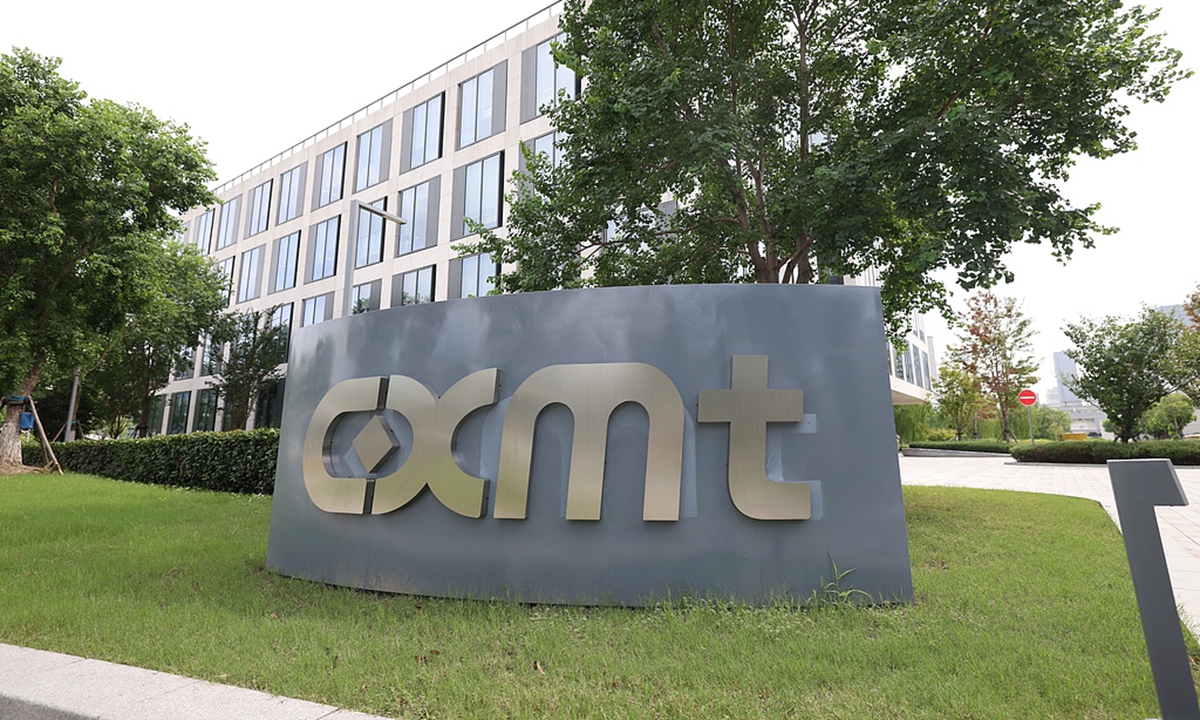
CXMT Photo: VCG
Chinese memory chipmaker CXMT reported revenue of 269.02 billion yuan ($40.39 billion) in the first nine months of 2026, up 738.51 percent year-on-year, and net profit attributable to shareholders of 132.04 billion yuan, reversing a loss recorded in the same period last year, according to its financial report released on Friday. The results reflect a global shortage of dynamic random-access memory (DRAM) chips, as well as the company's expanding production and technological advances, analysts said.
Rapid growth in global computing demand and capacity adjustments by major suppliers have tightened global DRAM chip supply, while the company's capacity expansion and optimization of its product mix have driven significant increases in both sales volume and selling prices, resulting in substantial revenue growth, the company's report said.
Xiang Ligang, president of the Beijing Institute of Intelligent Era Industry, told the Global Times on Friday that rising global memory chip prices were the main driver of the company's sharp growth. Capacity expansion and technological improvements also helped the company to capture seize development opportunities during the industry upswing, he said.
Having products and manufacturing capabilities of their own allows Chinese companies to take part in and benefit from this wave of growth, Xiang noted. However, the current high level of profitability should not be expected to last indefinitely, as companies will eventually have to contend with changes in market conditions and prices.
CXMT's research spending provides one indication of its efforts to build longer-term capabilities. In materials provided to the Global Times, the company said R&D expenditure reached 11.07 billion yuan in the first nine months of 2026, up 73.03 percent year-on-year. DRAM products developed on its sixth-generation technology platform have completed verification of engineering sample.
The company also said its fifth-generation technology platform entered mass production in September, increasing the number of dies produced per wafer by at least 50 percent compared with the previous generation. This improvement provides a way to lower production costs and strengthen competitiveness as the market evolves, analysts said.
These developments come amid broader growth in China's electronics industry. Data from the Ministry of Industry and Information Technology showed that value added in the electronic information manufacturing sector above designated size rose 15.7 percent year-on-year in January-August, while combined revenue increased 20.1 percent to 12.8 trillion yuan.
The upturn in the memory chip market also has implications for downstream businesses. Xiang said higher component prices could put pressure on smartphone and computer manufacturers and their suppliers, adding that a more stable market environment would benefit the industry as a whole.
For manufacturers, maintaining investment, upgrading technology and expanding production capacity during weaker downturns would help them seize opportunities when demand strengthens, Xiang said. Continued progress in these areas will help CXMT turn the current opportunities presented by the current industry upturn into a stronger foundation for growth through future market cycles.
RELATED ARTICLES