ARTS / BOOKS
Former Chinese diplomat turns observations overseas into fiction ‘A Bacchanal Land’
Answering questions with Chinese thought
By Zhang Ni and Published: Nov 01, 2026 10:16 PM

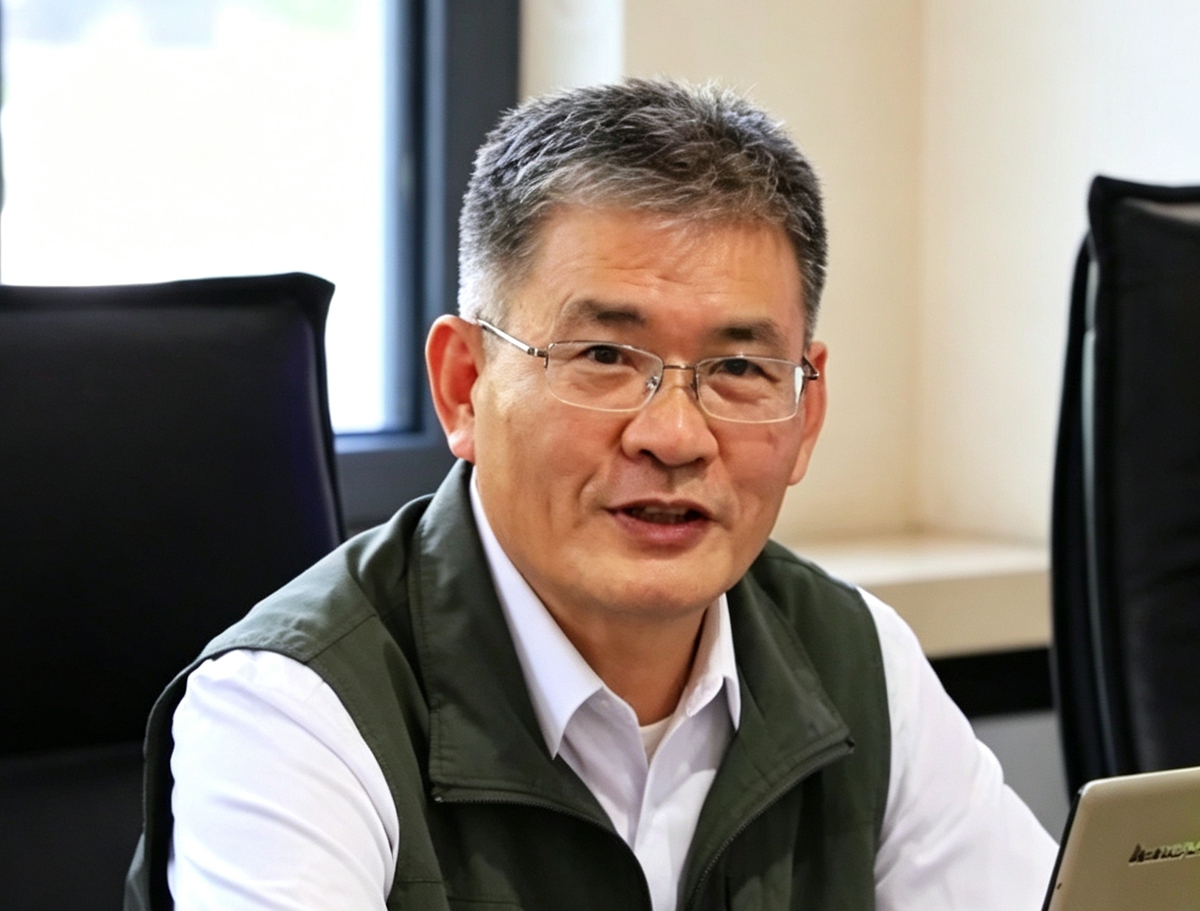
Writer Lu Shan Photos on this page: Courtesy of Lu Shan
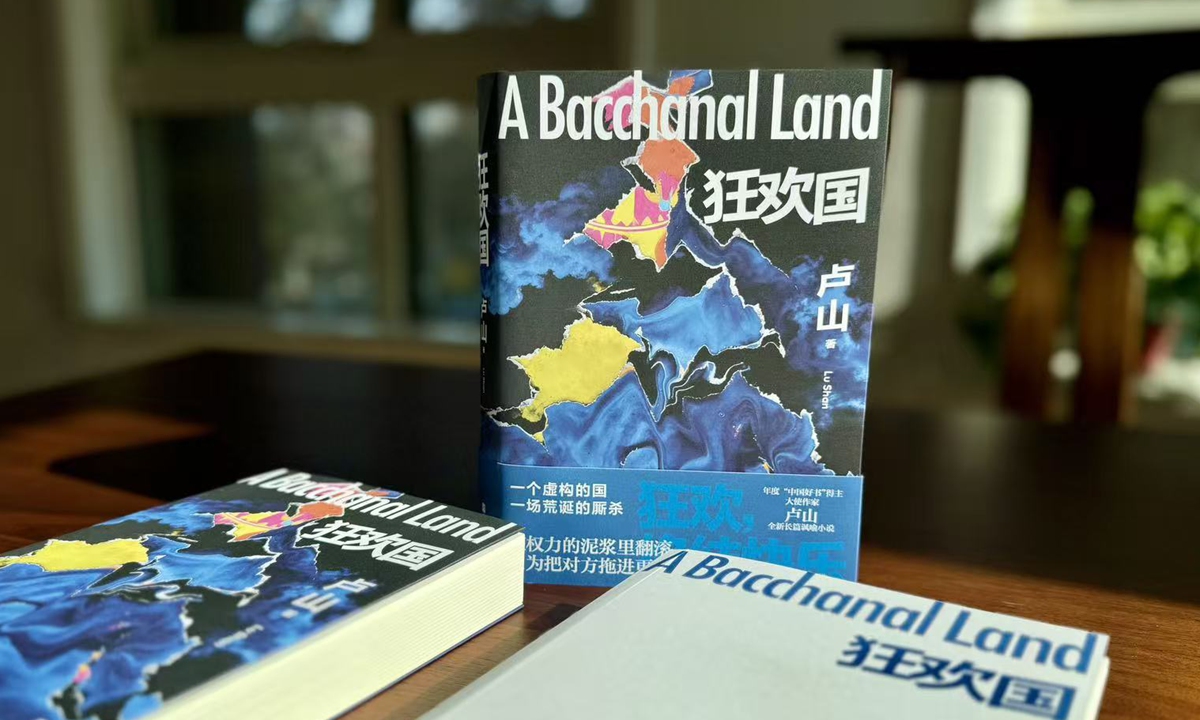
The book covers of A Bacchanal Land Photos on this page: Courtesy of Lu Shan
Bacchanal does not exist. It is an archipelago of writer Lu Shan's invention, and its full name is the Happy Islands of Bacchanal. In it, a former fashion model named Saga Boy becomes chief minister after a friend's drunken proposal at a party is taken seriously by people who should know better.
What follows is not a fairy tale. Ballot boxes are stuffed, newsrooms are bought, gangs shoot it out and financiers carve up the country like diners at a buffet. Nobody wins. Everybody parties.
That is the world Lu Shan built in A Bacchanal Land, a new novel published in 2026, and a colder book than its title suggests. He spent more than 30 years in China's foreign service, with ambassadorial postings twice, watching rise and fall in overseas politics from close enough to see the stitching. He has now put that seat to literary use.
His first novel, Bungee Jumping, came out of the same life and could hardly be more different: realistic, first-person, the story of a Chinese diplomat who builds an embassy from nothing on a fictional island nation and holds himself together through loneliness. It was named to China's Book of the Year list. Readers who come for the new book expecting more of the same will think they chose the wrong author.
Lu is not surprised. Being a diplomat, he said in an interview with the Global Times, gave him a pair of eyes he would not otherwise have had: A writer looks inward, at one person's fate and one person's feelings, while a diplomat's eye arrives with a global coordinate system already installed.
It also gave him a temperament, which is part of why the two books sit so far apart. Diplomacy is many-sided, and the reasons one novel turns out one way and the next very differently are hard to explain in a single sentence. "People who do the work for a long time learn to be warm and accommodating one day, cold and unforgiving the next," he noted.
Reflecting a multitude
Bacchanal is not any single country, and that is the point. He resists the game of matching fiction to a real map. "One incident looks accidental. The same thing can happen somewhere else, in a different form, for reasons that are not accidental at all," he said. A novel frees you from one event and one place; things that happened in different countries, unconnected to each other, can be strung into a single story.
The symptoms will be familiar to anyone who follows foreign news: power that curdles, corruption that spreads, hedonism that no longer bothers to justify itself, violence that arrives like the weather, a widening gap between the rich and everyone else. Lu locates the cause in capital, which he treats neither as villain nor as savior.
"Without capital you cannot build a market, and society loses its engine," he said. "But the moment capital escapes constraint, every kind of disorder grows up around it."
The title is a trap. A bacchanal and happiness share a single property, he explained. They both arrive fast and are over quickly, while pain and struggle settle in for the long term. In Bacchanal, ordinary people have no idea what tomorrow will bring. Food is not guaranteed, the streets are not safe, and taking part in politics can cost you your life. A party is a release valve, and when it ends, the anxiety returns and the cycle begins again.
Saga Boy, once in office, sets up a Happiness Committee, turns "happiness" into a slogan and stages Happiness Campaigns, promising a contentment he cannot deliver. "What is happiness? Where does it come from, and how do you guarantee it?" Lu said. "The whole world is asking. The novel is asking too."
The second road
The book had no model to follow. Writing a foreign country from the inside, in a Chinese voice, meant inventing the rules as he went. He said he is pleased to see the same instinct surfacing elsewhere, pointing to Once Upon a Time in the Middle East, director Wen Muye's film about a Chinese cook caught in a Middle Eastern war and one of the year's biggest domestic releases. He came out of it, he said, feeling on the same frequency as the people who made it.
"Telling China's story has two roads," Lu told the Global Times. "One is to write stories taking place in China. The other is to tell a story about the world using Chinese values and a Chinese perspective. That is also telling China's story." The second road, he says, has already produced finished works, and will become a trend.
Here the novelist stops and the argument begins. For decades, he said, China's emphasis was on learning from abroad: take what is useful, make up for what comes short. The harder step comes afterwards. "The more important step is to grow our own system of expression out of what we have absorbed."
Civilizations, in his account, do two things to each other. They borrow, and they surpass. It is the alternation of the two, he said, that allows a civilization as a whole to move upward.
Chinese civilization, he said, belongs to China and to the world at the same time. For this reason, China should take a deeper part in building a global culture so that modern world culture carries more Chinese thought and Chinese expression, and Chinese culture acquires a stronger claim on the world. In a global era, he went on, "The Earth is a single unit; the people on it are Chinese and also citizens of the Earth, and ought to see with the whole world in view."
This is where the book and the argument meet. "Only by understanding the world," he said, "can you see yourself clearly." National rejuvenation, in his telling, includes the ambition to not only look after oneself, but also answer questions all humanity shares using Eastern thought.
What he wants is for Chinese writers to move past the stage of simply exporting local stories and enter a new phase, one in which Chinese thinking is brought deliberately to bear on the world order and on where humanity is going. He considers the shift far-reaching.
RELATED ARTICLES