ARTS / CULTURE & LEISURE
Six-nation artists gather in Xishuangbanna for Lancang-Mekong culture and arts festival
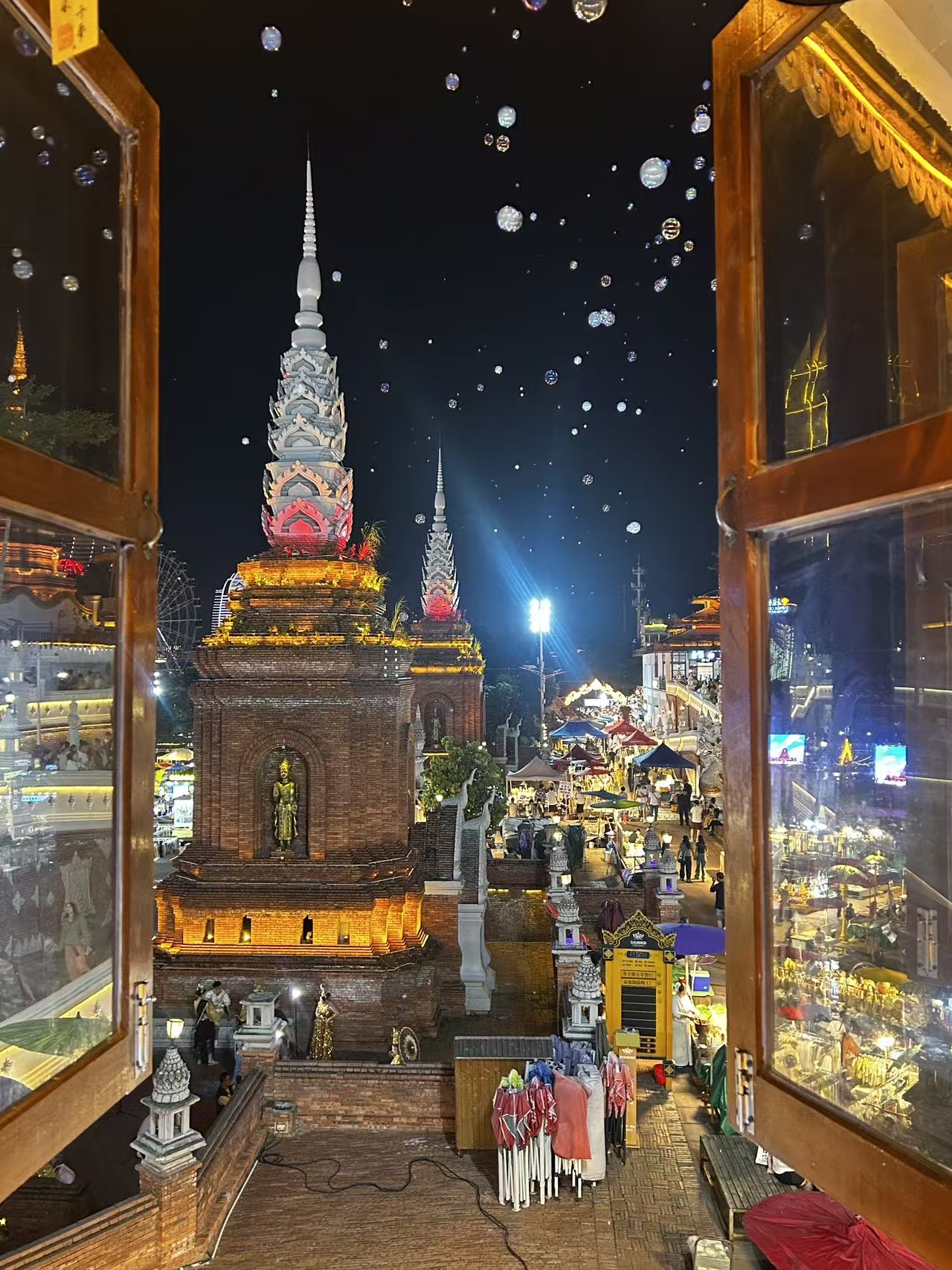
A night market in Xishuangbanna, Southwest China's Yunnan Province. Photo: Jiang Li/GT
The event brought together performers from China, Cambodia, Laos, Myanmar, Thailand and Vietnam, offering a vivid display of the region's cultural diversity and a chance for people from across the region to connect through the arts.
Zeyar Myo Myint, Myanmar's consul general in Kunming, said the festival is more than a gathering of performers. It offered countries along the Lancang-Mekong River a chance to deepen mutual understanding through cultural exchange.
"The festival provides many opportunities for countries that share the same river to exchange views and experiences in culture and the arts," he told the Global Times.
China and Myanmar have long been "good neighbors and good friends," he said, noting that the two countries have maintained cultural exchange through mutual visits by delegations and joint performances.
He hopes these exchanges can develop further through closer cooperation between art institutions in the two countries. "University visits, training programs and seminars could give students and arts professionals more opportunities to learn from one another."
"If exchanges and training programs between universities in the two countries increase, we will gain a deeper understanding of each other's cultures, and exchanges in the arts will become smoother," he said.
Mayfong Mayxay, president of the University of Health Sciences in Laos, who visited Xishuangbanna for the first time, told the Global Times that the region's rich cultural and artistic activities had left a strong impression on him. Seeing people from different countries gather, interact and share their happiness showed him how culture and the arts can bring people closer.
"I also see room for closer cooperation between China and Laos beyond cultural activities. The two countries have a long-standing foundation for cooperation in healthcare and student exchanges," he noted.
"I hope they can jointly organize medical conferences, promote knowledge-sharing among students and researchers, and conduct joint research," he said. "More opportunities for students from the two countries to learn from one another and build friendships would also help strengthen bilateral ties."
For scholars from different countries, exchanges offer an opportunity to learn from one another's development experiences through observation and academic discussions. Achmad Firas Khudi, an assistant professor of sociology at Universitas Negeri Jakarta, has a research interest in rural development. He told the Global Times that the progress made in rural China in recent years had greatly impressed him, particularly the way development benefits are reaching grassroots communities and rural residents.
"Rural China has very good prospects and is continuing to make progress. This is a positive sign that the benefits of development are reaching grassroots communities and rural residents," Khudi said.
In his view, related projects not only provide support for rural residents but also help them develop local products and gain access to education and employment opportunities.
"China's experiences in rural infrastructure development and the application of technology could offer useful lessons for other countries," he said. "For me, participating in the festival also provided an opportunity to exchange ideas with researchers from China and other countries and learn more about rural development practices in different parts of the world."
His remarks point to a broader value of cross-border exchanges: Understanding another country is not just about appreciating its cultural traditions, but also about learning how its people live, address common challenges and pursue development. To many scholars attending the event, such understanding can deepen when cultural encounters are accompanied by the sharing of experiences and ideas.
Performers take the stage at the opening ceremony of the 14th Lancang-Mekong River Basin Countries Culture and Arts Festival in Xishuangbanna, Southwest China's Yunnan Province on October 28, 2026. Photo: Courtesy of the 14th Lancang-Mekong River Basin Countries Culture and Arts Festival
RELATED ARTICLES