China open to increasing US agricultural imports, contingent on $30b reciprocal tariff cuts: MOFCOM
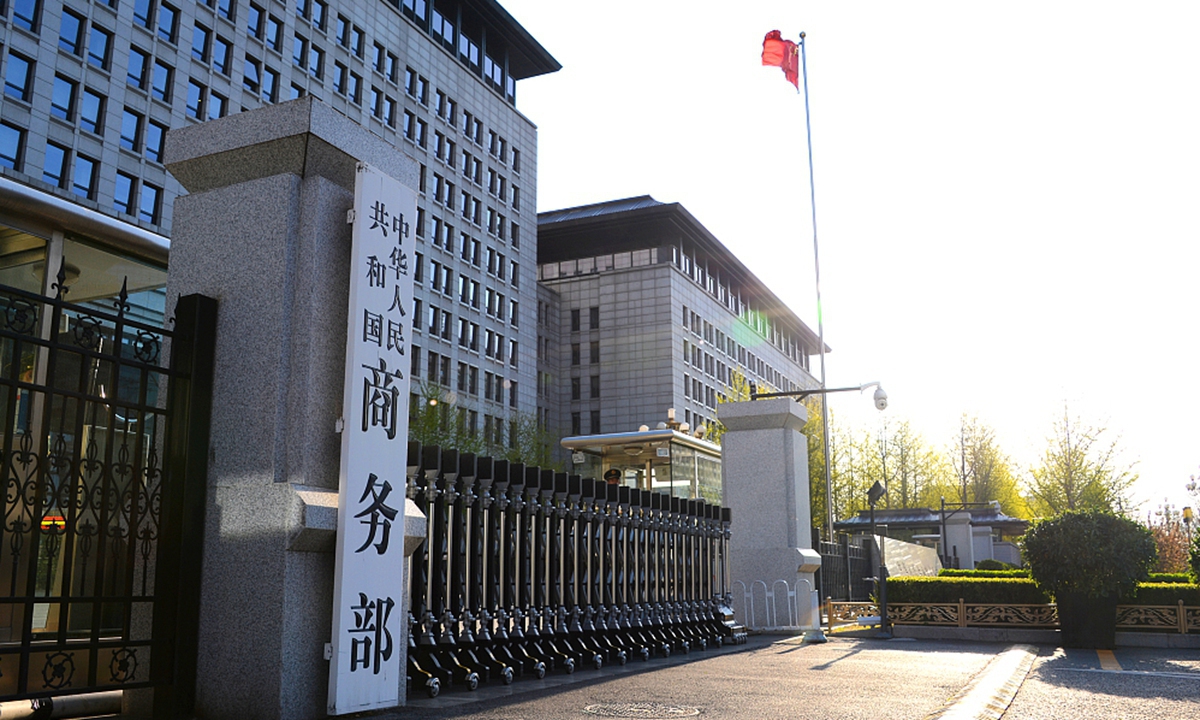
The Ministry of Commerce of China File photo: VCG
China remains open to increasing US agricultural imports, provided that the arrangement for agreed reciprocal tariff cuts covering $30 billion in trade on each side is implemented, a spokesperson of China's Ministry of Commerce (MOFCOM) noted on Thursday, urging joint efforts to lower trade barriers and expand market access.The remarks came in response to a question about a November 2 meeting between China's International Trade Representative Li Chenggang and a US agricultural trade delegation, including whether the two sides had reached any consensus on expanding US agricultural exports to China, particularly soybeans and other farm products.
"China-US agricultural trade is an important part of bilateral economic and trade cooperation. Expanding cooperation in agriculture would not only provide consumers in both countries with a wider variety of food products but also generate stable income for businesses and farmers on both sides, delivering tangible benefits to both countries," MOFCOM spokesperson Huang Ling said on Thursday.
Huang also expressed hope that the US would work with China to create more favorable conditions for bilateral agricultural trade by jointly reducing tariffs, lowering non-tariff barriers and expanding market access.
Agricultural trade has long been an important component of China-US economic ties, with soybeans, meat and dairy products among the major US agricultural exports to China.
In September, China and the US reached an agreement on reciprocal tariff reductions covering about $30 billion worth of imports on each side, with more than 90 percent of the covered products being exempted from all additional tariffs imposed on each other and enjoying most-favored-nation tariff treatment. The arrangement covers US agricultural products, personal care products, medical devices and coal, as well as Chinese products including toys and home appliances. The tariff cuts will take effect simultaneously after both sides complete their respective domestic legal procedures, according to the MOFCOM.
The reciprocal tariff arrangement is expected to create more favorable conditions for agricultural trade by reducing tariff costs on covered products, although the extent of any increase in purchases will also depend on market demand and other trade conditions.
According to data from the US Department of Agriculture, US agricultural exports to China totaled $8.27 billion in 2025, a relatively low level compared with the past decade, making China the sixth-largest export market for American agricultural products. Soybeans accounted for about $3 billion, followed by pork and pork products, dairy products and beef.
Agricultural trade has long been an important part of China-US economic relations, with China maintaining steady demand for US farm products, particularly soybeans, Ma Wei, an associate research fellow of the Institute of American Studies from the Chinese Academy of Social Sciences, told the Global Times on Thursday. However, expanding US agricultural exports to China cannot depend solely on increased purchases by the Chinese side, Ma said.
Ma stressed that Chinese companies will continue to make purchasing decisions based on market demand, prices and commercial considerations. The US should work with China to advance reciprocal tariff reductions and ensure their orderly implementation, helping maintain stability in bilateral agricultural trade. Ma noted that amid changes in the US trade environment and tariff measures in recent years, Chinese importers have diversified their suppliers and signed contracts with producers in other countries.
He added that the US also needs to make progress in easing restrictions on certain Chinese agricultural exports, stressing that reciprocal implementation of trade commitments is essential to creating stable conditions for bilateral agricultural trade.
RELATED ARTICLES