EU's reported China deterrence plans risk hurting competitiveness, raising costs for EU manufacturers and undermining bilateral cooperation: expert

The European Union (EU) flags in front of EU headquarters in Brussels, Belgium. Photo: VCG
The European Commission (EC) on Wednesday unveiled its 2027 work program, outlining plans for a dedicated diversification instrument, which the bloc claimed was intended to strengthen its resilience and accelerate supply chain diversification, as Brussels reportedly continues to consider further restrictions on Chinese imports.
The EU's push to reduce so-called overreliance on China through trade restrictions could backfire by raising costs for European manufacturers and weakening their competitiveness, while undermining China-EU economic cooperation and mutual trust, Chinese experts warned.
In the work program, the EC explicitly referred to the Chinese market, asserting that access to it, along with "cheap" imported energy and raw materials and open global trade, was no longer the foundation for a thriving EU economy that it once was. The bloc claimed that economic independence had therefore become a priority for Europe.
Euronews reported on October 29 that the diversification proposal was directly aimed at Beijing, linking it to concerns over the bloc's reliance on Chinese supplies of critical raw materials and other strategic products.
Notably, the diversification plan has raised concerns among European businesses about the costs of finding alternative suppliers.
"Companies are already doing the maximum to have a cost-effective structure," Luisa Santos, deputy director-general at BusinessEurope, told Euronews. "If they are working with certain suppliers, it is because they are the ones that have the best offer in terms of the product, regarding its cost and performance."
"There is nothing inherently wrong with diversifying supply chains, as this is a choice the EU is free to make. However, diversification should not be driven by the politically motivated goal of decoupling from China or imposing artificial barriers on normal trade," Jian Junbo, director of the Center for China-Europe Relations at Fudan University, told the Global Times on Thursday.
If diversification policies are primarily aimed at arbitrarily decoupling from China, they could undermine the stable and mutually beneficial economic and trade ties between China and the EU, Jian said.
The proposals come as Brussels continues to imposes restrictions on trade with China, prompting firm responses form the Chinese side.
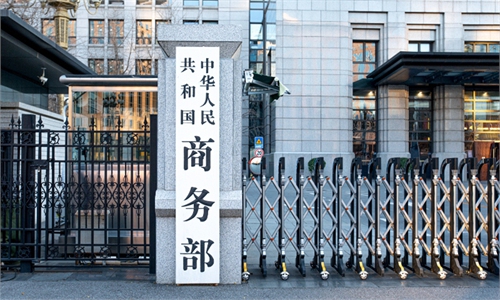
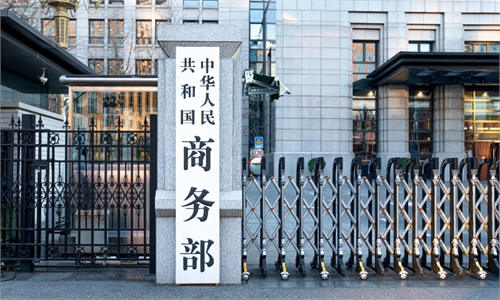
On Thursday, Huang Ling, a spokesperson for China's Ministry of Commerce, criticized the EU's introduction of a 2-euro handling fee on low-value imports starting November 1, following the implementation of a 3-euro tariff in July, and the combined impact of the two measures on Chinese cross-border e-commerce exporters.
Huang said China is paying close attention to the EU's new regulations, noting that cross-border e-commerce, as a new form and model of international trade, provides businesses and consumers around the world with a diverse range of choices.
Many Chinese products imported by Europe are intermediate goods used in manufacturing. Replacing them with supplies from other sources could significantly increase production costs and weaken European companies' competitiveness, while reduced access to affordable consumer goods could add to inflationary pressures, Hu Qimu, a professor at the Maritime Silk Road Institute of Huaqiao University, told the Global Times on Thursday.
Moreover, the unilateral restrictions could undermine respect for World Trade Organization (WTO) rules and erode trust in China-EU trade talks, said Hu.
China has repeatedly emphasized the importance of addressing economic and trade differences through dialogue. "China is not the root cause of the EU's problems, but a partner in addressing them... Rather than resorting to further trade restrictions, the EU should adopt a more pragmatic approach, strengthen dialogue with China, and pursue mutually beneficial cooperation to address economic challenges and enhance industrial competitiveness," said Hu.
RELATED ARTICLES