ARTS / CULTURE & LEISURE
Three Chinese documentary collections included in UNESCO heritage program
Three Chinese documentary heritage collections, covering traditional land registration, charitable medical services in Macao and the country's targeted poverty alleviation efforts, were added to the Memory of the World Committee for Asia and the Pacific (MOWCAP) Regional Register on Thursday. The additions bring the total number of Chinese collections on the regional register to 20, according to the National Archives Administration of China.
The three collections - Fish-Scale Registers of China (1581-1934), Archives and Manuscripts of Macau Kiang Wu Hospital Charitable Association (1857-1961), and Chinese Archives On Targeted Poverty Alleviation (2012-2020) - were inscribed at MOWCAP's 11th plenary meeting in Jakarta, Indonesia.
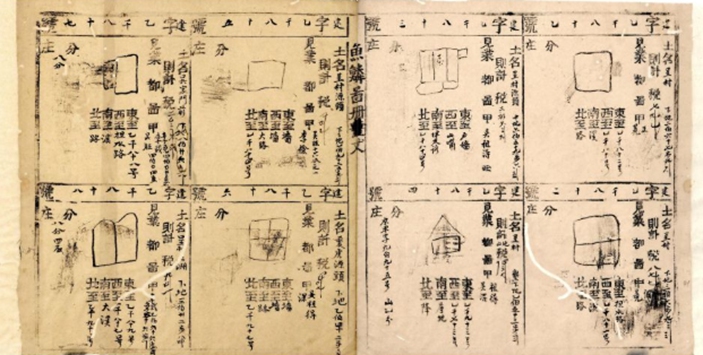
They document details of individual plots, including their location, area, shape and grade. The system took shape during the Song Dynasty, was widely adopted during the Ming Dynasty (1368-1644) and developed further during the Qing Dynasty (1644-1911), becoming an important part of China's traditional land registration and management system, according to the administration.
"The collection is of considerable value for research into the history of global land resource management, the development of modern land management systems in East Asia, grassroots populations and organizational structures, women's rights protection, and human-environment interactions and ecological protection," Wang Deyan, director of the Chinese Language Department at the School of Liberal Arts and Law of North China University of Technology, told the Global Times.
While the Fish-Scale Registers show how land was managed in traditional Chinese society, the Archives and Manuscripts of Macau Kiang Wu Hospital Charitable Association offers a record of how a local organization responded to public needs. The collection comprises 5,400 items dating from 1857 to 1961. It documents the development of charitable medical services in Macao, as well as exchanges between Chinese and Western cultures, women's education, public education and humanitarian assistance, according to the National Archives Administration of China.
"Archives record not only major historical events, but also the everyday lives and practical activities of ordinary people," Wang said. "Documents concerning land registration and charitable medical services may appear routine, but they can help researchers reconstruct how a society operated, how public affairs were organized and how different groups-built relationships."
"Their value lies in providing verifiable primary sources for historical research, giving broader historical narratives a solid documentary basis," he added.
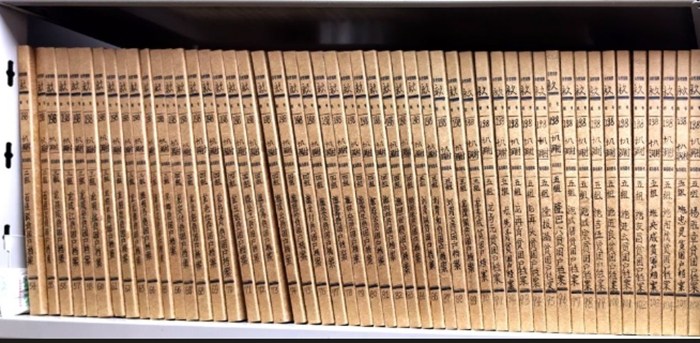
Launched by UNESCO in 1992, the Memory of the World Programme aims to promote the preservation, use and dissemination of documentary heritage. It is one of UNESCO's three major heritage programs, alongside the World Heritage and Intangible Cultural Heritage programs, according to CCTV News.
The Memory of the World Committee for Asia and the Pacific is responsible for reviewing nominations to the MOWCAP Regional Register, with reviews conducted every two years, CCTV News reported.
The three collections - Fish-Scale Registers of China (1581-1934), Archives and Manuscripts of Macau Kiang Wu Hospital Charitable Association (1857-1961), and Chinese Archives On Targeted Poverty Alleviation (2012-2020) - were inscribed at MOWCAP's 11th plenary meeting in Jakarta, Indonesia.
Fish-Scale Registers of China (1581-1934)
The Fish-Scale Registers were cadastral records compiled by Chinese government authorities since the Song Dynasty (960-1279) for land registration and taxation purposes, according to the National Archives Administration of China. They are named after the way plots of land were arranged in the registers, resembling closely connected fish scales. The records are sometimes described as ancient Chinese versions of real estate certificates.They document details of individual plots, including their location, area, shape and grade. The system took shape during the Song Dynasty, was widely adopted during the Ming Dynasty (1368-1644) and developed further during the Qing Dynasty (1644-1911), becoming an important part of China's traditional land registration and management system, according to the administration.
"The collection is of considerable value for research into the history of global land resource management, the development of modern land management systems in East Asia, grassroots populations and organizational structures, women's rights protection, and human-environment interactions and ecological protection," Wang Deyan, director of the Chinese Language Department at the School of Liberal Arts and Law of North China University of Technology, told the Global Times.
While the Fish-Scale Registers show how land was managed in traditional Chinese society, the Archives and Manuscripts of Macau Kiang Wu Hospital Charitable Association offers a record of how a local organization responded to public needs. The collection comprises 5,400 items dating from 1857 to 1961. It documents the development of charitable medical services in Macao, as well as exchanges between Chinese and Western cultures, women's education, public education and humanitarian assistance, according to the National Archives Administration of China.
"Archives record not only major historical events, but also the everyday lives and practical activities of ordinary people," Wang said. "Documents concerning land registration and charitable medical services may appear routine, but they can help researchers reconstruct how a society operated, how public affairs were organized and how different groups-built relationships."
"Their value lies in providing verifiable primary sources for historical research, giving broader historical narratives a solid documentary basis," he added.
Chinese Archives On Targeted Poverty Alleviation (2012-2020)
This approach to understanding social change through everyday records also applies to contemporary China. The Chinese Archives On Targeted Poverty Alleviation comprise systematically collected original records from typical areas of deep poverty, documenting the entire process, from identifying people in need and providing targeted assistance to their exit from poverty.Launched by UNESCO in 1992, the Memory of the World Programme aims to promote the preservation, use and dissemination of documentary heritage. It is one of UNESCO's three major heritage programs, alongside the World Heritage and Intangible Cultural Heritage programs, according to CCTV News.
The Memory of the World Committee for Asia and the Pacific is responsible for reviewing nominations to the MOWCAP Regional Register, with reviews conducted every two years, CCTV News reported.
RELATED ARTICLES